Cognitive skill development Math Worksheets for Ages 4-7
3 filtered results
-
From - To
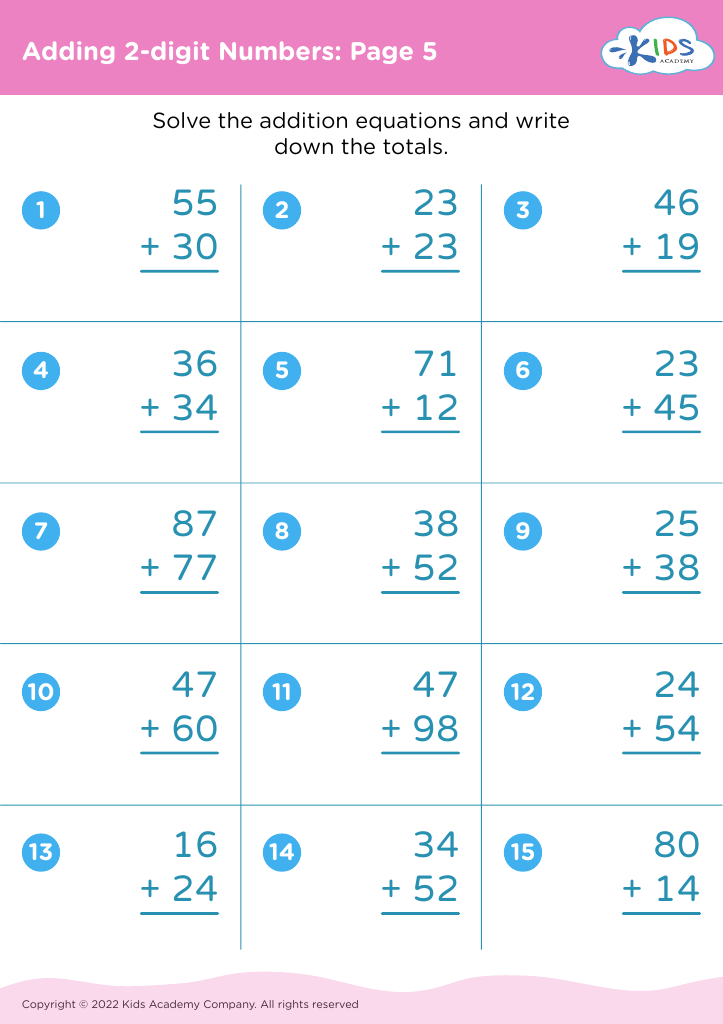
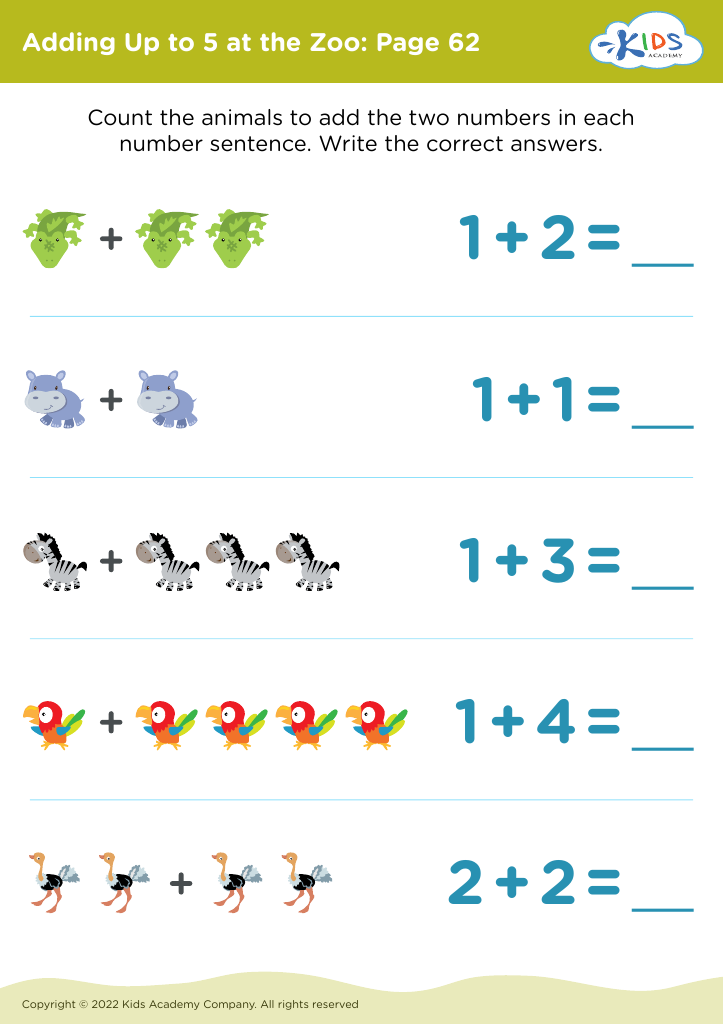
Boost your child's cognitive abilities with our specifically designed Math Worksheets for Ages 4-7. Tailored to enhance key skills and optimal brain development, these captivating worksheets merge fun with education, promoting critical thinking and problem-solving. Activities include puzzles, pattern recognition, counting, and basic arithmetic, each crafted to build a solid mathematical foundation. Ideal for young learners, these printable sheets are a fantastic resource for parents and educators aiming to support a child's learning journey. Discover a vibrant mix of engaging exercises that make early math exploration both enjoyable and effective. Download now to begin the adventure!
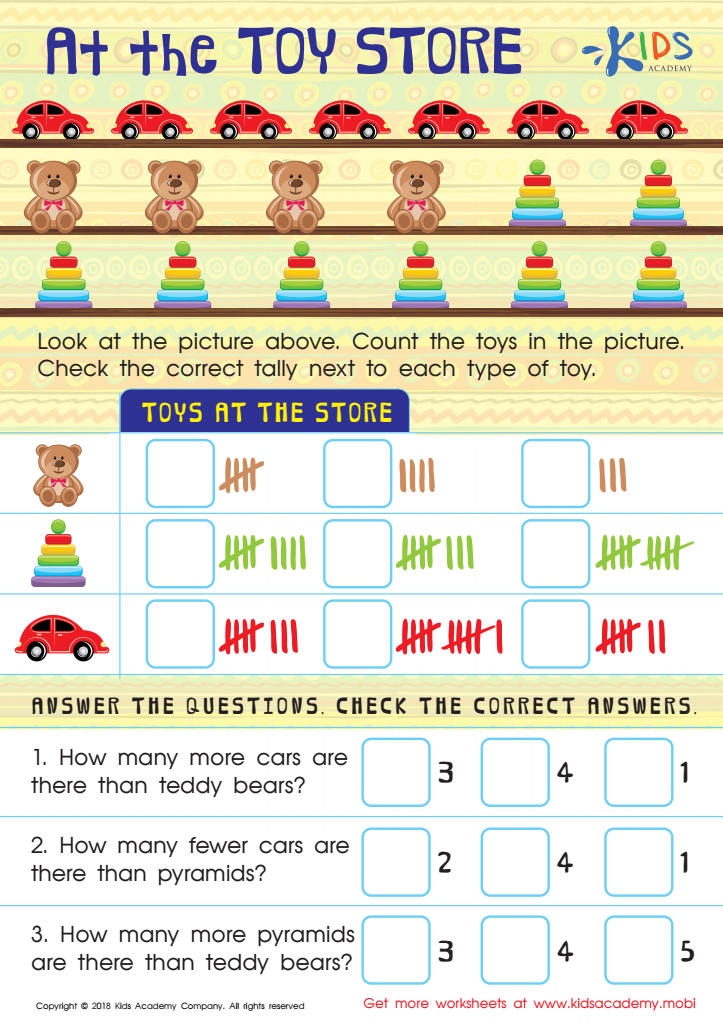
Tally Chart: At the Toy Store Worksheet
 Assign to My Students








Cognitive skill development in math for children aged 4-7 is crucial because it lays the foundation for critical thinking, problem-solving, and academic success. At this early stage, children's brains are highly receptive to learning new concepts, and developing strong math skills can enhance their logical reasoning and analytical capabilities. These skills are not just limited to math; they translate into everyday life, helping children make informed decisions, follow sequences, and recognize patterns.
Parents and teachers play a pivotal role in nurturing these skills by creating a stimulating environment that encourages exploration and curiosity about numbers and mathematical concepts. Engaging activities like counting games, puzzles, and hands-on experiences with shapes and measurements can make learning math enjoyable and meaningful.
Early math proficiency is also a strong predictor of later academic achievements. Studies have shown that children who develop good math skills in early childhood tend to perform better in school, not only in math-related subjects but also in literacy. Additionally, building confidence in math from a young age can prevent math anxiety, fostering a positive attitude towards learning and intellectual challenges.
Therefore, focusing on cognitive skill development in math during the crucial years of 4-7 sets children on a path of lifelong learning, equipping them with essential tools for their future academic and personal success.








