Comparison Skills Math Worksheets for Ages 4-7
9 filtered results
-
From - To
Nurture your child's mathematical growth with our Comparison Skills Math Worksheets for Ages 4-7. Specifically designed for young learners, these fun and engaging worksheets help children develop essential comparison and analytical skills. Activities include comparing sizes, quantities, numbers, and more, providing a solid foundation for future math success. Through interactive exercises and colorful visuals, Kids Academy makes learning both educational and entertaining, ensuring a hands-on experience that sparks curiosity and critical thinking. Ideal for use at home or in the classroom, our expertly crafted worksheets make foundational math concepts accessible and enjoyable for young minds.
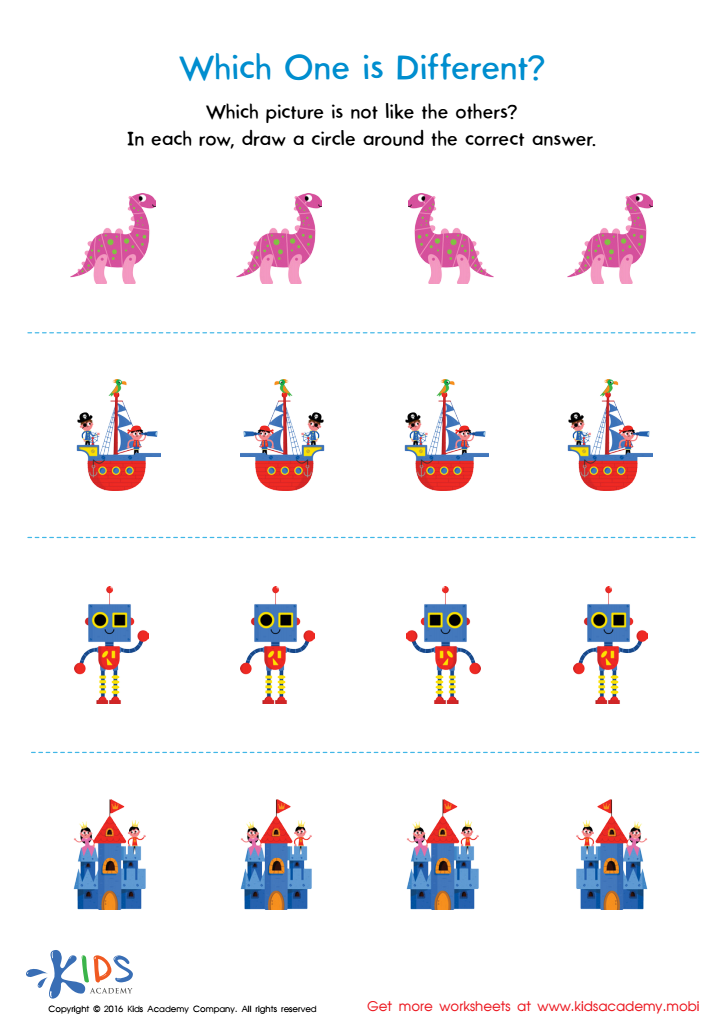
Which One Is Different Worksheet
 Assign to My Students
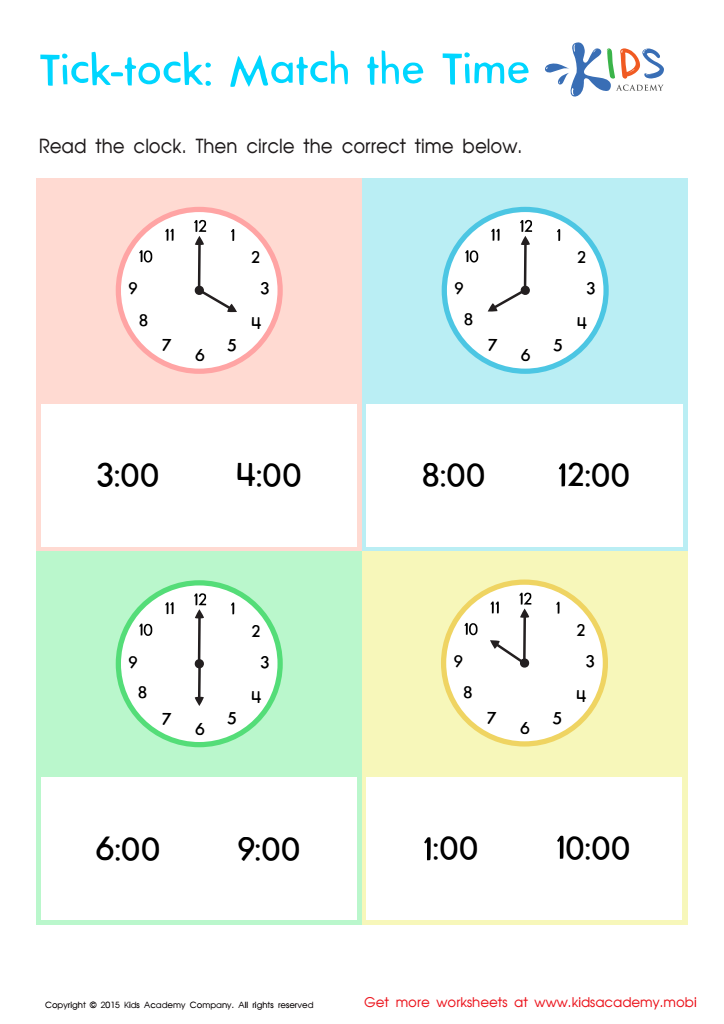
Telling The Time Worksheet: Part 4
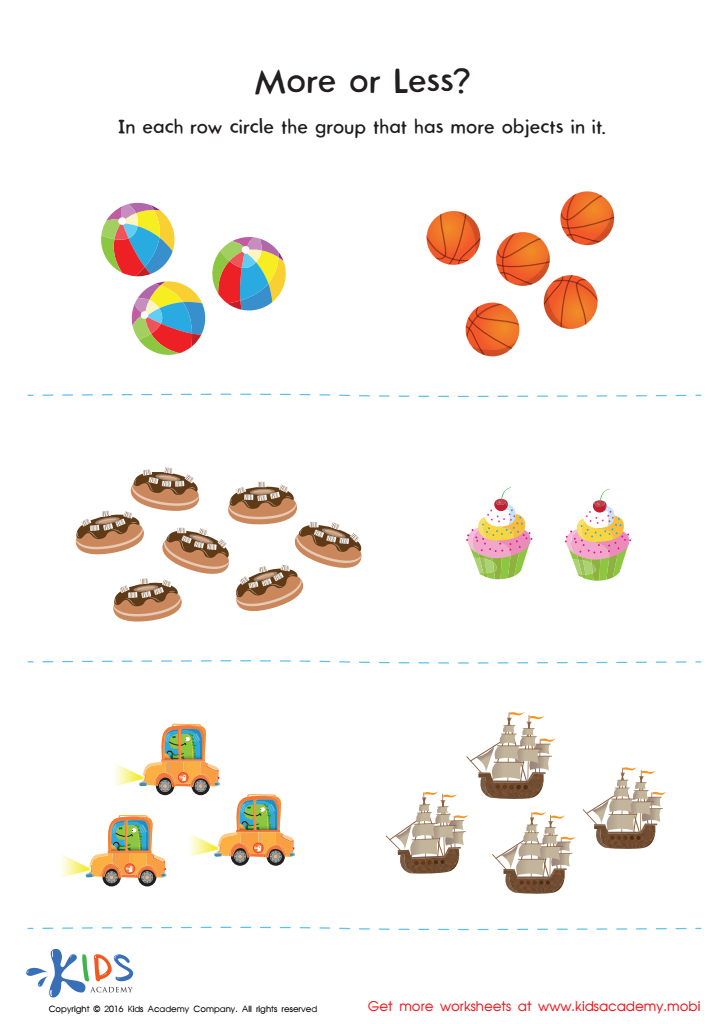
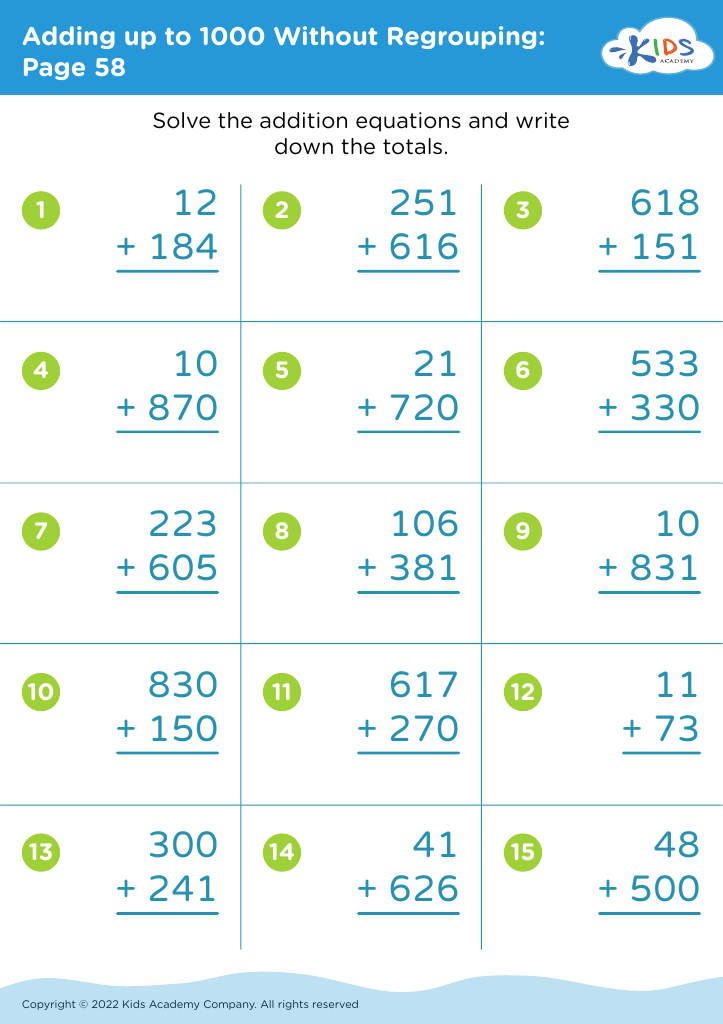
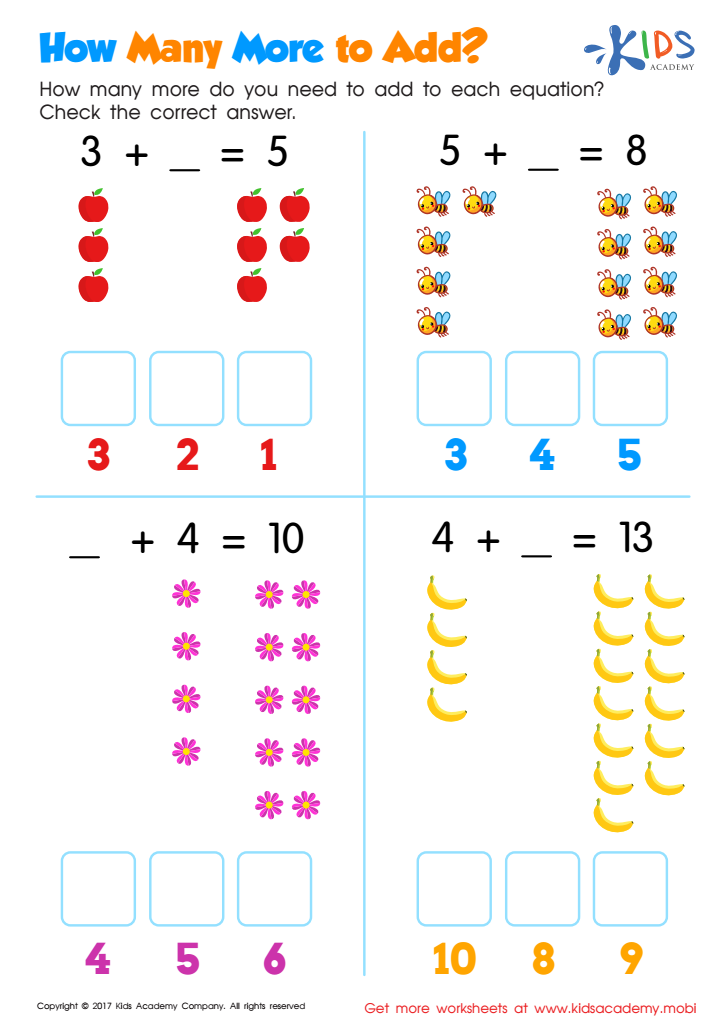
How Many More to Add Worksheet
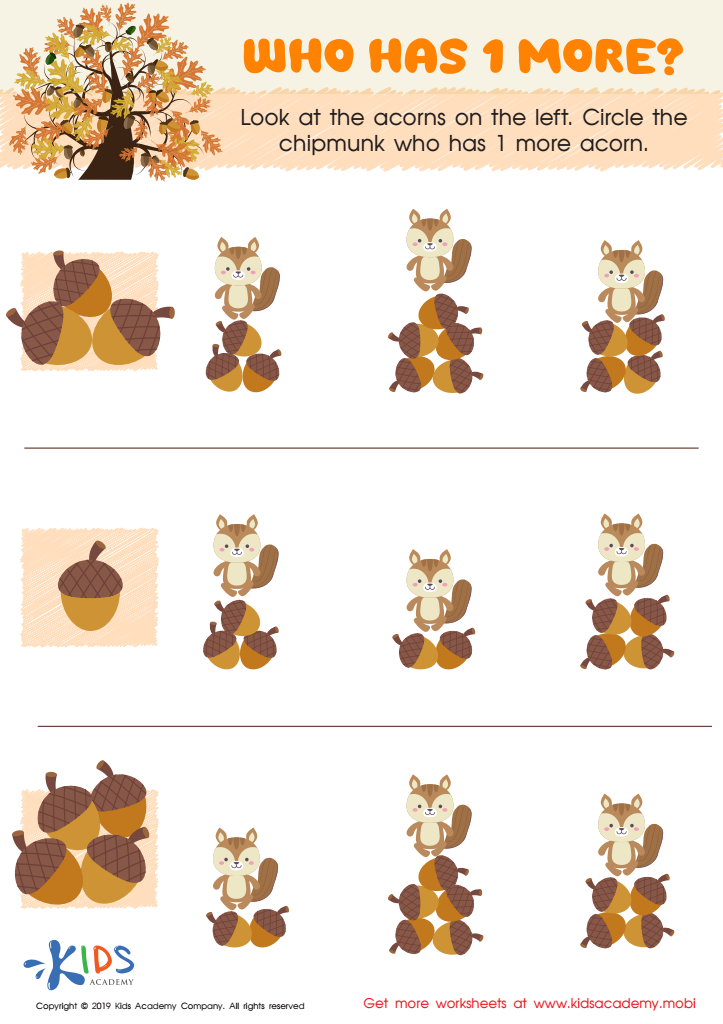
Who Has 1 More? Worksheet
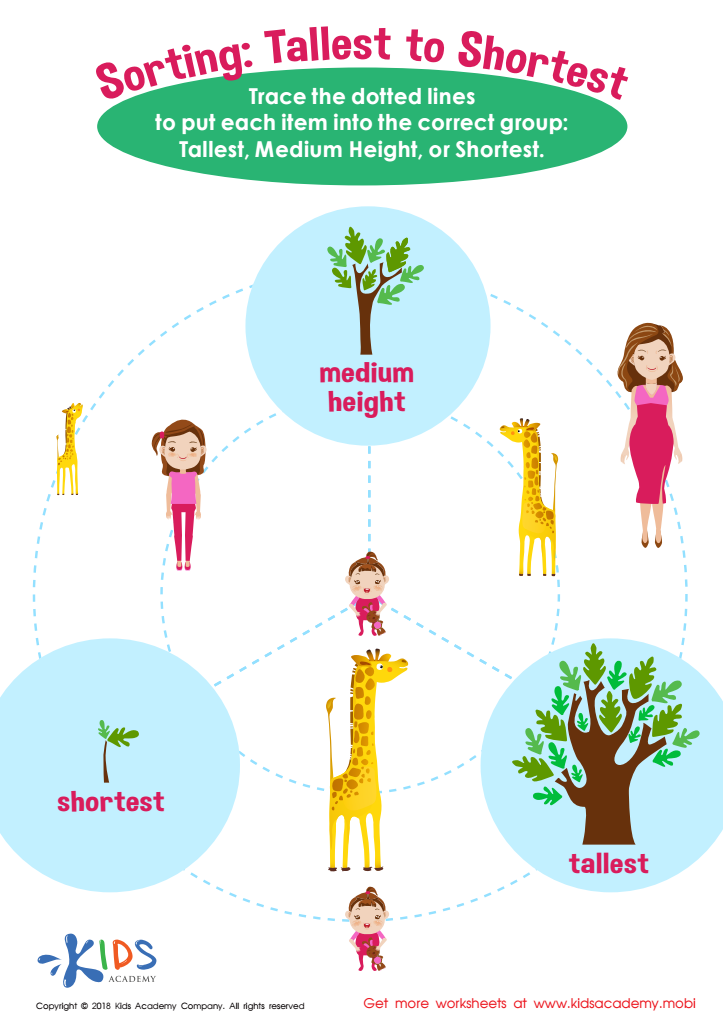
Sorting: Tallest to Shortest Worksheet




%20(1).jpg)

Comparison skills in math are fundamental building blocks for young learners aged 4-7, as they set the stage for future mathematical understanding and everyday problem-solving. When parents and teachers focus on teaching children how to compare quantities, sizes, lengths, weights, and numbers, they cultivate essential cognitive skills such as critical thinking, attention to detail, and the ability to make informed decisions based on observations and data.
At this tender age, children are naturally curious and eager to explore the world around them. Concepts such as "more than," "less than," "bigger," "smaller," "heavier," and "lighter" can be introduced through engaging activities and hands-on experiences, laying a solid foundation for arithmetic operations like addition and subtraction. For instance, comparing two groups of objects can help children understand the notion of quantity and the numerical relationships between different sets.
Additionally, mastering comparison skills fosters language development. As children verbalize their observations, they learn to use descriptive words and phrases, enhancing their communication abilities. This integrative approach not only improves math skills but also supports overall cognitive development.
Ultimately, encouraging comparison skills in early education empowers children to approach mathematical concepts with confidence, paving the way for more complex problem-solving tasks in later years. It equips them with the tools to navigate both academic challenges and everyday decisions effectively.








