Counting accuracy Math Worksheets for Ages 4-7
3 filtered results
-
From - To
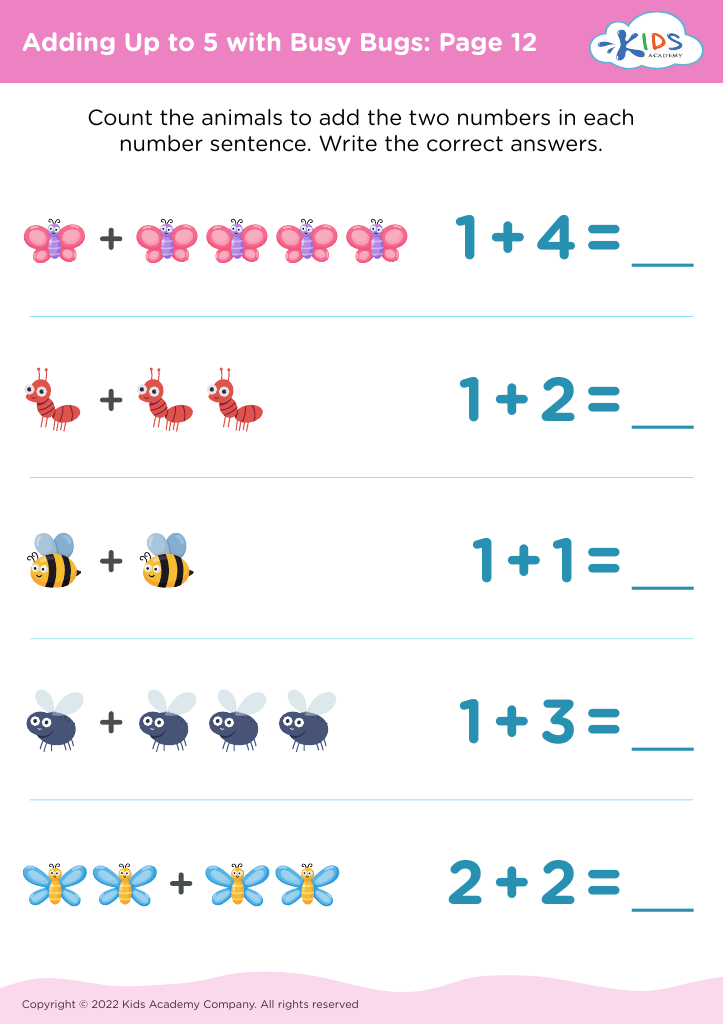
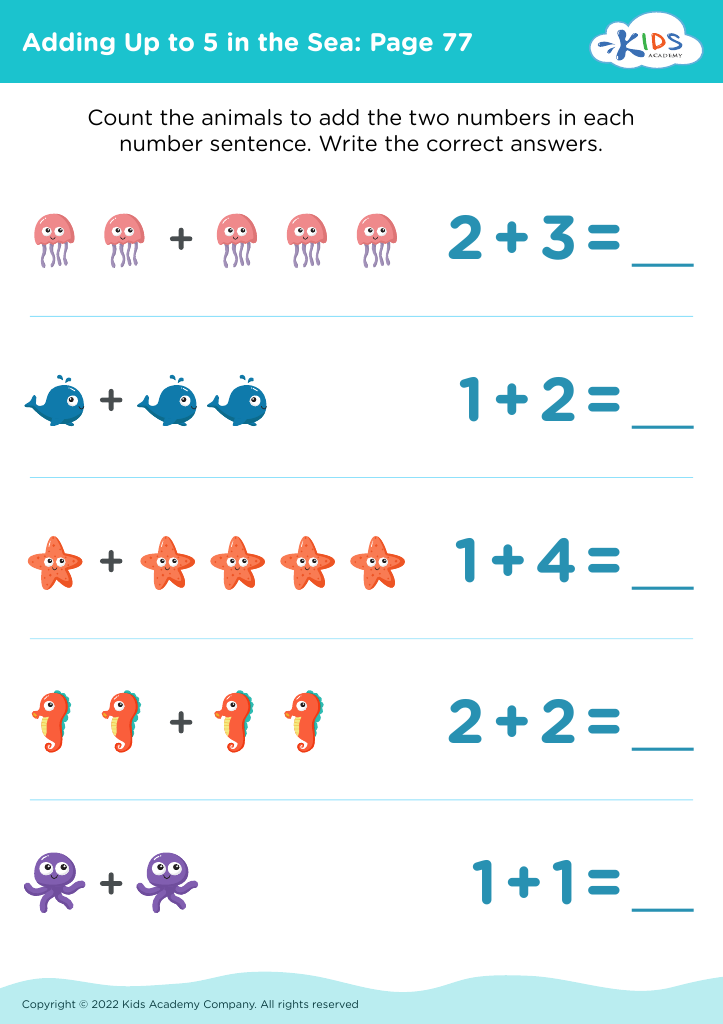
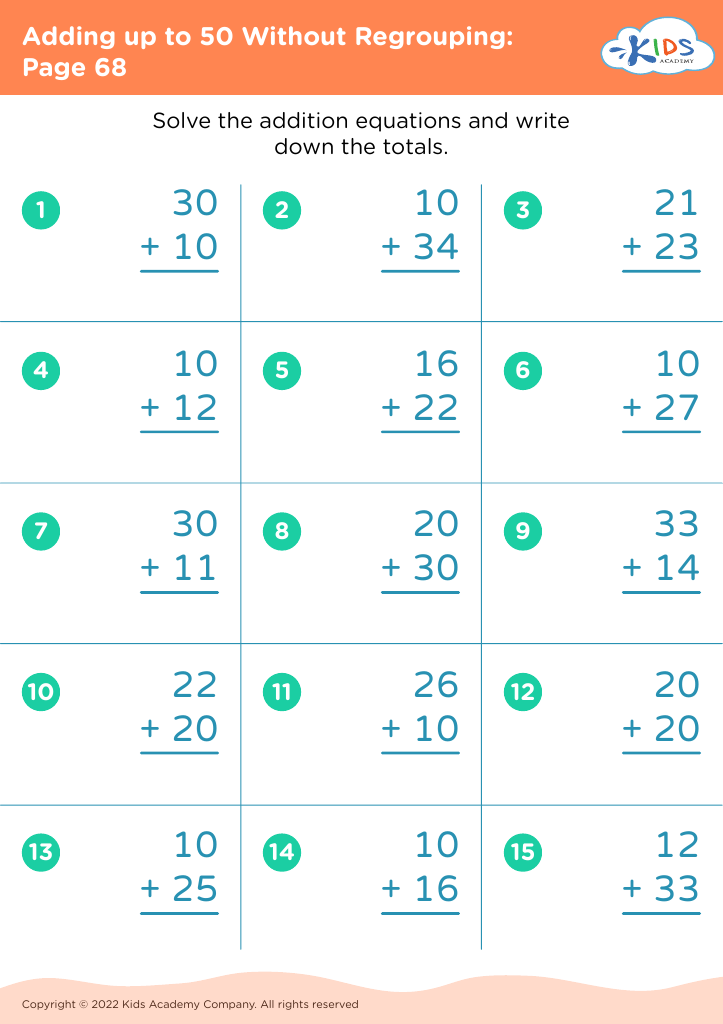
Enhance your child's counting skills with our Counting Accuracy Math Worksheets designed specifically for ages 4-7. These engaging and age-appropriate worksheets help young learners develop precision in counting various objects, improving their numerical literacy. Each worksheet features fun themes and colorful illustrations that captivate young minds, making learning enjoyable. By practicing counting accuracy, children build a strong foundation for future math concepts. Our collection is perfect for preschool and early elementary students, providing ample opportunities for practice at home or in the classroom. Explore our worksheets today and watch your child's confidence in math skills soar!








Counting accuracy is crucial for children aged 4 to 7 because it lays the foundation for their future mathematical understanding and overall cognitive development. At this age, children are not just learning numbers; they are also developing number sense, which is the ability to understand quantities, relationships, and basic numerical operations.
Parents and teachers should care about counting accuracy because it directly impacts children's ability to solve problems and perform more advanced math concepts like addition and subtraction. By ensuring children can accurately count objects, recognize quantities, and understand the sequence of numbers, we promote a more profound comprehension of mathematics.
Moreover, counting involves fine motor skills and cognitive processing, contributing to overall brain development. Consistent practice in counting fosters confidence and encourages a positive attitude towards mathematics. Children who struggle with counting may develop anxiety around math, which can hinder their academic progress.
Engaging children in counting activities can also enhance their language skills and critical thinking abilities, as they learn to articulate numbers and compare quantities. Ultimately, promoting counting accuracy helps children build a strong mathematical foundation that supports their lifelong learning and fosters a love for math from an early age.








