Developing observational skills Math Worksheets for Ages 4-7
4 filtered results
-
From - To
Enhance your child's learning experience with our Developing Observational Skills Math Worksheets designed for ages 4-7. These engaging resources focus on strengthening your child's ability to notice patterns, differences, and relationships in various mathematical concepts. Featuring colorful visuals and fun activities, each worksheet encourages critical thinking and boosts problem-solving skills. Ideal for both classroom and home use, these worksheets promote active learning through games and interactive tasks. Help your little ones cultivate essential observational skills necessary for their academic success, making math enjoyable and accessible for early learners. Explore our collection today and watch your child's confidence and abilities grow!
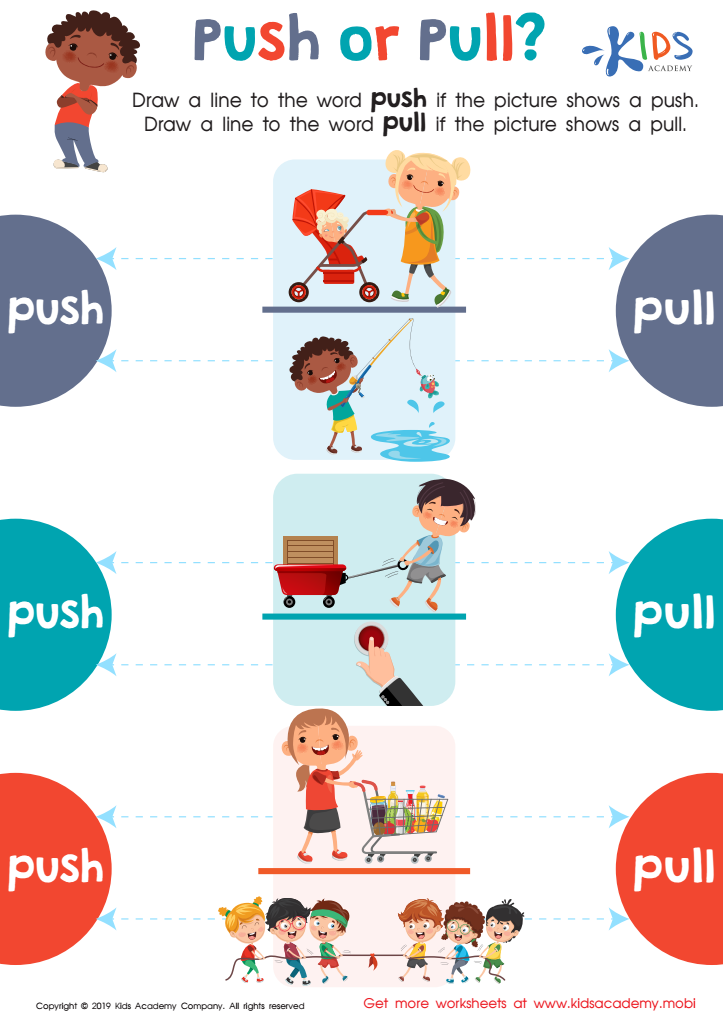
Push or Pull? Worksheet
 Assign to My Students
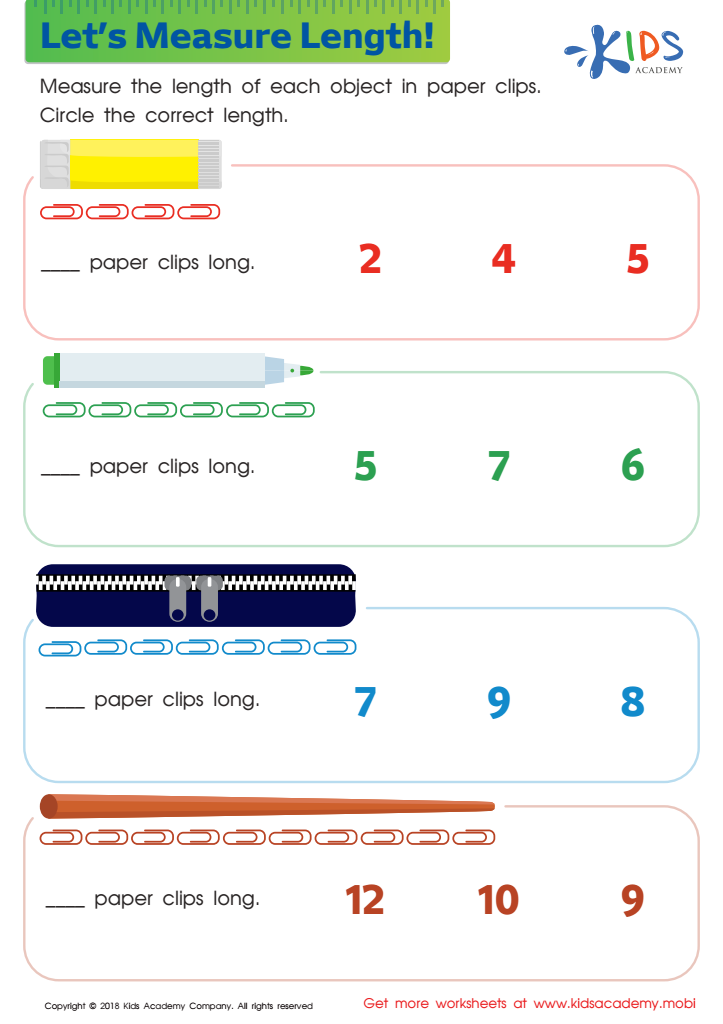
Lets Measure Length Worksheet
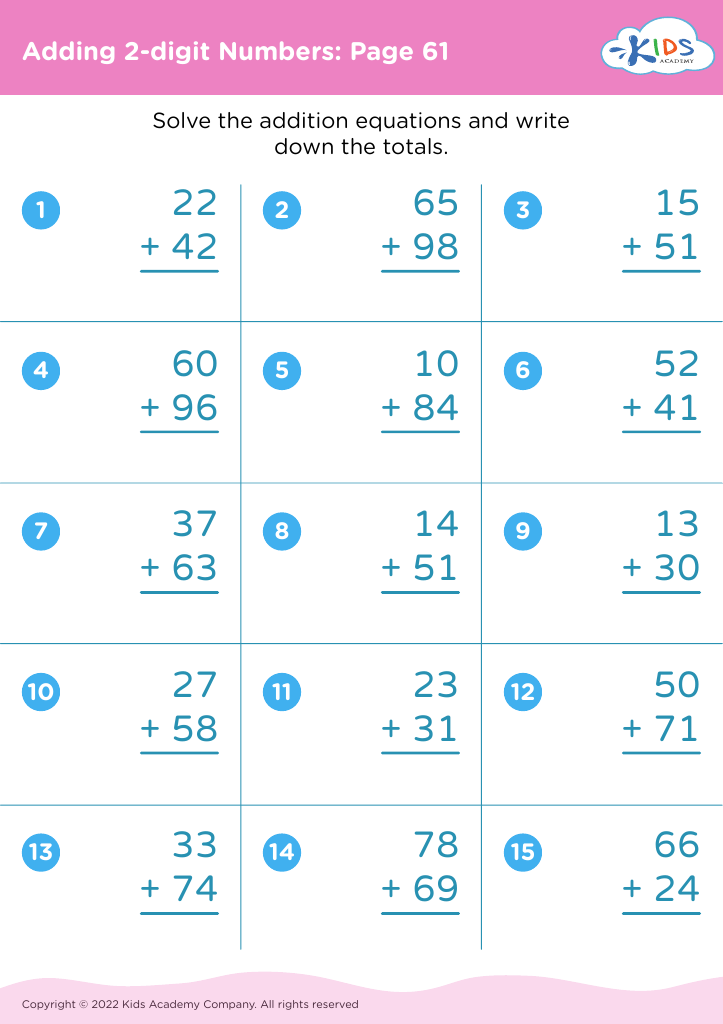
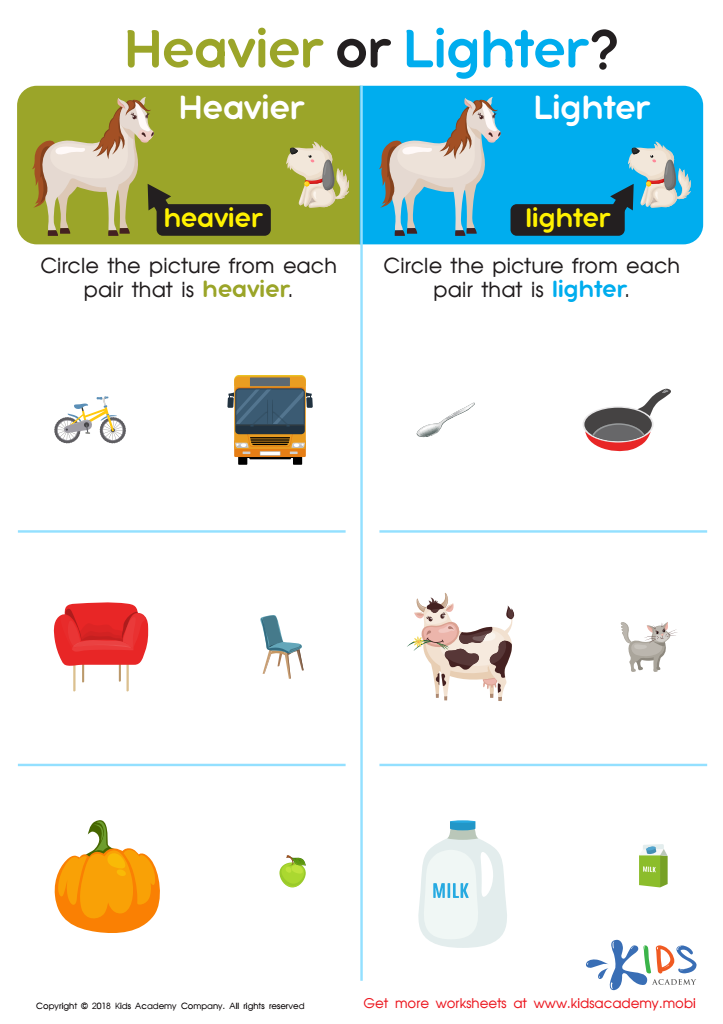
Heavier or Lighter? Worksheet








Developing observational skills in mathematics for children ages 4-7 is crucial for their overall cognitive and social development. During these formative years, children are naturally curious and keen to learn, making it an ideal time to foster their observational abilities. By enhancing these skills, children learn to notice patterns, relationships, and structures in their environment, which are foundational concepts in mathematics. Observational skills encourage children to engage with their surroundings, enabling them to analyze data, make predictions, and solve problems effectively.
Furthermore, these skills promote critical thinking, as children become adept at making connections between concepts and drawing conclusions from their findings. Observational skills also enhance communication abilities, allowing children to articulate their discoveries and reasoning. For parents and teachers, nurturing these skills means creating a learning atmosphere rich in inquiry and exploration. This approach not only builds a strong mathematical foundation but also fosters a love for learning.
Moreover, early engagement with math through observation can lead to greater success in later academic settings. By championing observational skills, parents and teachers immensely contribute to shaping children’s future academic trajectories and help them develop a growth mindset, valuable for navigating the complexities of adult life.








