Enhance vocabulary skills Math Worksheets for Ages 4-7
5 filtered results
-
From - To
Enhance vocabulary skills with our engaging Math Worksheets designed specifically for children aged 4-7! These worksheets combine essential math concepts with vocabulary enrichment, fostering early literacy and numerical understanding. Crafted for young learners, they encourage the development of critical thinking and language skills through fun, interactive activities. Kids will explore words related to shapes, numbers, and measurements, strengthening their comprehension while enjoying math. Perfect for parents and educators, our printable resources provide an effective way to support learning at home or in the classroom. Let your child discover the joy of math and expand their vocabulary simultaneously with our innovative worksheets!
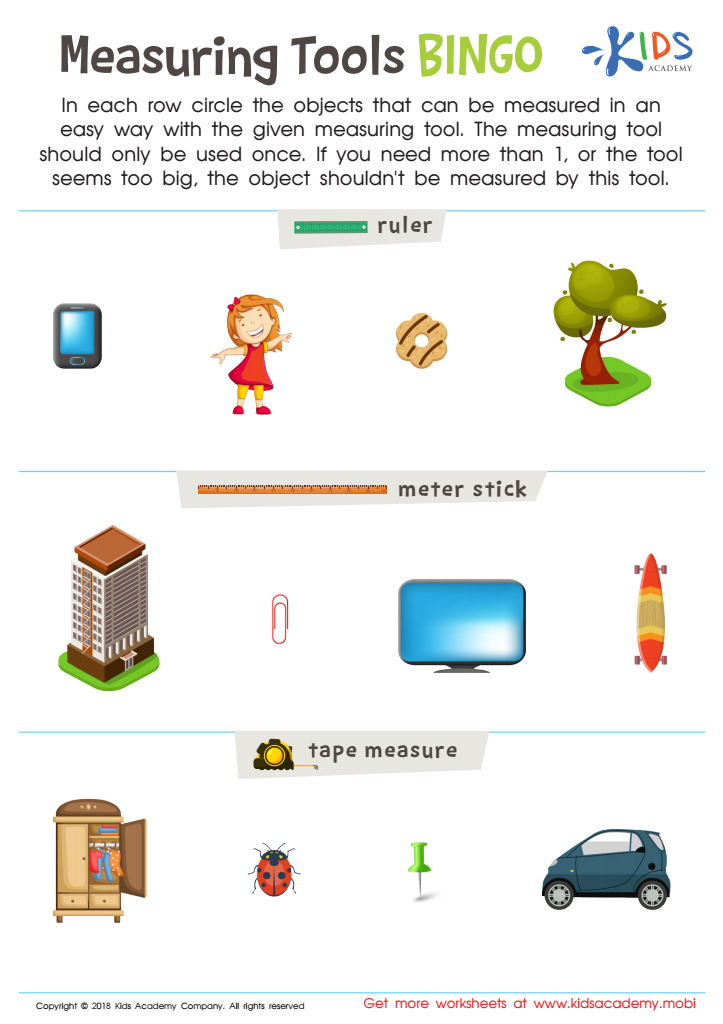
Measuring Tools Bingo Worksheet
 Assign to My Students








Enhancing vocabulary skills in math for children aged 4-7 is crucial for their overall cognitive development and future academic success. At this early age, children are building the foundational language that will support their understanding of mathematical concepts. When children learn math vocabulary—such as "add," "subtract," "equal," and "more"—it helps them articulate their understanding and enhances their ability to solve problems.
Furthermore, developing math vocabulary promotes critical thinking and facilitates communication about mathematical ideas. Parents and teachers play a key role in this process by engaging children in conversations that incorporate math language during everyday activities. For instance, discussing shapes, numbers, or measurements while cooking or playing can reinforce their learning.
Additionally, a robust math vocabulary is linked to improved performance in standardized tests as children advance in their education. It also fosters a positive attitude toward math, making it less intimidating and more enjoyable. By prioritizing math vocabulary skills, parents and teachers can help young learners develop a strong foundation that will support not only their mathematical abilities but also their overall confidence and success in school.








