
Financial literacy Math Worksheets for Ages 4-7
4 filtered results
Difficulty Level
Grade
Age
-
From - To
Subject
Activity
Standards
Introduce your children to the basics of money management with our engaging Financial Literacy Math Worksheets for Ages 4-7. Designed to build solid financial foundations, these printable worksheets incorporate fun activities, from counting coins to understanding simple transactions. Our carefully crafted exercises help children recognize and calculate different denominations while fostering essential budgeting skills. Perfect for young learners, these worksheets make financial concepts easy and enjoyable to grasp. Explore valuable math learning skills and give your kids a head start in mastering financial literacy in a playful and educational way. Empower your child with confidence in managing money today!
Favorites
With answer key
Interactive
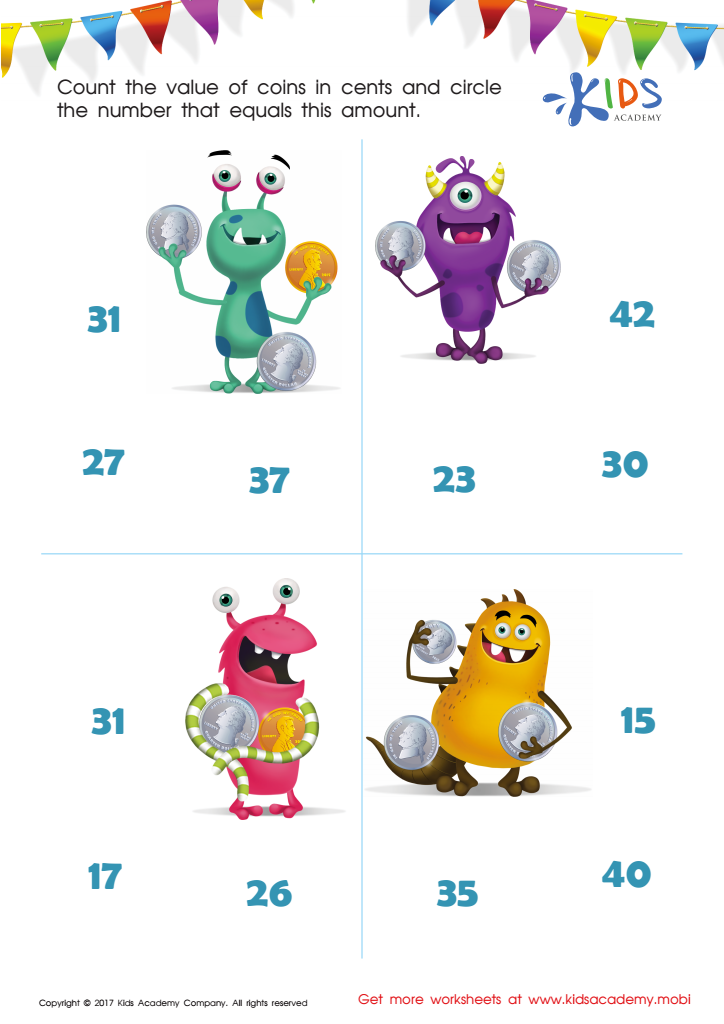
How Many Coins Money Worksheet
Have fun while counting coins: look at the monsters and count the coins in their hands. Challenge your little learners to count and write down the number of coins each one has. Enjoy the time together!
 Assign to My Students
How Many Coins Money Worksheet
Worksheet
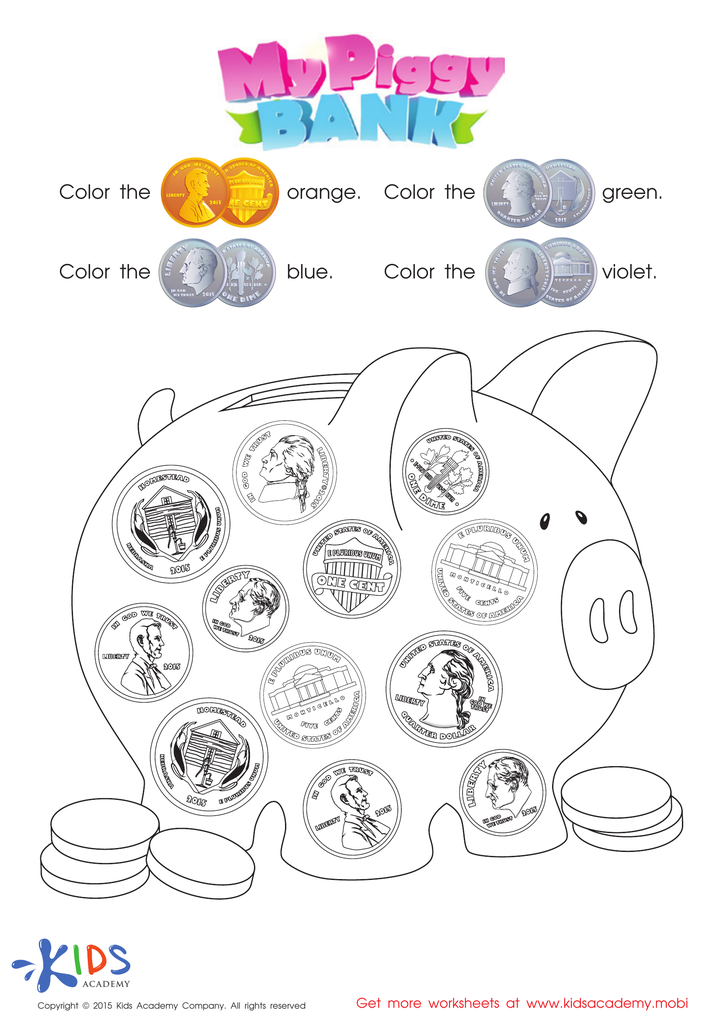
Recognizing Money Money Worksheet
Help the piggy bank by coloring its coins with Kids Academy's free money worksheets! Learn the different coins and their values with your kids. Printable worksheets are available to continue the lesson. Let's learn and have fun!
Recognizing Money Money Worksheet
Worksheet
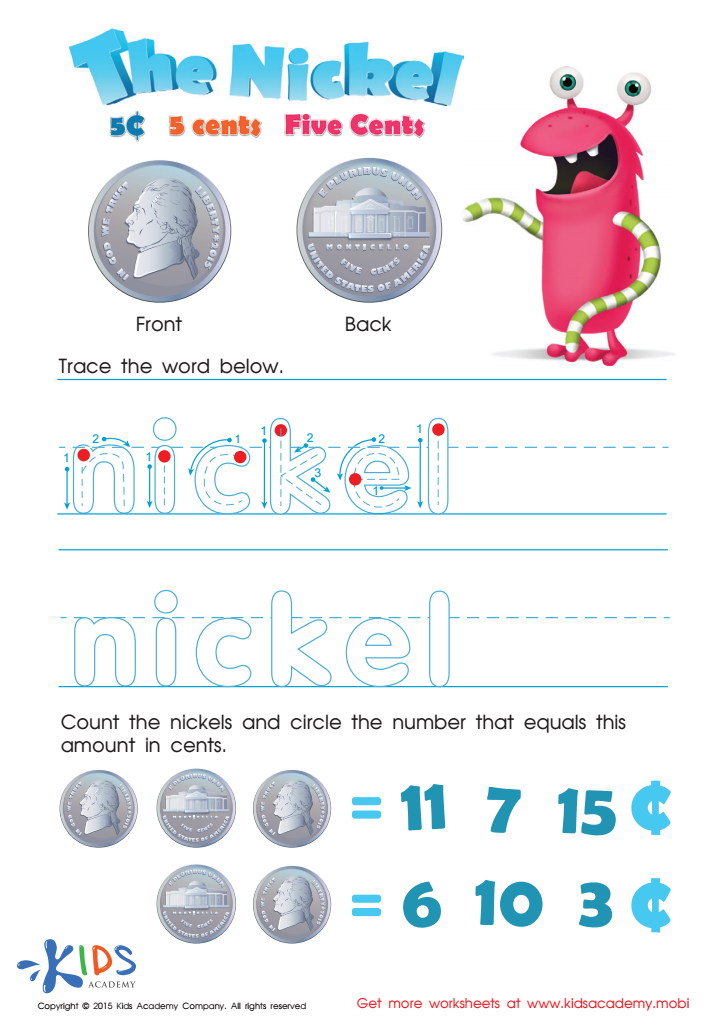
Five Cents or the Nickel Money Worksheet
Counting money games help kids make learning money fun and easy. Next up: the 5 cent coin, or nickel. Look at both sides and remember them. Then, trace the word "nickel" to help you remember. Finally, count the nickels and work out amounts in cents. Let's do this! Kids Academy helps make money learning easy and fun!
Five Cents or the Nickel Money Worksheet
Worksheet
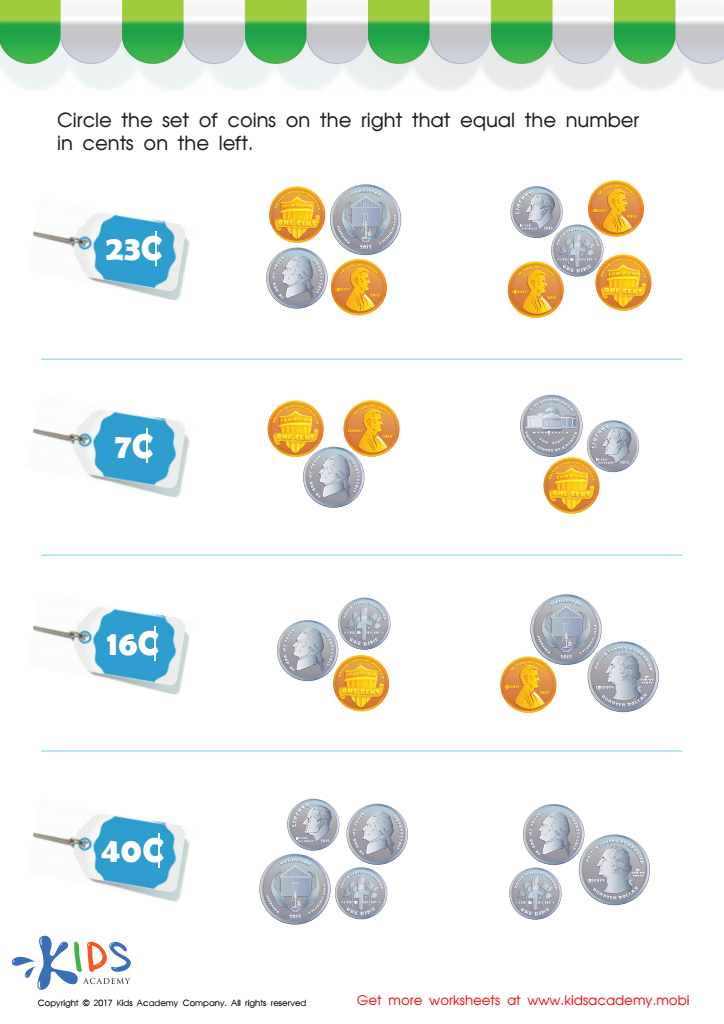
Picking the Coins You Need Money Worksheet
Let's learn to count money with Parents and Kids Academy! Investigate a real shop together: buy a globe, pencils, books, and a school bag using coins. Then, circle the coins you'll need. Visit our website for more free and fun money games for kids!
Picking the Coins You Need Money Worksheet
Worksheet
Join Kids Academy for Free
Who is primarily going to use this learning content?








Financial literacy math for children aged 4-7 is foundational for their future financial well-being and overall understanding of the world. At this early age, the basic concepts of money can be introduced in simple, engaging ways that align with children's cognitive development. By learning about counting money, recognizing coins and bills, and understanding simple transactions, young children build essential numerical and problem-solving skills.
Parents and teachers should care about integrating financial literacy math for several key reasons. First, it fosters early numeracy skills, such as counting, addition, and subtraction, which are critical for academic success and everyday life. Secondly, it cultivates a sense of responsibility and awareness about money management, helping children to appreciate the value of saving and spending wisely from a young age.
Additionally, early exposure to financial concepts can demystify the subject, making children less intimidated by financial matters as they grow older. This foundation facilitates smoother, more informed decision-making in their teenage and adult years. Integrating financial literacy into early childhood education also promotes equity by ensuring all children, regardless of background, gain essential life skills. Parents and teachers, therefore, play a crucial role in equipping children with the knowledge and habits that build financial competence and confidence for a lifetime.








