
Improves counting skills Math Worksheets for Ages 4-7
9 filtered results
Difficulty Level
Grade
Age
-
From - To
Subject
Activity
Standards
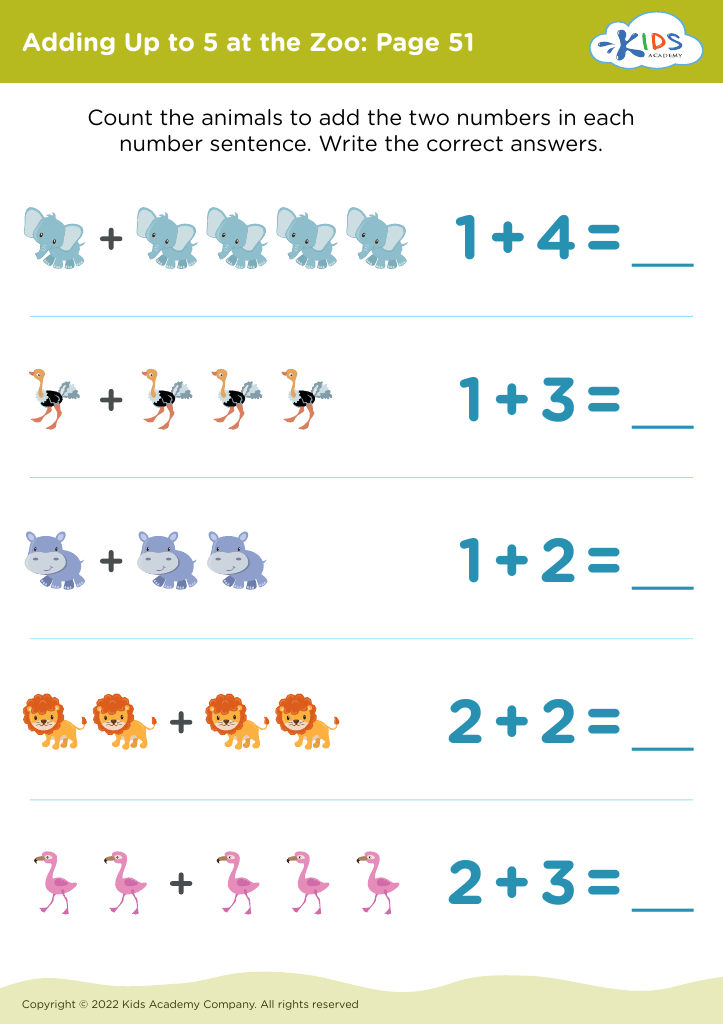
Boost your child's counting skills with our engaging math worksheets designed for ages 4-7! These interactive resources help young learners grasp the fundamentals of counting in a fun and captivating way. Our worksheets focus on essential skills, including number recognition, one-to-one correspondence, and basic addition. Each activity is crafted to build confidence and critical thinking, catering to various learning styles and paces. Perfect for homeschoolers, classroom settings, or supplementary practice at home, these worksheets provide a solid foundation for a lifelong love of math. Start your educational journey today and watch your little mathematicians thrive!
Favorites
With answer key
Interactive
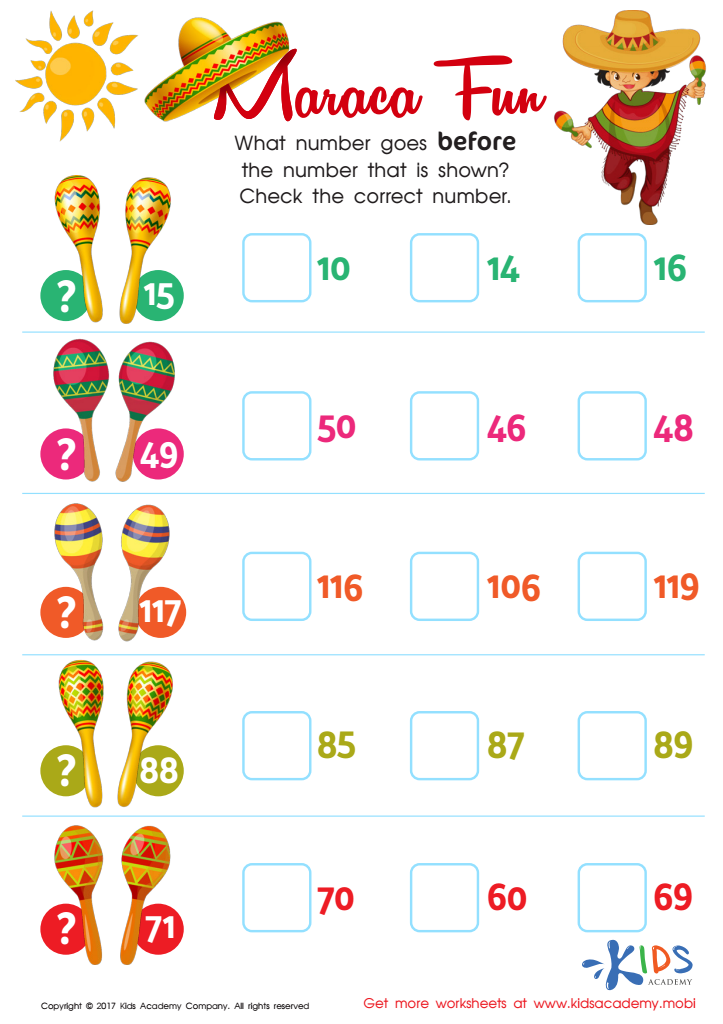
Counting: Maraca Fun Worksheet
Let your child add some Maraca fun to their math lessons by using this printable worksheet! They must figure out the numbers that come before the ones shown. Answers are provided on the other side; all your child needs to do is check the boxes with the correct numbers. Help them improve their counting and have fun along the way!
 Assign to My Students
Counting: Maraca Fun Worksheet
Worksheet
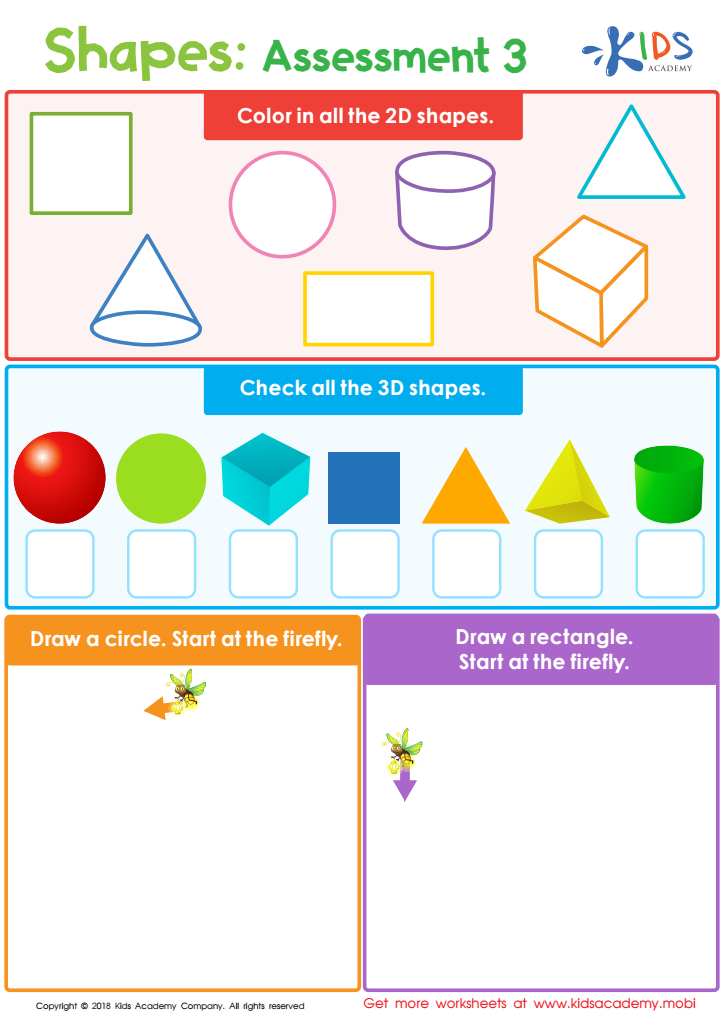
Shapes: Assessment 3 Worksheet
Shapes are everywhere! Help your students differentiate between 2D and 3D shapes. Ask them the difference between a triangle and pyramid, or a circle and a sphere. This worksheet tests their understanding of both types and is a useful assessment tool.
Shapes: Assessment 3 Worksheet
Worksheet
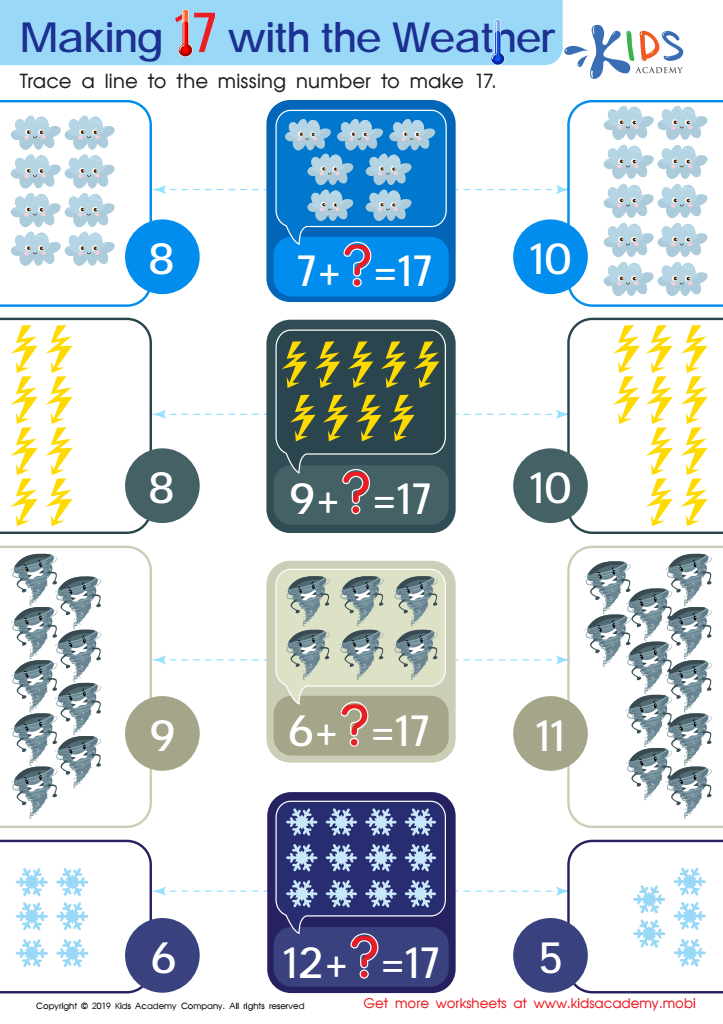
Making 17 with the Weather Worksheet
Show your kids the pictures in the worksheet and identify the weather. This exercise is to help them add simple numbers. There are 4 equations in the printout. Help them figure out the numbers to make 17, then trace a line to the missing number to complete the equation.
Making 17 with the Weather Worksheet
Worksheet
Join Kids Academy for Free
Who is primarily going to use this learning content?







Improving counting skills in children aged 4-7 is crucial for their overall mathematical development and confidence in learning. During these formative years, foundational skills are established that will influence their understanding of more complex mathematical concepts later on. Mastery of counting lays the groundwork for critical skills such as addition, subtraction, and the recognition of patterns. It enhances cognitive abilities, language development, and promotes logical thinking.
Parents and teachers play a significant role in nurturing these skills. Engaging children in counting activities, such as counting everyday objects, playing number games, or using visuals, helps make learning enjoyable and effective. It is important for children to recognize not just numbers, but how counting relates to the world around them.
Moreover, strong counting skills boost a child's confidence and willingness to engage in math, reducing anxiety toward the subject in future educational stages. This foundational proficiency ensures children are prepared to tackle more challenging mathematical tasks as they progress through school. By prioritizing counting skills, parents and teachers can foster a positive attitude toward math and lay a solid groundwork for lifelong learning, ultimately shaping successful learners both academically and in everyday life.








