Problem Solving Math Worksheets for Ages 4-7 - Page 2
32 filtered results
-
From - To

Help the Bee Find 16 Flowers Worksheet
 Assign to My Students
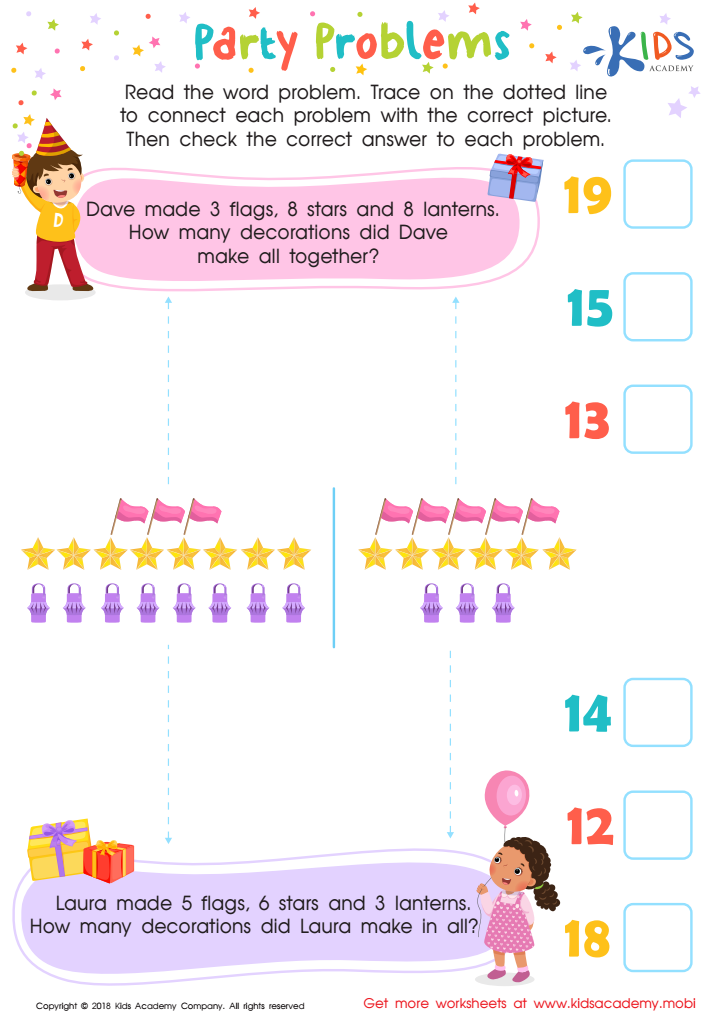
Party Problems Worksheet
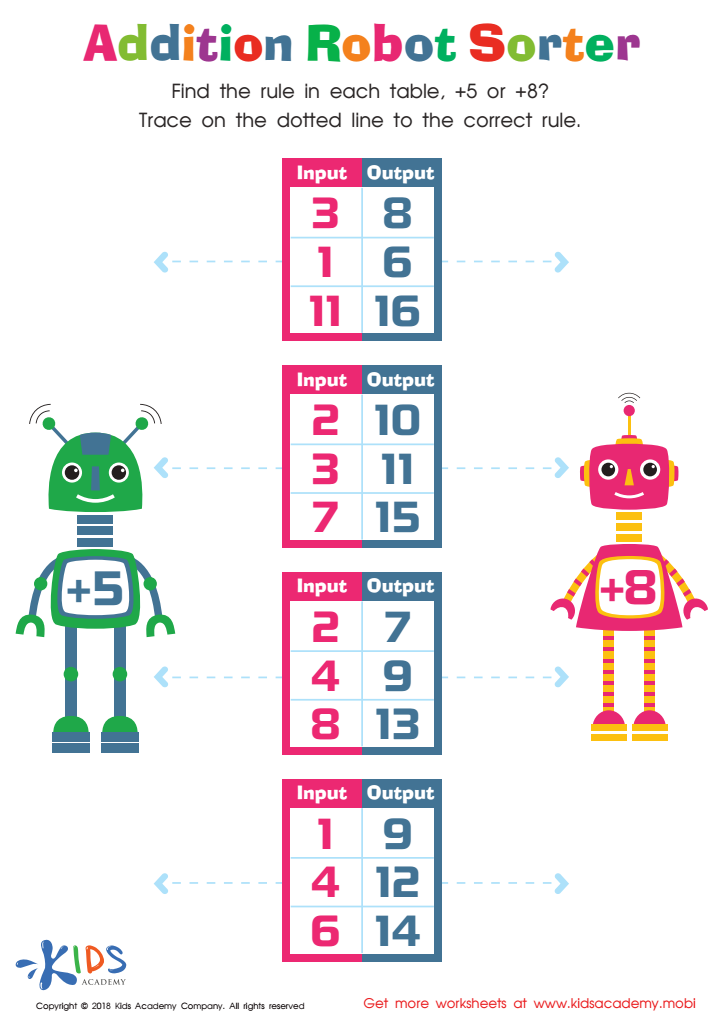
Addition Robot Sorter Worksheet
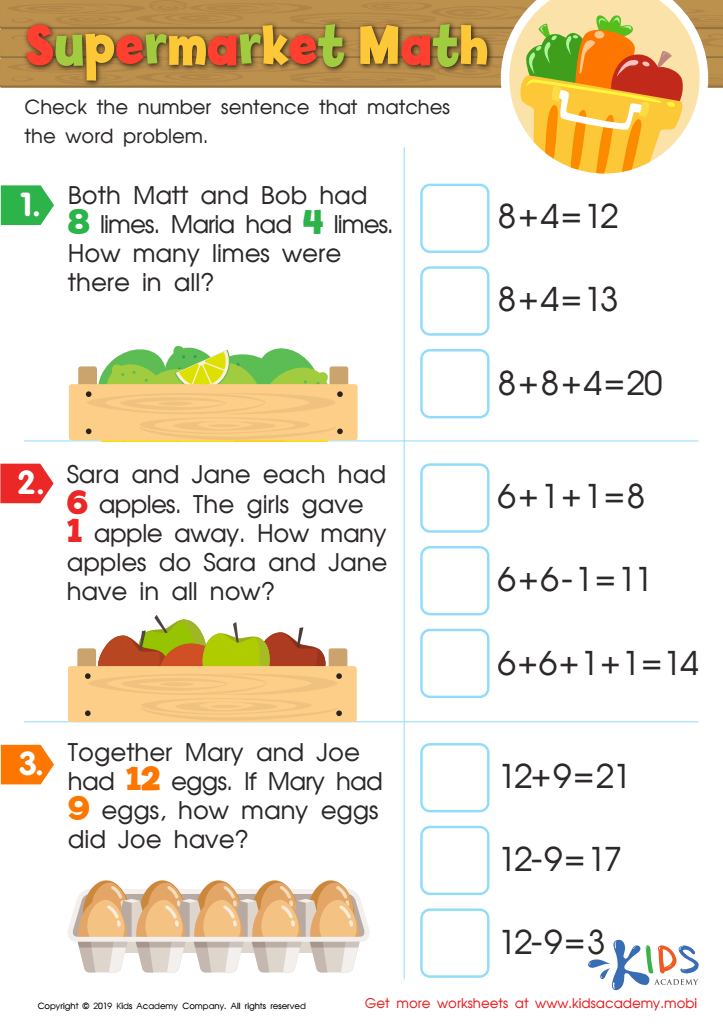
Supermarket Math Worksheet

Ann Takes her Friends Home Worksheet








Problem-solving math for ages 4-7 is crucial for early development because it lays the foundation for critical thinking and analytical skills. At this age, children are naturally curious and eager to explore their environment, making it an optimal time to introduce mathematical concepts in a fun and engaging manner. Exploring problem-solving teaches them to think logically and tackle challenges, essential traits not only in mathematics but in everyday life.
Moreover, it fosters intellectual independence. Children learn to approach problems from various angles, making connections and discovering multiple solutions to reach a conclusion. This nurturing of creativity and flexibility in thinking is vital as they progress through their education.
Additionally, developing problem-solving skills promotes collaboration and communication, as children often engage in group activities where they discuss and share strategies. Teachers and parents play an essential role in guiding these interactions, enhancing social development alongside cognitive growth.
Ultimately, encouraging children to explore problem-solving math can spark a lifelong interest in mathematics and science, guiding them toward success in higher education and future careers. By prioritizing these skills early on, parents and teachers help build resilient learners who are equipped to navigate the complexities of the modern world.








