Understanding adjectives Math Worksheets for Ages 4-7
6 filtered results
-
From - To
Discover our collection of engaging "Understanding Adjectives" Math Worksheets designed for children ages 4-7! These interactive worksheets help young learners grasp the concept of adjectives while sparking their interest in math. Through relatable visuals and fun activities, kids will explore various adjectives to describe shapes, sizes, and quantities, making learning an enjoyable experience. Perfect for parents and teachers alike, these resources promote essential language skills alongside early math development. Delight your child with these vibrant worksheets that combine creativity and learning, ensuring essential growth in both literacy and numeracy. Start your educational adventure today!
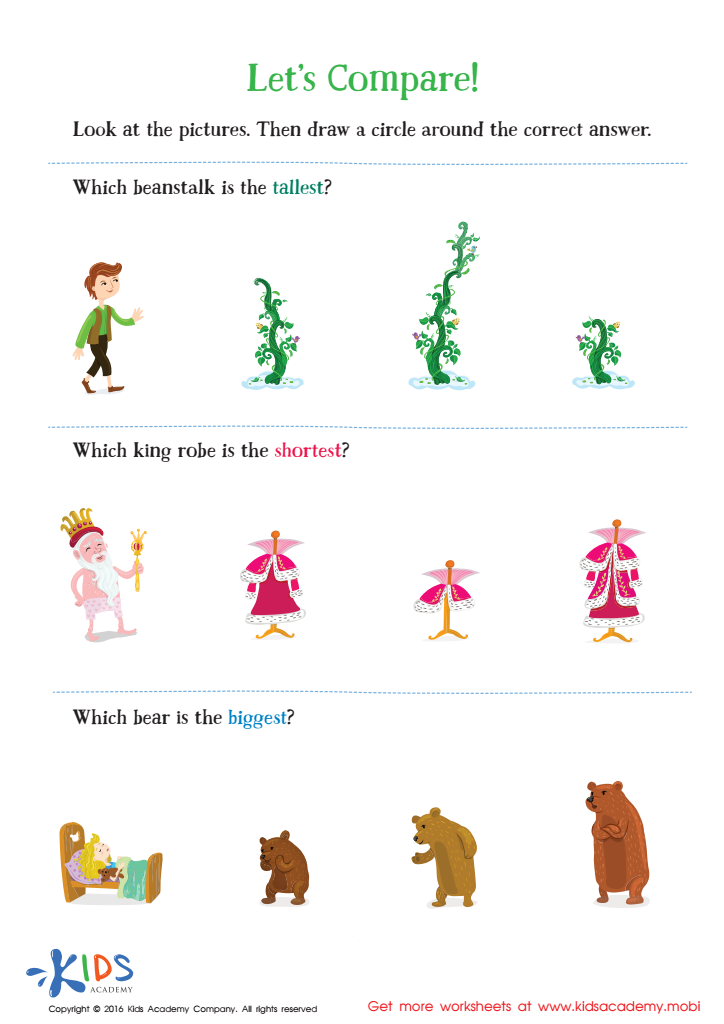
Fairy Tale Worksheet: Let's Compare
 Assign to My Students








Understanding adjectives in math is crucial for children aged 4-7 as it enhances both their mathematical and linguistic skills. Adjectives play a significant role in helping young learners describe and categorize objects, which is foundational for their comprehension of mathematical concepts. When children learn to identify adjectives, they can better articulate sizes, shapes, colors, and quantities during math activities. For example, describing a "large red circle" or a "small blue triangle" helps strengthen their abilities to compare and contrast, fostering a deeper understanding of orders and classifications.
Furthermore, adjectives encourage critical thinking and problem-solving skills. When students categorize objects based on their adjectives, they engage in sorting, grouping, and counting, which are all essential math processes. This hands-on approach enriches their learning and connects language and math in an interactive manner.
By incorporating adjectives into math lessons, parents and teachers can create a rich, engaging learning environment that motivates children. This integration also helps bridge the gaps between linguistic proficiency and mathematical understanding, laying a solid foundation for future academic success. Supporting children in grasping adjectives in math can lead to improved communication skills and a heightened enthusiasm for learning across all subjects.








