Understanding habitats Math Worksheets for Ages 4-7
3 filtered results
-
From - To
Explore "Understanding Habitats" Math Worksheets for Ages 4-7 at Kids Academy! Our engaging worksheets are specially crafted to combine math skills with the fascinating world of animal habitats. Through fun activities and colorful illustrations, young learners will enhance their counting, addition, and subtraction abilities while discovering different ecosystems. Perfect for early grade students, these worksheets offer an interactive way to reinforce foundational math concepts. Help your child build a solid math foundation and foster a love for nature simultaneously. Visit Kids Academy now to make math learning more enjoyable and meaningful.
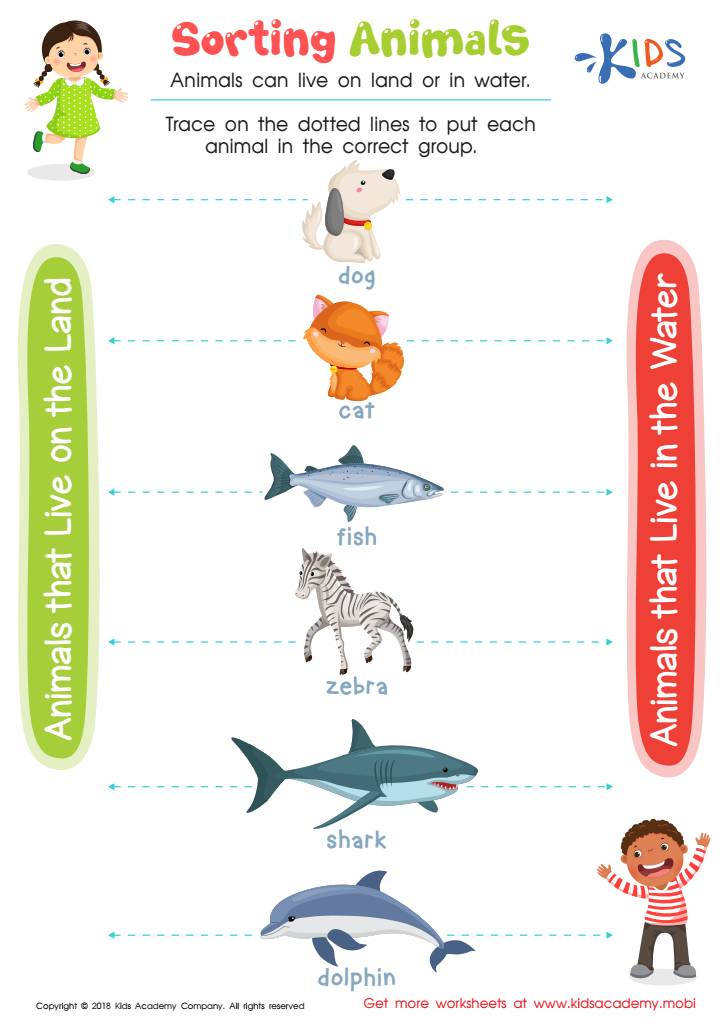
Sorting Animals Worksheet
 Assign to My Students
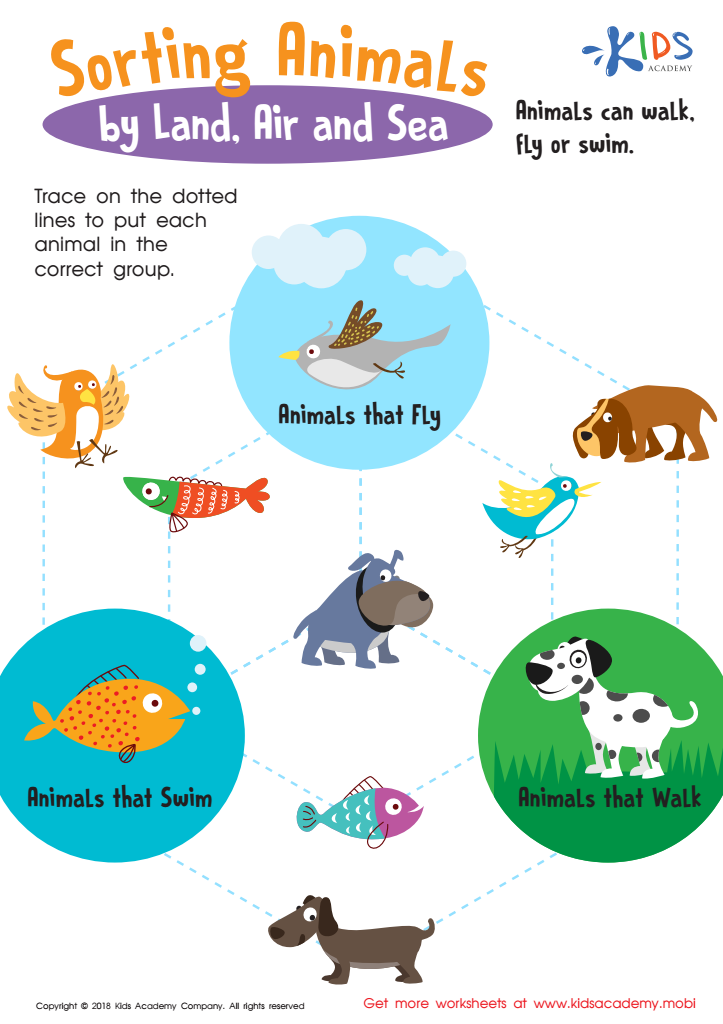
Sorting Animals by Land, Air and Sea Worksheet








Understanding habitats and math for children aged 4-7 is crucial for several reasons. First, learning about habitats helps young children understand the world around them, fostering an appreciation for nature and the environment. It teaches them about the different places where animals and plants live, how these organisms interact with their surroundings, and the important balance that exists in ecosystems. This foundational knowledge encourages curiosity, critical thinking, and responsible behavior towards nature as they grow older.
Incorporating math into this learning is equally important. Early math skills are fundamental for academic success in later years. Simple activities that involve counting the number of different animals, measuring distances in nature walks, or categorizing plants and animals by type can lay the groundwork for more complex mathematical concepts.
By integrating math with learning about habitats, children gain practical and meaningful applications of math in the real world. It helps build their problem-solving skills and logical thinking. Furthermore, such hands-on and tactile learning experiences are immensely valuable at this age, where engaging a child's natural sense of wonder and play can significantly enhance their overall learning and development. Therefore, focusing on understanding habitats and basic math principles fosters well-rounded growth in young children.








