Understanding more/less concept Math Worksheets for Ages 4-7
3 filtered results
-
From - To
Boost your child's math skills with our engaging "Understanding More/Less Concept" worksheets designed for ages 4-7. These fun, colorful sheets help young learners grasp essential math concepts by comparing quantities. Through diverse activities, including counting objects and recognizing numbers, kids practice identifying which group has more or less. Aligned with early childhood educational standards, these worksheets enable pre-K to first-grade students to develop critical thinking and problem-solving skills. Perfect for classroom or at-home use, our resources ensure learning remains enjoyable. Give your child a strong foundation in math with Kids Academy!
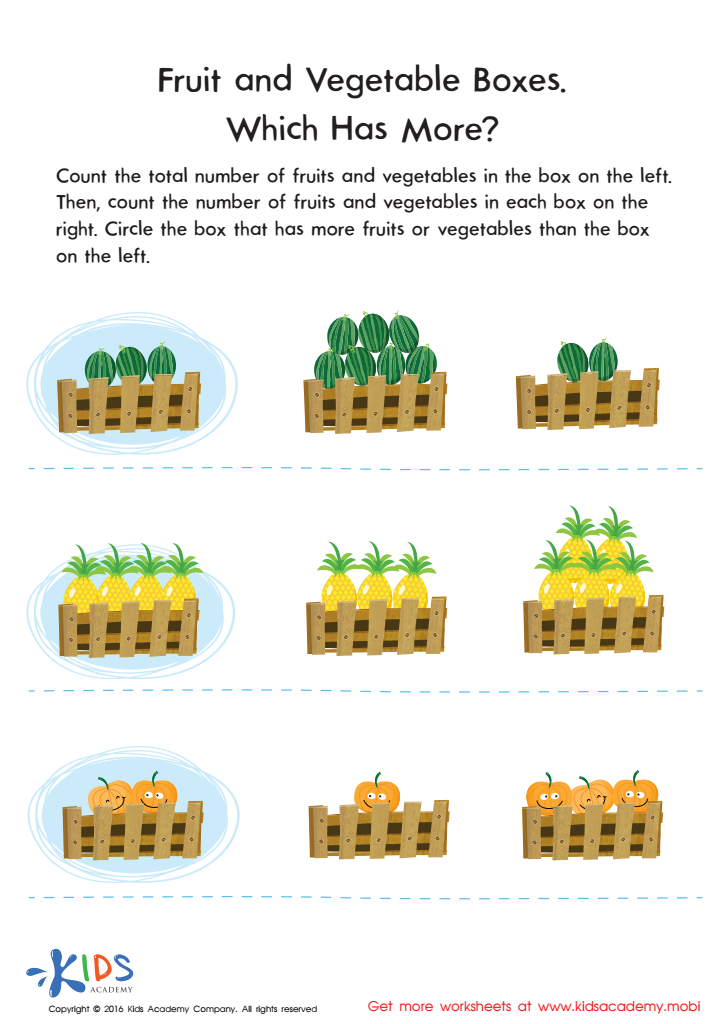
Which Has More? Size Worksheet
 Assign to My Students
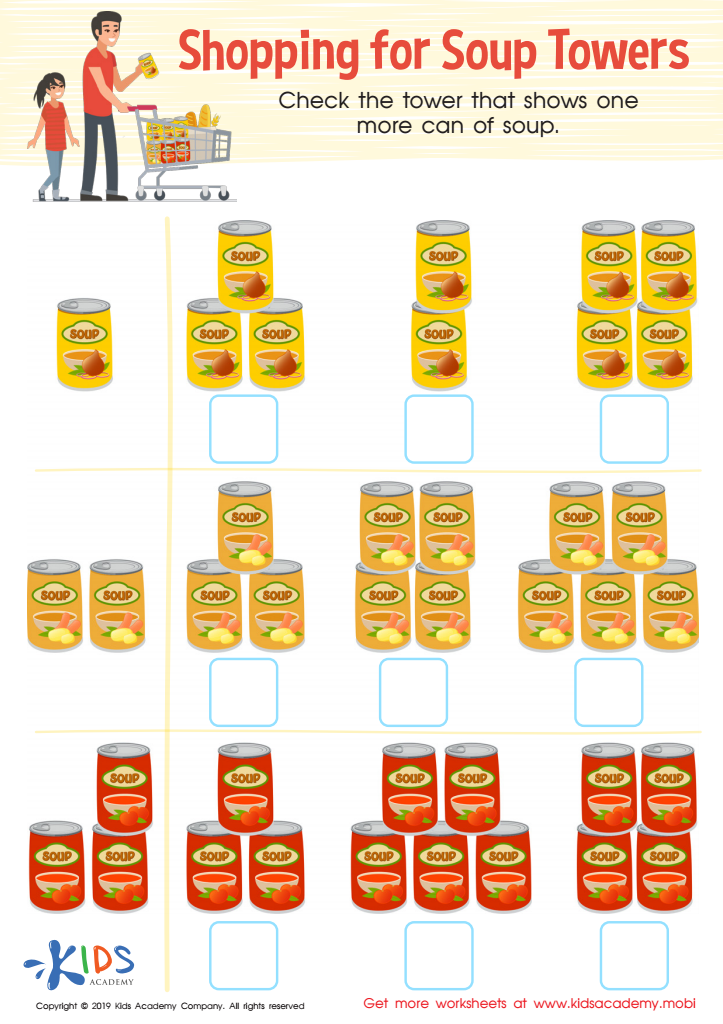
Soup Towers Worksheet
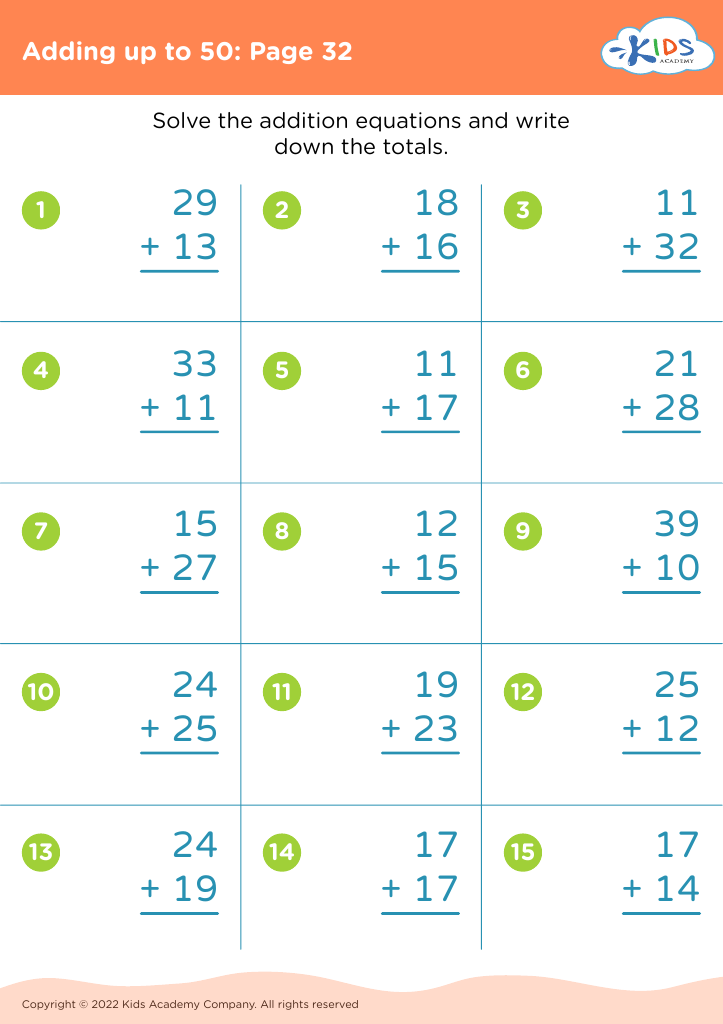








Understanding the more/less concept in math is fundamental for children aged 4-7, serving as a cornerstone for their future mathematical learning. At this early developmental stage, children are naturally curious and extremely receptive to absorbing new concepts. Teaching them about more and less helps them grasp the basics of quantities and numbers, fostering essential cognitive skills.
When parents and teachers emphasize understanding this concept, they are laying the groundwork for mathematical proficiency. Recognizing differences in quantities aids in the comprehension of number relationships, counting skills, and eventually arithmetic operations like addition and subtraction. For instance, if a child understands that 5 is more than 3, they are better prepared to add 2 to 3 and expect a greater number.
Furthermore, the more/less concept enhances problem-solving and critical thinking abilities. It encourages young children to make comparisons, develop reasoning skills, and understand the relationships between objects or groups. These skills are not confined to mathematics alone; they translate to everyday situations and other academic areas as well.
In essence, focusing on the more/less concept equips children with a robust foundation for future learning, nurtures their cognitive development, and strengthens their analytical abilities, making it a crucial aspect of early childhood education.








