Visual fraction representation Math Worksheets for Ages 4-7
3 filtered results
-
From - To
Unlock the magic of learning with our Visual Fraction Representation Math Worksheets for Ages 4-7! Designed to make fractions fun and accessible, our engaging worksheets utilize colorful visuals and hands-on activities that cater to young learners. Each worksheet offers a simple, interactive approach to understanding halves, thirds, and quarters, building strong foundational skills in a playful manner. Perfect for both classroom and home use, our fraction worksheets enhance mathematical understanding through clear, easy-to-follow illustrations and exercises, fostering a love for math from an early age. Boost your child's confidence and skills with our innovative learning tools today!
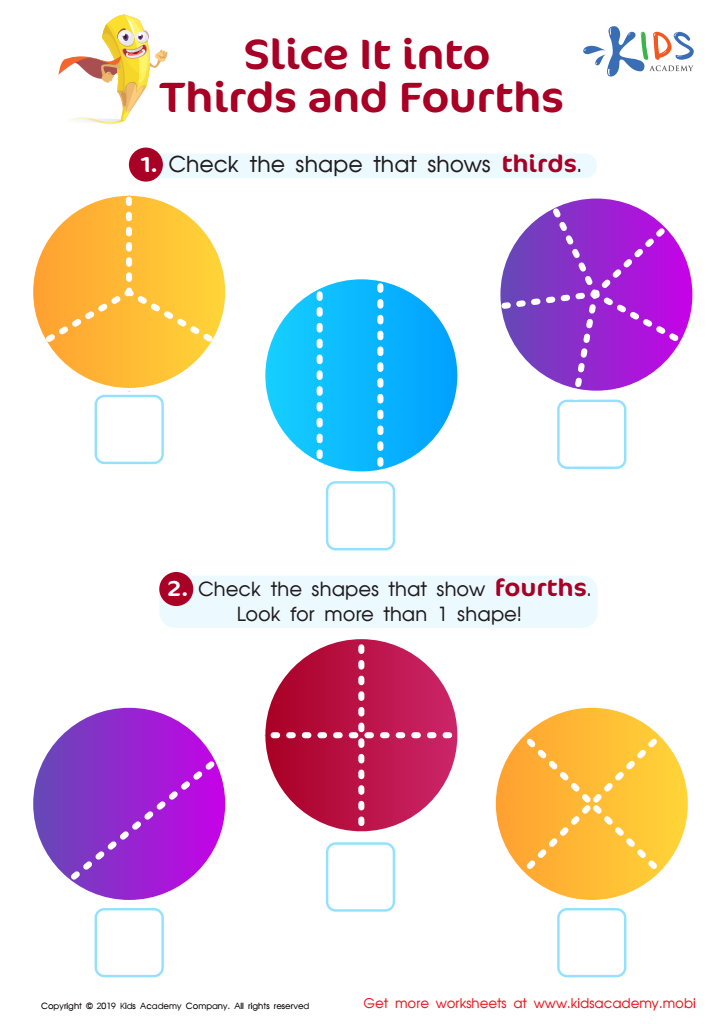
Slice in Thirds Fourths Worksheet
 Assign to My Students
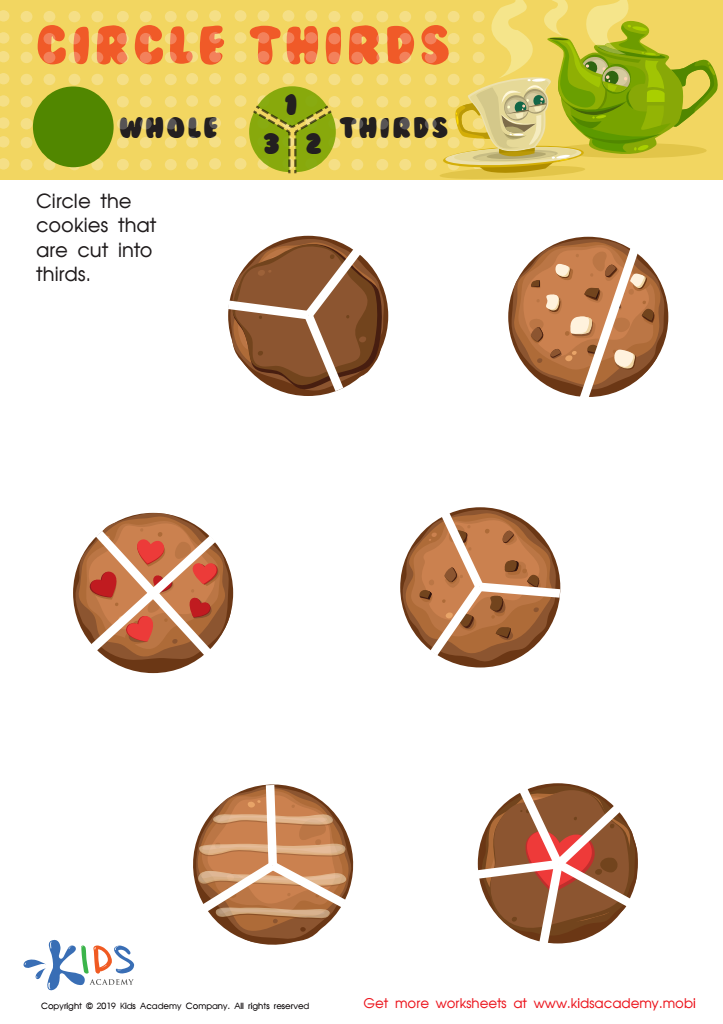
Circle Thirds Worksheet






Visual fraction representation is an essential concept in early childhood education, especially for ages 4-7, as it lays the foundation for numeracy skills in a tangible and engaging way. During these formative years, children are naturally visual and experiential learners. They grasp new ideas more effectively when they can see, touch, and manipulate objects, making visual fraction representation a powerful tool in their learning arsenal.
Fractions can be an abstract concept for young learners, and using visual aids like pie charts, fraction bars, and puzzles enables children to concretely understand how a whole can be divided into parts. This visual and hands-on approach helps demystify fractions, turning a potentially daunting topic into one that's accessible and fun. When children can physically see parts of a whole, it reinforces the concept much more solidly than through rote memorization or numbers alone.
Furthermore, mastering this concept early supports critical thinking and problem-solving skills. As students progress in their education, a firm grasp of fractions is crucial for more advanced mathematics like division, algebra, and geometry. By caring about and investing in visual fraction representation now, parents and teachers set young learners on a path to mathematical literacy and confidence, equipping them with the tools to approach future challenges proactively and thoughtfully.








