Interpreting data Measurement Worksheets for Ages 4-7
4 filtered results
-
From - To
Discover our engaging "Interpreting Data Measurement Worksheets" designed specifically for children aged 4 to 7. These interactive worksheets introduce young learners to the basics of data interpretation through fun activities tailored to their developmental stage. By exploring simple charts, graphs, and visual data, children enhance their analytical skills while enjoying colorful illustrations and relatable themes. Each worksheet promotes problem-solving and critical thinking, making learning both effective and enjoyable. Perfect for the classroom or at home, our resources support early math education and set the foundation for future success in interpreting essential data. Start your child's journey into data literacy today!
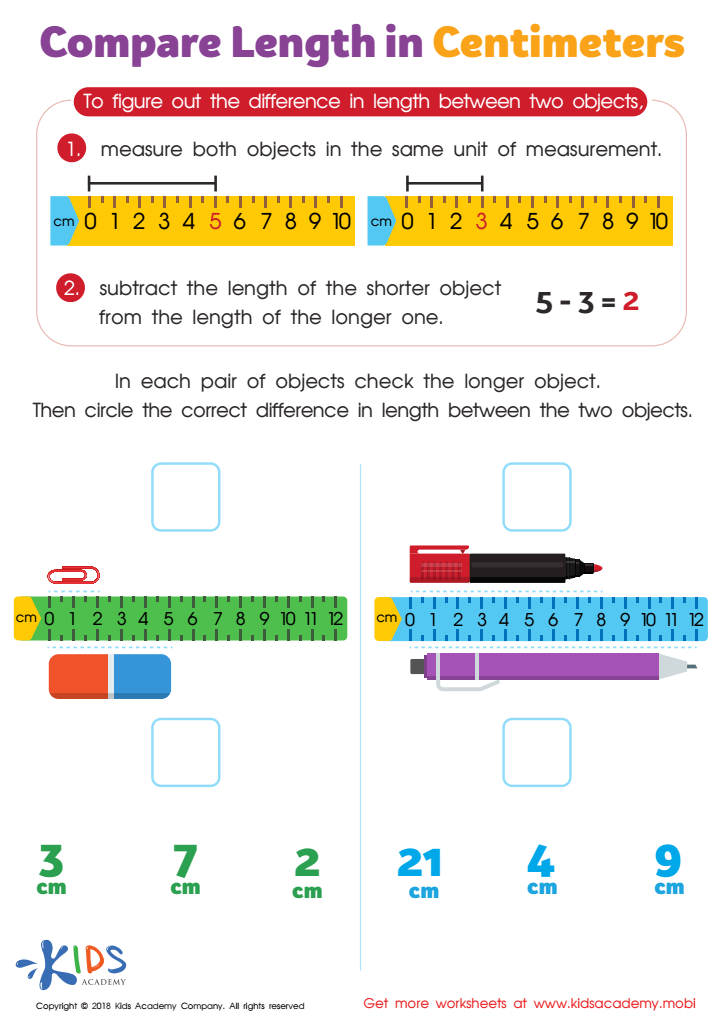
Compare Length in Centimeters Worksheet
 Assign to My Students
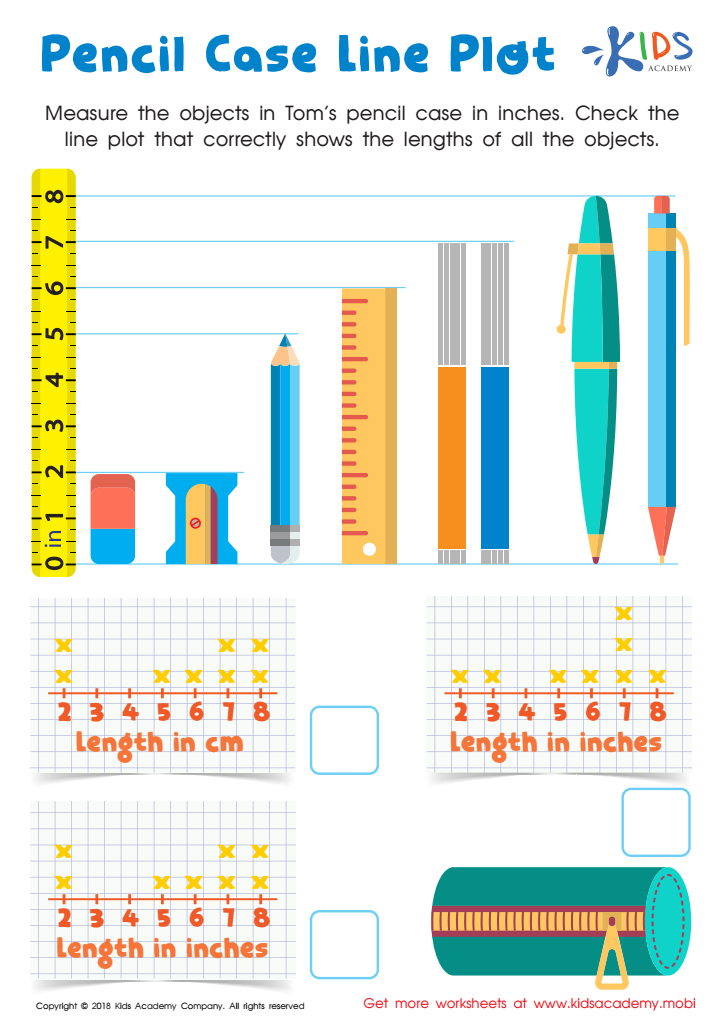
Pencil Case Line Plot Worksheet
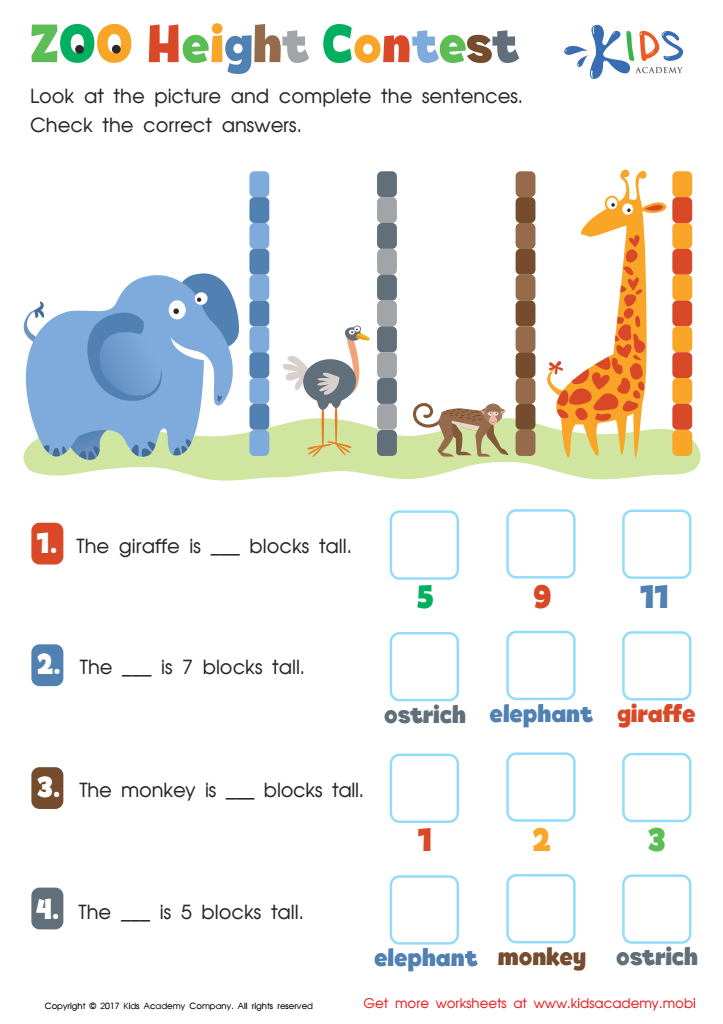
Zoo Height Contest Worksheet
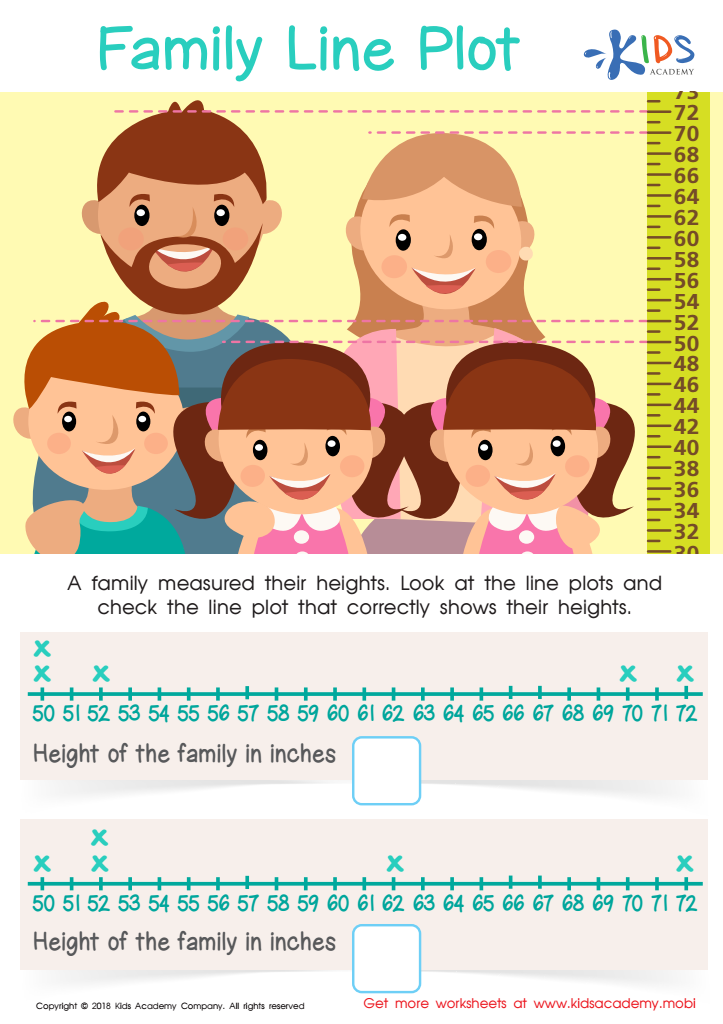
Family Line Plot Worksheet








Interpreting data measurement is crucial for parents and teachers of children ages 4-7 because it forms a foundational skill for lifelong learning. At this age, children are naturally curious and eager to understand their world, making it an ideal time to introduce basic data concepts. Engaging with measurement—be it through comparing heights, weighing objects, or counting items—enhances their observational and analytical skills.
When parents and teachers focus on data interpretation, they are fostering critical thinking abilities that empower children to make informed decisions and solve everyday problems. Understanding measurement encourages children to develop a sense of number sense, spatial reasoning, and prediction, laying the groundwork for future mathematical understanding.
Moreover, data measurement activities promote collaboration and communication among peers, aiding in social development. Children learn to articulate their findings, listen to others, and accept different perspectives—all vital social skills.
Ultimately, caring about data measurement equips children with the tools they need for academic success and encourages a love for learning that can last a lifetime. By nurturing these skills early on, we set the stage for informed learners who are capable of critical thought in an increasingly data-driven world.








