Filters

6 filtered results

Clear all filters
Favorites
With answer key
Interactive

6 filtered results

Difficulty Level

Grade


Discover engaging "Animal Recognition Numbers 0–10 Worksheets" designed for children ages 4-7! These fun and colorful worksheets combine the excitement of animal identification with essential early math skills. Your young learners will enjoy counting, recognizing, and associating numbers with various animals. Our user-friendly activities promote cognitive development, enhance number recognition, and encourage playful learning. With bright illustrations and interactive tasks, children will not only learn to identify numbers 0 through 10 but also develop a love for animals. Perfect for classroom settings, homeschooling, or supplemental practice at home, these worksheets provide a joyful learning experience for early learners!

Check out this FREE Trial Lesson on Numbers 0–10 for age 4-7!

Farm Animals and Pets

Favorites
With answer key
Interactive
  • 4-7
  • Animal recognition
  • Numbers 0–10
Counting Pets Worksheet

Counting Pets Worksheet

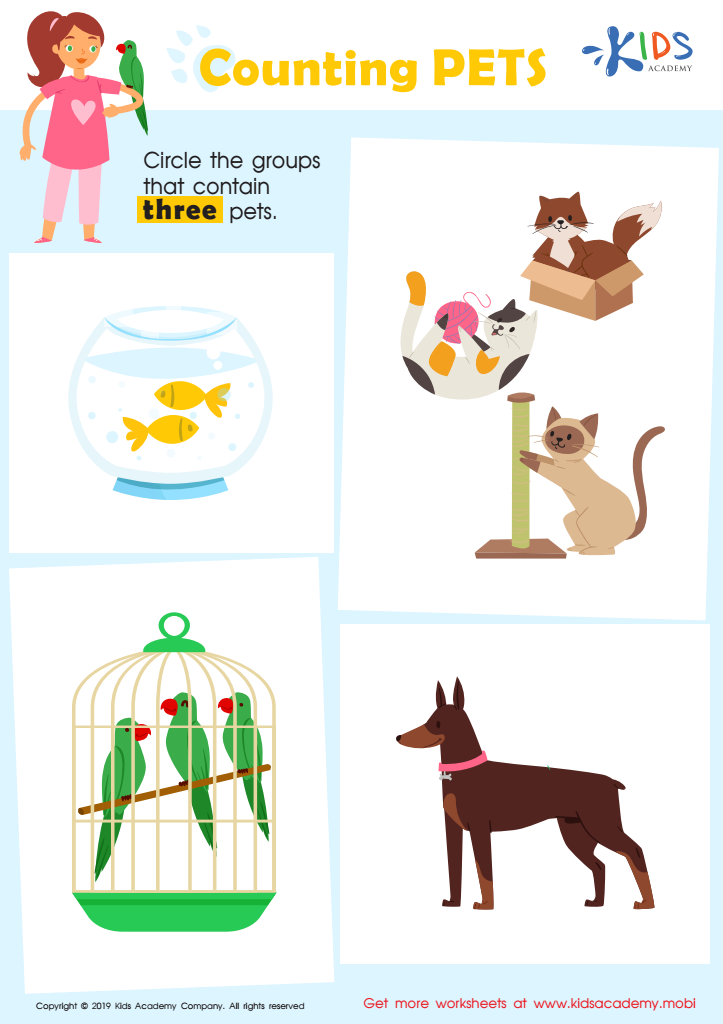
Kids adore their pets, making this free pet counting worksheet the perfect way to combine something they love with math skills. They'll count the number of pets, circle the pictures with three pets, and use one-to-one picture representation to help. This exercise will cultivate their learning and reinforce their love of animals!
Counting Pets Worksheet
Worksheet
Counting Sea Animals Worksheet

Counting Sea Animals Worksheet

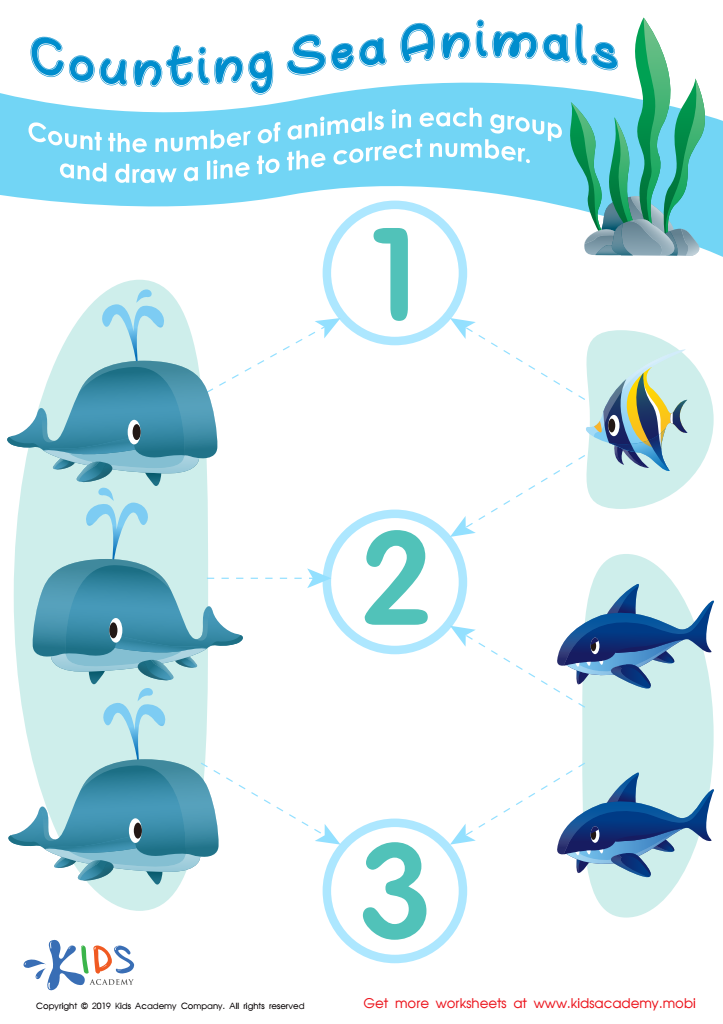
Kids adore sea creatures for their captivating, unknown nature. Let them use this free worksheet to practice counting, where they match numbers to groups of animals. Through traceable lines, they'll easily connect numbers to sea creatures and learn math with vibrant, underwater fun!
Counting Sea Animals Worksheet
Worksheet
Dot to Dot Numbers 1-10

Jungle Counting Connect Dots Worksheet
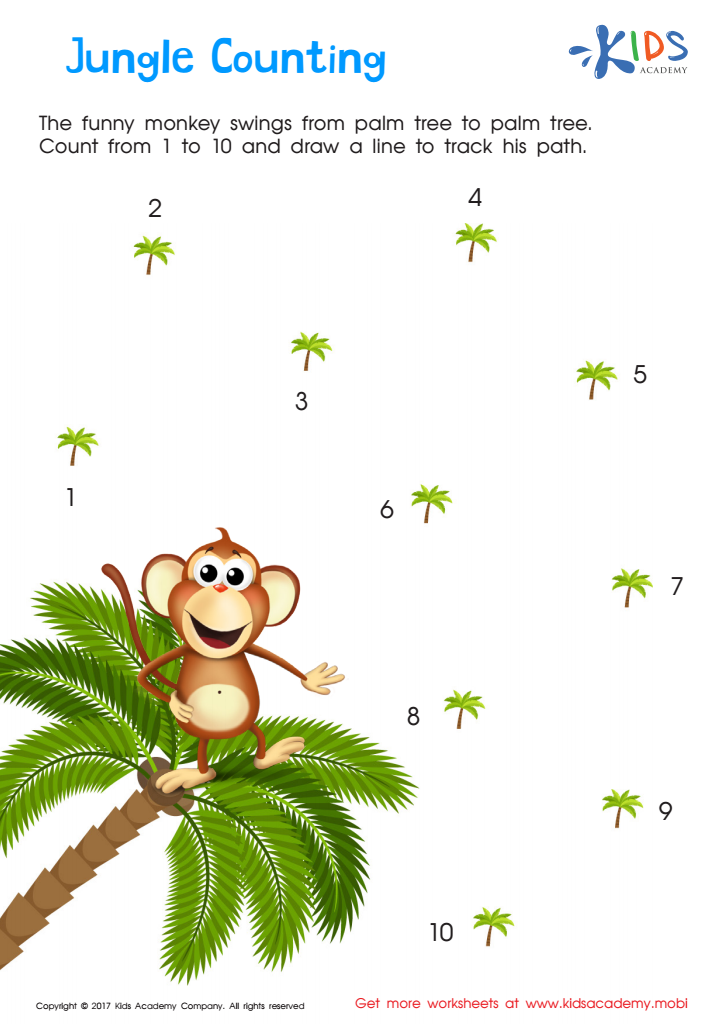
Help your child count from 1-10 and practice problem solving skills with this dot to dot worksheet. Your child will enjoy helping the cute monkey swing from tree to tree while honing their math skills. Let them have a jungle-themed counting adventure!
Jungle Counting Connect Dots Worksheet
Worksheet
Count and Match: Feed the Animals Worksheet

Count and Match: Feed the Animals Worksheet

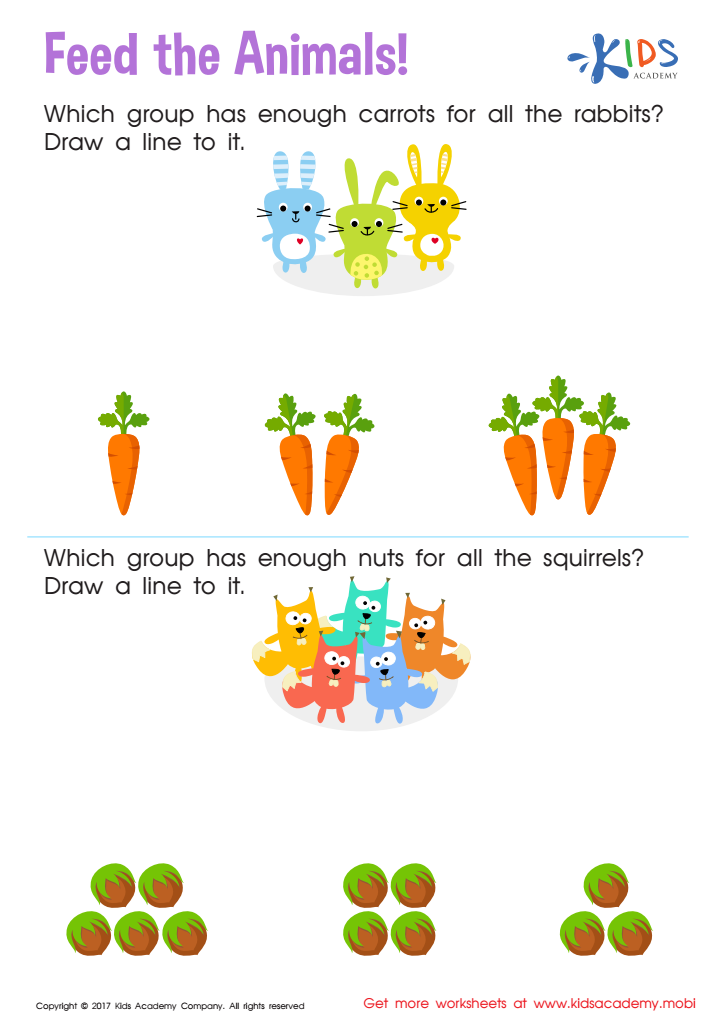
Learning and growing involves more than just numbers, phonics and comparison. This Feed the Animals worksheet helps kids to exercise their reasoning skills. They must work out how many rabbits and carrots there are, and then repeat the process for the squirrels. This encourages problem solving and counting skills.
Count and Match: Feed the Animals Worksheet
Worksheet
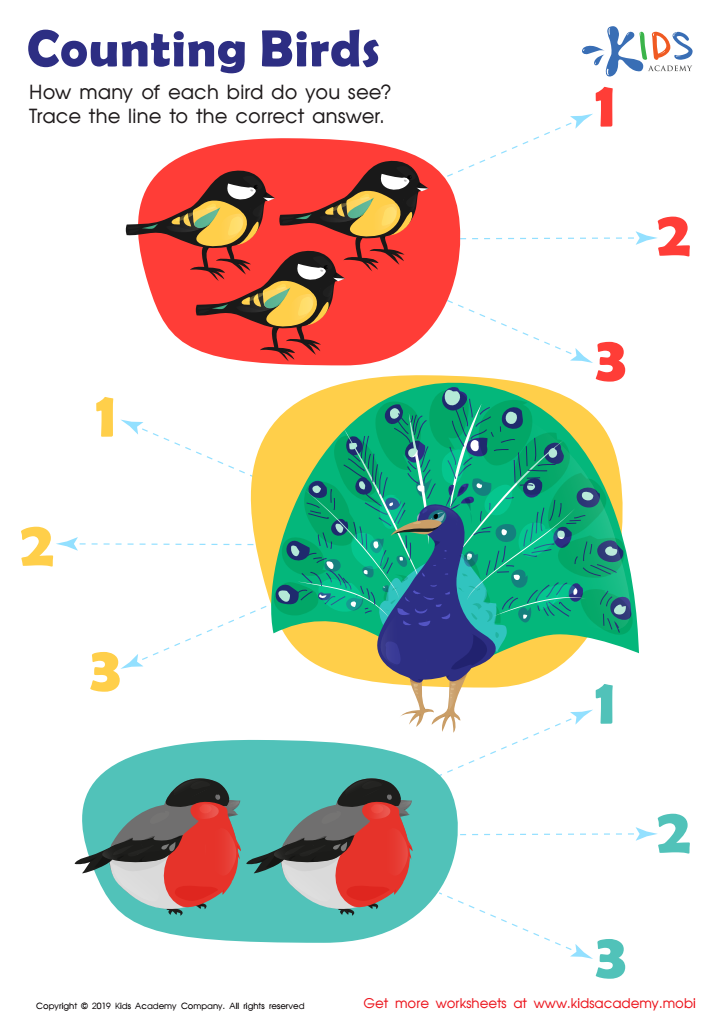
Counting Birds Worksheet

Counting Birds Worksheet

Kids love counting! With each number they learn, they can make a one-to-one representation with an item. The more practice they get, the better. Try this counting worksheet with traceable lines, to give your children practice and work on their fine motor skills. They will enjoy connecting the picture to the right number, and will feel like mathematicians with each success!
Counting Birds Worksheet
Worksheet
Counting Farm Animals Worksheet


Counting Farm Animals Worksheet

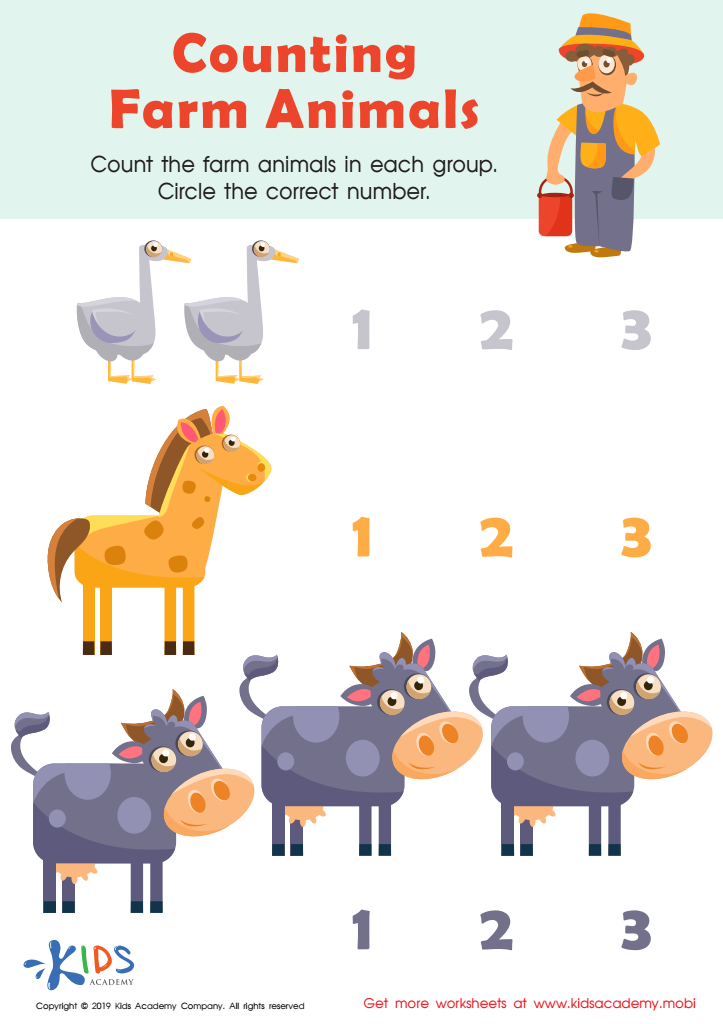
Kids love farms! That's why this free farm animals counting worksheet is great for building number sense and counting skills. Have your young mathematician count the pictures, then circle the corresponding number. It's a fun and meaningful way to practice counting.
Counting Farm Animals Worksheet

Worksheet


Animal recognition numbers 0–10 for children aged 4-7 are crucial for several reasons. First, they introduce early numeracy skills in a fun and engaging way. Children are naturally curious about animals, and by connecting numbers to different animals, they can better understand the concepts of counting and quantity.

Moreover, using animals helps children develop cognitive skills. Each animal can represent a specific quantity, allowing visual learners to see and feel how numbers work in a tangible and relatable context. This method supports strong associations between numerals and their meanings, which is foundational for future math skills.

Additionally, incorporating animals can foster emotional development. Children often form connections with animals, and integrating these elements into learning can boost enthusiasm and motivation. It helps create a positive learning environment, reducing anxiety around math concepts and encouraging playful exploration.

Lastly, this approach supports social skills and teamwork if done in group settings. Collaborative activities involving animal recognition and counting can enhance peer interactions and communication. Overall, prioritizing animal recognition from 0-10 not only aids in academic success but also nurtures emotional and social development in young learners.