Addition skills Subtraction Worksheets for Ages 4-7
7 filtered results
-
From - To
Introduce young learners to the dynamic world of math with our engaging Addition and Subtraction Worksheets for ages 4-7. Professionally crafted to foster foundational numeracy skills, these worksheets blend fun and education, guiding children through simple addition and subtraction problems. Age-appropriate exercises ensure that your little ones develop confidence and competence in handling numbers, enhancing their arithmetic abilities effectively. Ideal for preschool to early elementary students, these worksheets are perfect for both classroom use and home practice, paving the way for a strong mathematical foundation. Let learning become an enjoyable journey with our thoughtfully designed resources.
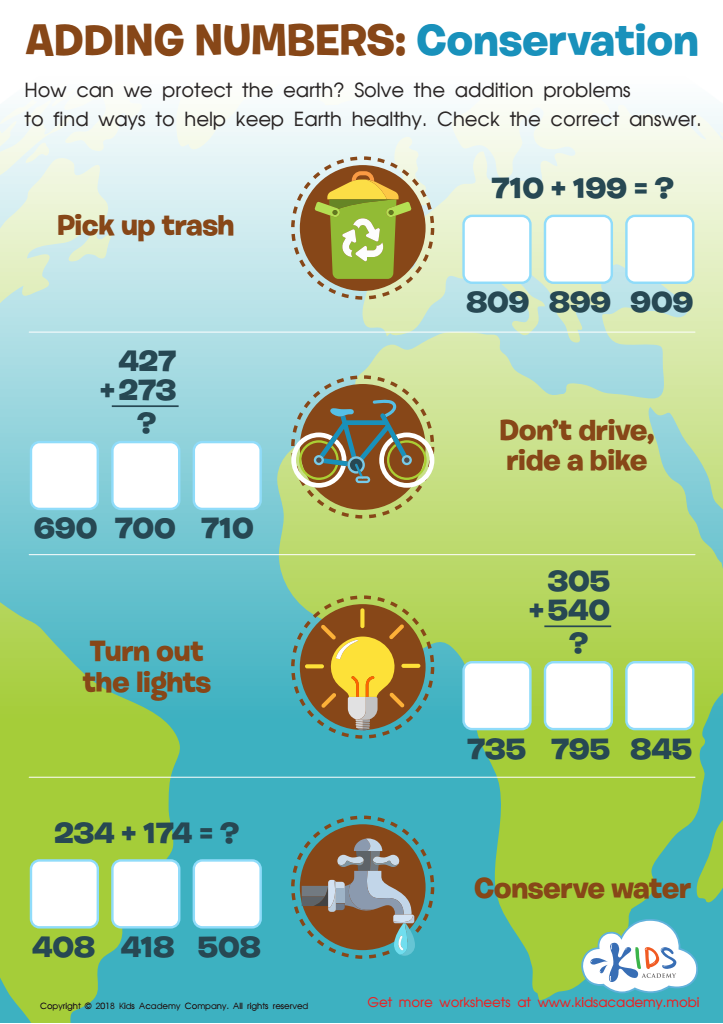
Adding Numbers: Conservation Worksheet
 Assign to My Students
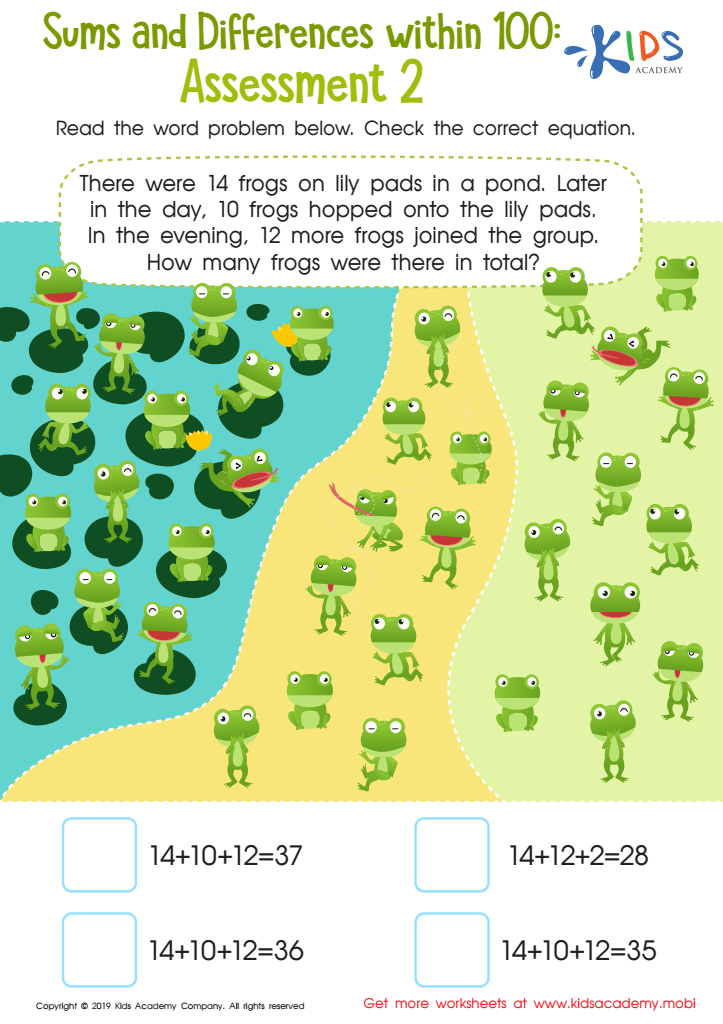
Sums and Differences Within 1 - Assessment 2 Worksheet
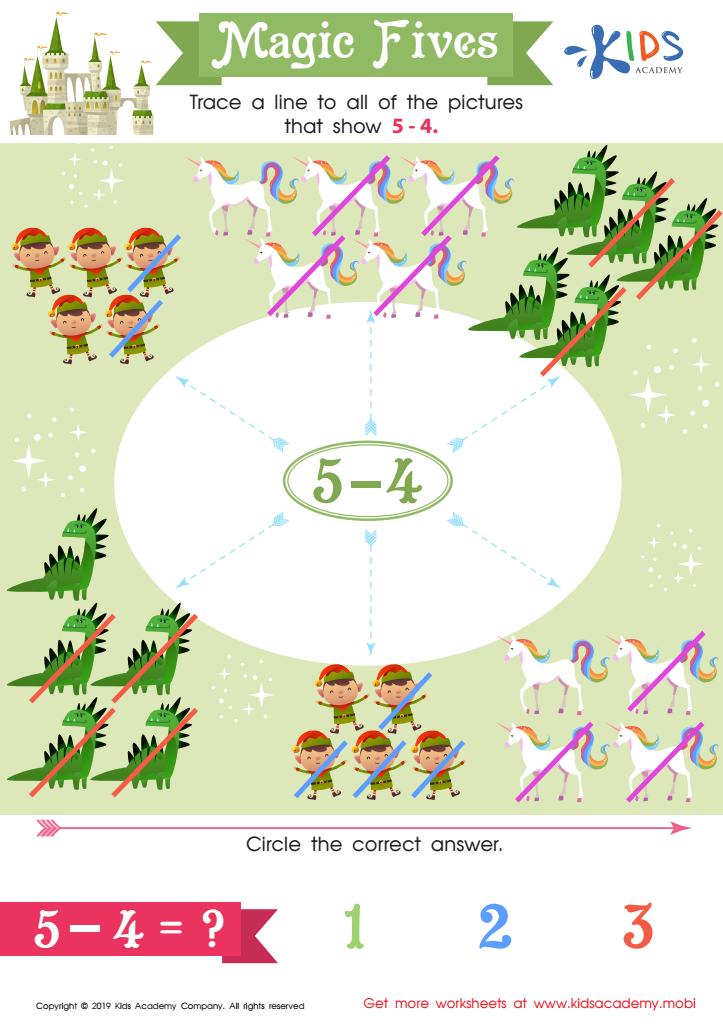
Magic Fives Worksheet
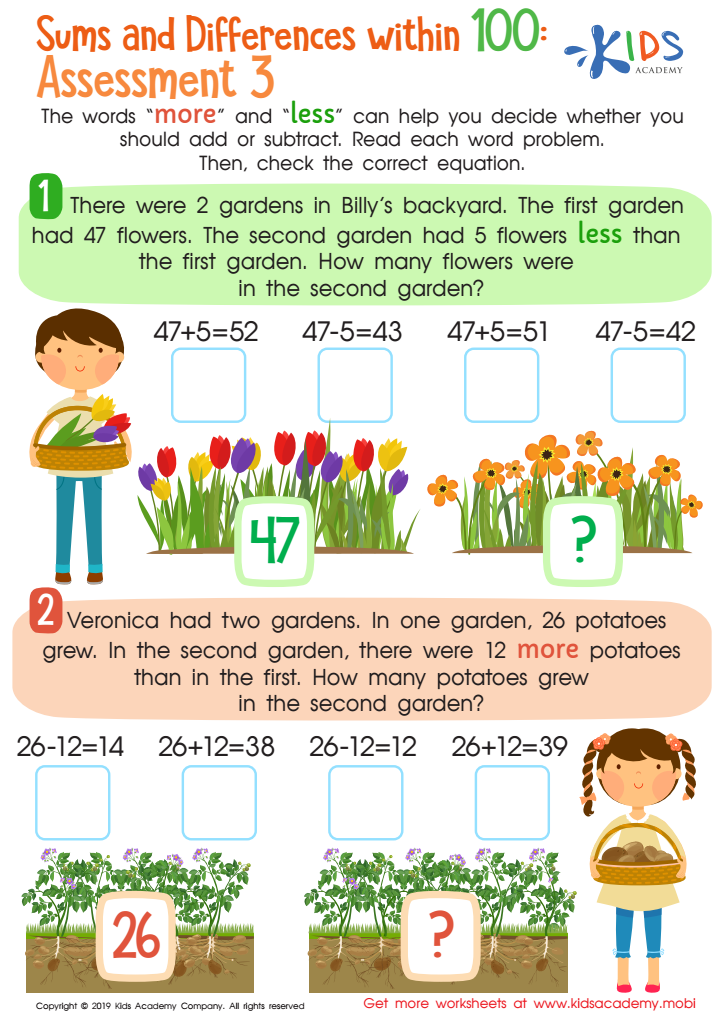
Sums and Differences Within 1 - Assessment 3 Worksheet
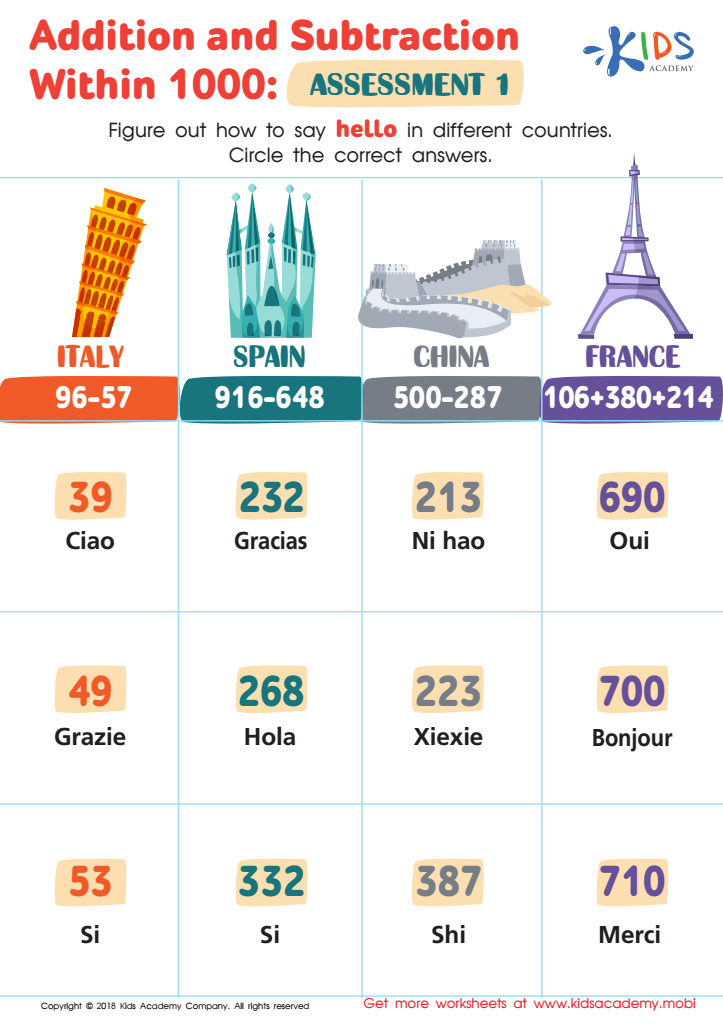
Addition and Subtraction Within 1000: Assessment 1 Worksheet
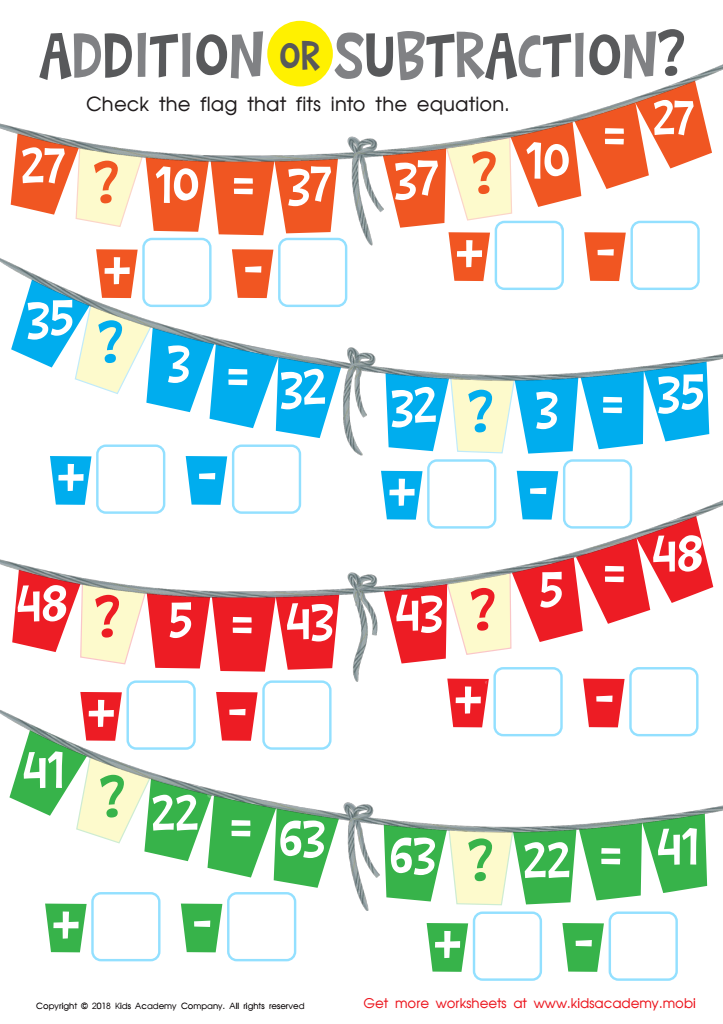
Addition or Subtraction? Worksheet
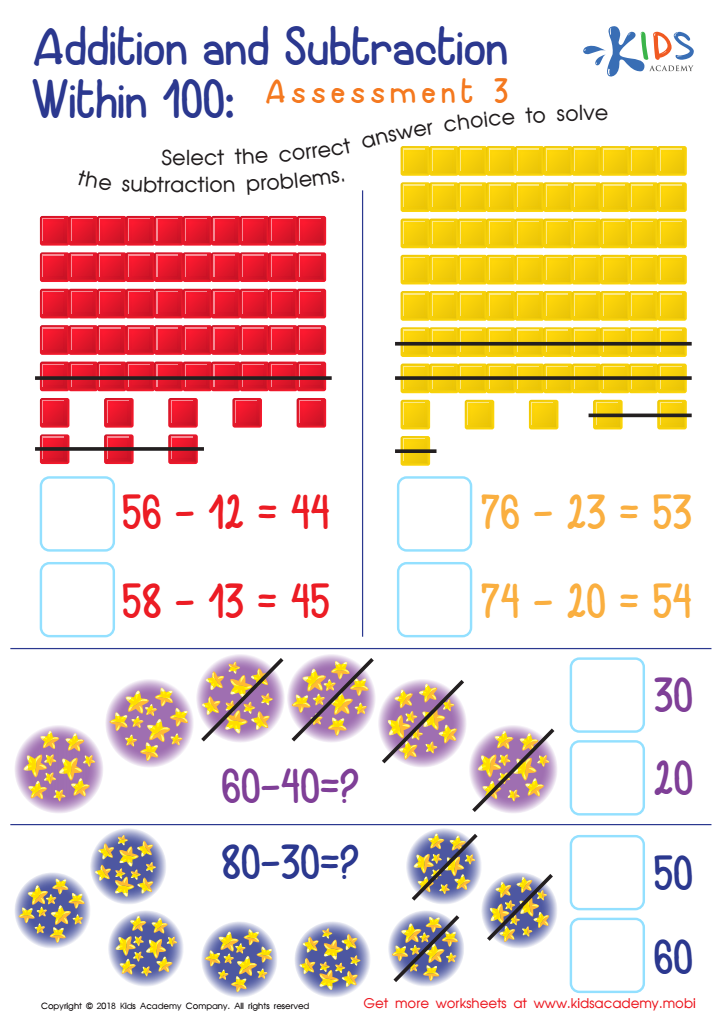
Addition and Subtraction Within 1: Assessment 3 Worksheet








Parents and teachers should place significant emphasis on developing addition and subtraction skills in children aged 4-7 as these foundational mathematical concepts lay the groundwork for higher-level math proficiency. During these formative years, children's brains are highly receptive to learning new skills, and fostering a solid understanding of basic arithmetic promotes cognitive development and problem-solving skills.
Addition and subtraction are not just about numbers; they are critical for everyday tasks such as counting, making purchases, telling time, and following directions, thereby enhancing a child's practical life skills. Mastery of these basic operations builds confidence in young learners, encouraging a positive attitude toward math and reducing anxiety around more complex topics later on.
Early competence in these areas supports academic readiness and success. Strong arithmetic skills often correlate with better performance in other subjects as they enhance logical thinking and equilibrium in tackling multifaceted challenges. Furthermore, fostering a nurturing and engaging mathematical environment at this age instills a lifelong appreciation for learning and curiosity.
In conclusion, committing to the development of arithmetic skills in early childhood is essential not only for immediate academic success but for equipping children with critical tools for lifetime learning and daily functioning. Parents and teachers play a pivotal role in igniting this initial spark for mathematics.








