
Reading analog clocks Time Worksheets for Ages 4-7
3 filtered results
Difficulty Level
Grade
Age
-
From - To
Subject
Activity
Standards
Introducing our engaging "Reading Analog Clocks Time Worksheets" designed specifically for children ages 4 to 7! These worksheets provide a fun and interactive way for young learners to master telling time with analog clocks. Featuring colorful illustrations and age-appropriate activities, kids will explore concepts such as hours, minutes, and the relationship between numbers on the clock. Each worksheet encourages hands-on learning through drawing, matching, and clock face creations, fostering both time-telling skills and confidence. Support your child's mathematical journey while making learning enjoyable! Discover the joy of mastering clocks with our expertly designed resources today!
Favorites
With answer key
Interactive
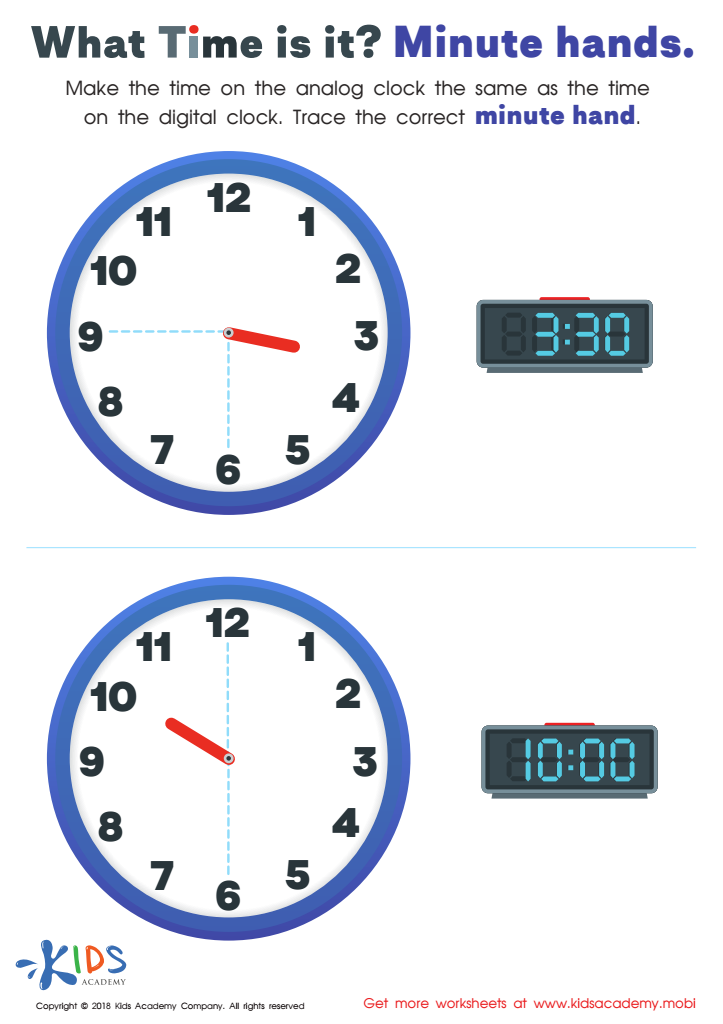
What Time Is it? Minute Hands Worksheet
Help your kids telling time with the minute hand correctly with this tracing sheet. Trace the correct minute hand to make the time on the analog clock the same as the time on the digital clock. Give them a pictured demonstration of how to do it and you'll be all set!
 Assign to My Students
What Time Is it? Minute Hands Worksheet
Worksheet
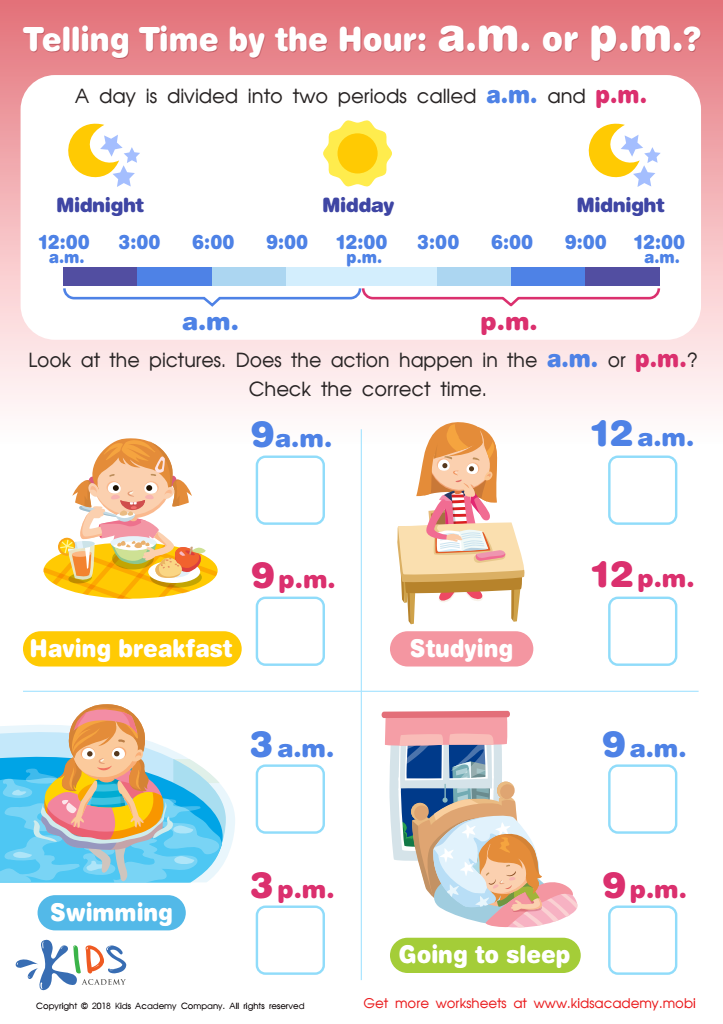
Tilling Time by the Hour: a.m. or p.m.? Worksheet
Can your child tell the time? This worksheet will help them learn. Explain a.m and p.m. and look at the pictures together. Ask your child if the activities happen in the a.m or p.m and help them check the correct time.
Tilling Time by the Hour: a.m. or p.m.? Worksheet
Worksheet
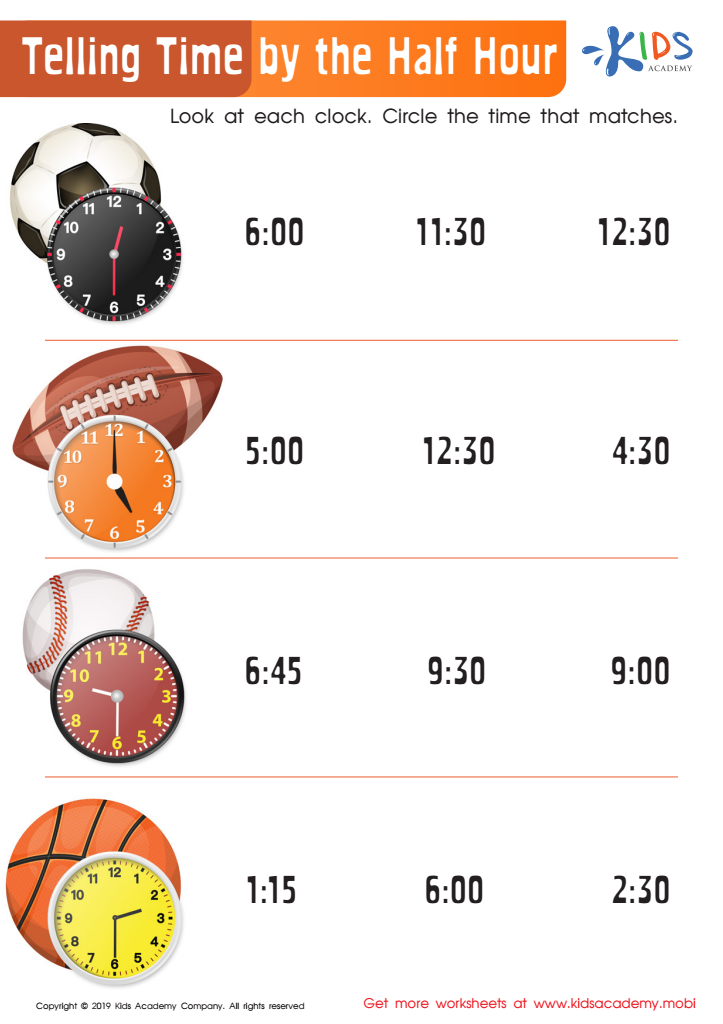
Telling Time by the Half Hour Worksheet
Teach kids to tell time with this worksheet! Four clocks are labeled with different times; help your child circle the right one. It's a great way to teach them to read analog and digital clocks, watches, and written times. Easy and fun learning!
Telling Time by the Half Hour Worksheet
Worksheet
Join Kids Academy for Free
Who is primarily going to use this learning content?




.jpg)


Teaching children to read analog clocks is an important skill that lays the foundation for time management and enhances their understanding of the world. For ages 4-7, learning to tell time on an analog clock develops both cognitive and practical skills.
Firstly, understanding analog time fosters mathematical abilities, as it involves concepts like counting, spatial awareness, and fractions when interpreting hour and minute hands. It also sharpens critical thinking skills, as children learn to infer and estimate time intervals.
Additionally, analog clocks are prevalent in everyday life — from schools to public transportation. Familiarity in reading these clocks encourages independence in children when navigating their routines, such as knowing when to prepare for meals, bedtime, or playtime.
Teaching kids to read and understand analog time also provides an opportunity for quality parent-child interactions. Simple activities like setting daily schedules or engaging in timed games can foster communication and bonding.
Lastly, life skills such as punctuality and responsibility are nurtured when children grasp the concept of time. Overall, understanding analog clocks equips young learners with valuable skills that go beyond merely telling time and supports their holistic development.








