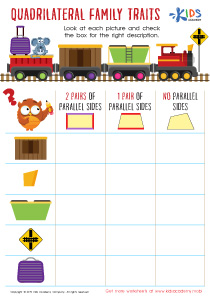
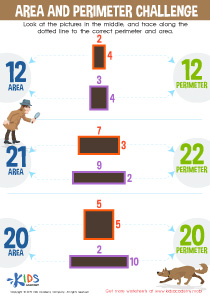
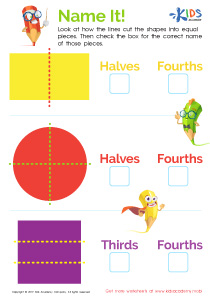
Shape identification Tracing Shapes Worksheets for Ages 4-7
3 filtered results
-
From - To
Enhance your child's shape recognition skills with our engaging Shape Identification Tracing Worksheets, designed specifically for children ages 4-7. These interactive worksheets are perfect for developing fine motor skills and fostering creativity while teaching essential geometric concepts. Kids will enjoy tracing various shapes such as circles, squares, triangles, and more, encouraging them to recognize and differentiate between each one. Our colorful and playful designs keep learners motivated and entertained, making learning fun. Perfect for both classroom and home use, these printable resources are a fantastic addition to your teaching toolkit, providing young learners with the foundational skills they need for future success in math.
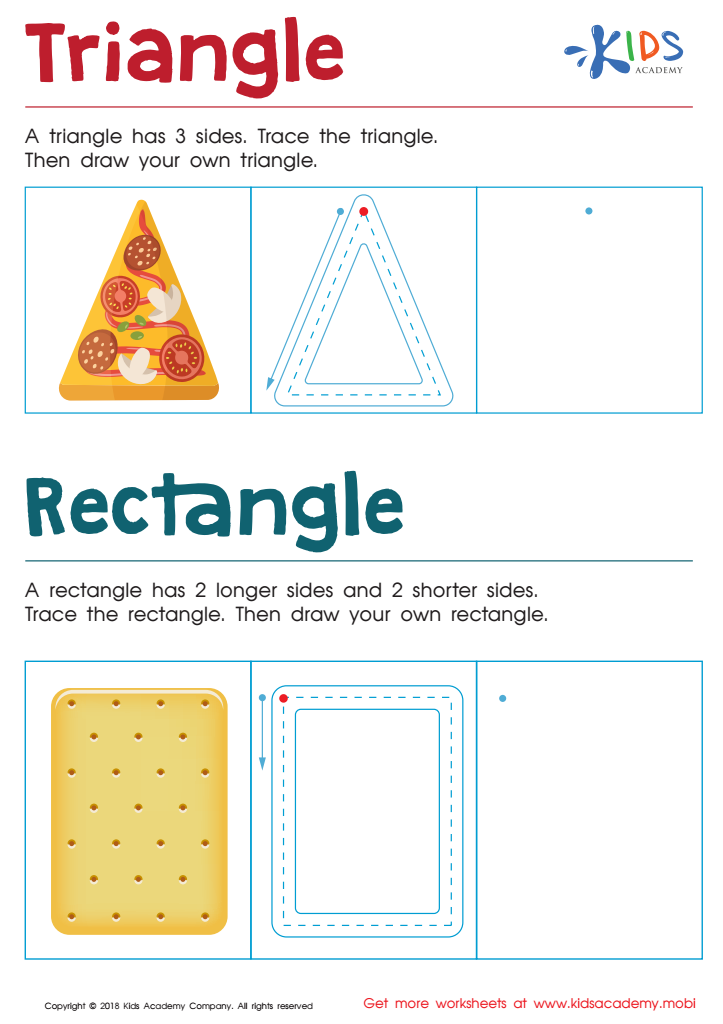
Triangle Rectangle Worksheet
 Assign to My Students
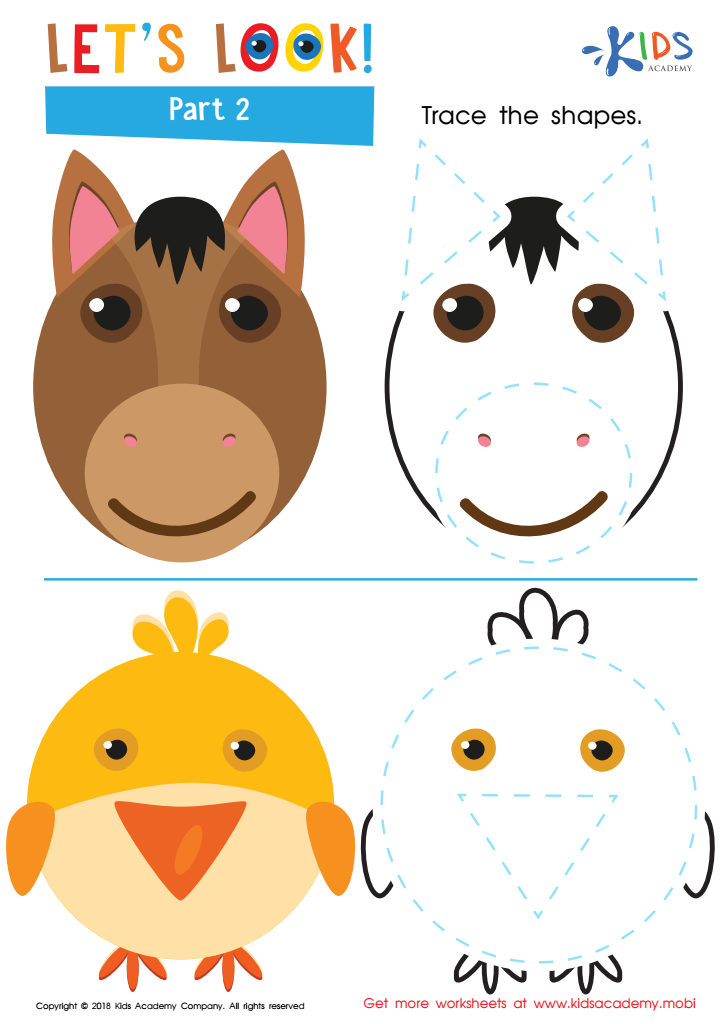
Let's Look! Part 2 Worksheet
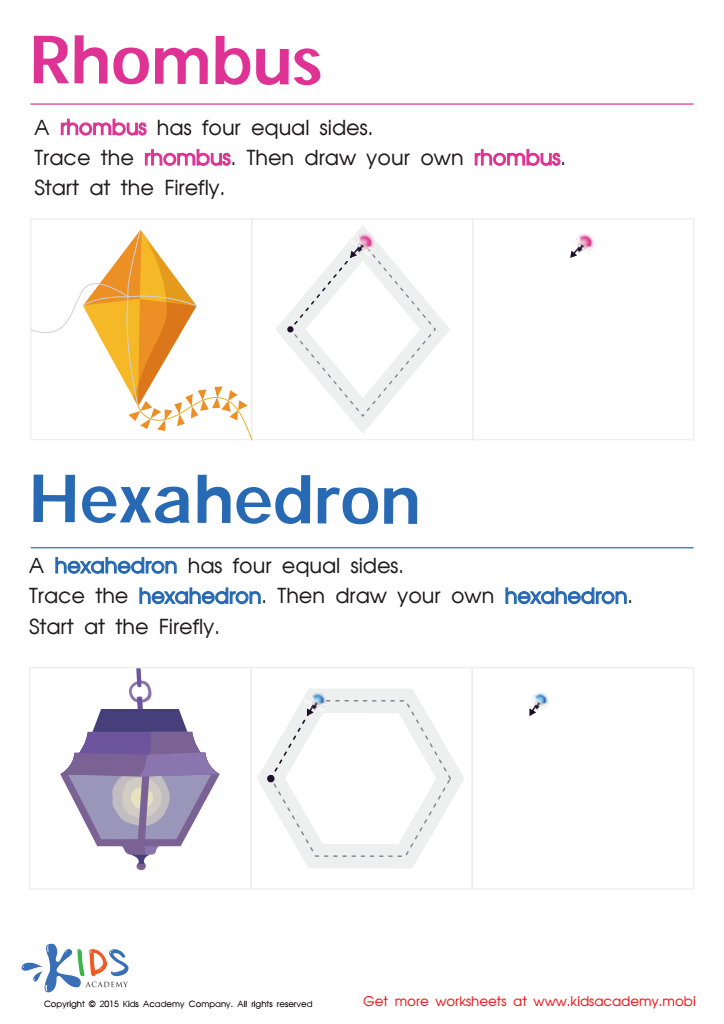
Draw a Rhombus And a Hexahedron Printable








Shape identification and tracing shapes are essential foundational skills for children aged 4-7. These activities serve as building blocks for a variety of cognitive and motor skills crucial for early development.
Firstly, recognizing shapes helps young children understand their environment better. Shapes form the basis of many objects around them, and by identifying geometric figures, children enhance their observational skills and spatial awareness. This knowledge is vital for subjects such as math, science, and art, as it lays the groundwork for more complex concepts later.
Moreover, tracing shapes aids in developing fine motor skills. As children engage in tracing, they learn to control their pencils or crayons, which strengthens the muscles in their hands and fingers, improving their ability to hold and manipulate writing instruments effectively. This skill is pivotal for writing readiness, allowing children to progress toward writing letters and words.
Additionally, shape tracing promotes concentration and focus, encouraging patience and persistence in tasks. Engaging in these activities fosters creativity and builds confidence in problem-solving.
Ultimately, parents and teachers should recognize that shape identification and tracing are not merely play but vital educational activities that support holistic development, preparing children for academic challenges ahead.