Animal recognition Word Problems Worksheets for Ages 4-7
4 filtered results
-
From - To
Discover engaging Animal Recognition Word Problems Worksheets designed for children ages 4-7! These interactive worksheets help young learners develop essential math skills while exploring the fascinating world of animals. Each problem features fun scenarios that encourage kids to recognize different animals and practice counting, addition, and subtraction in a playful context. Ideal for classroom learning or at-home practice, these worksheets not only enhance mathematical understanding but also stimulate curiosity about wildlife. Bring the excitement of the animal kingdom into your child’s education with our vibrant and educational worksheets, making learning enjoyable and effective! Perfect for early grade classrooms or homeschooling parents.
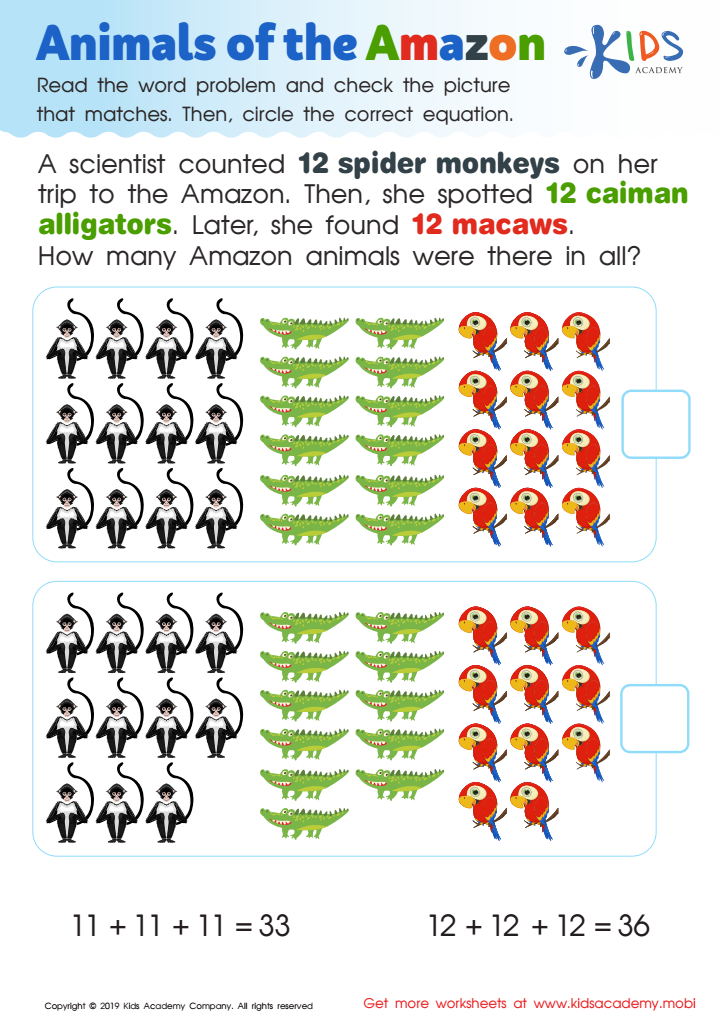
Animals of Amazon Worksheet
 Assign to My Students
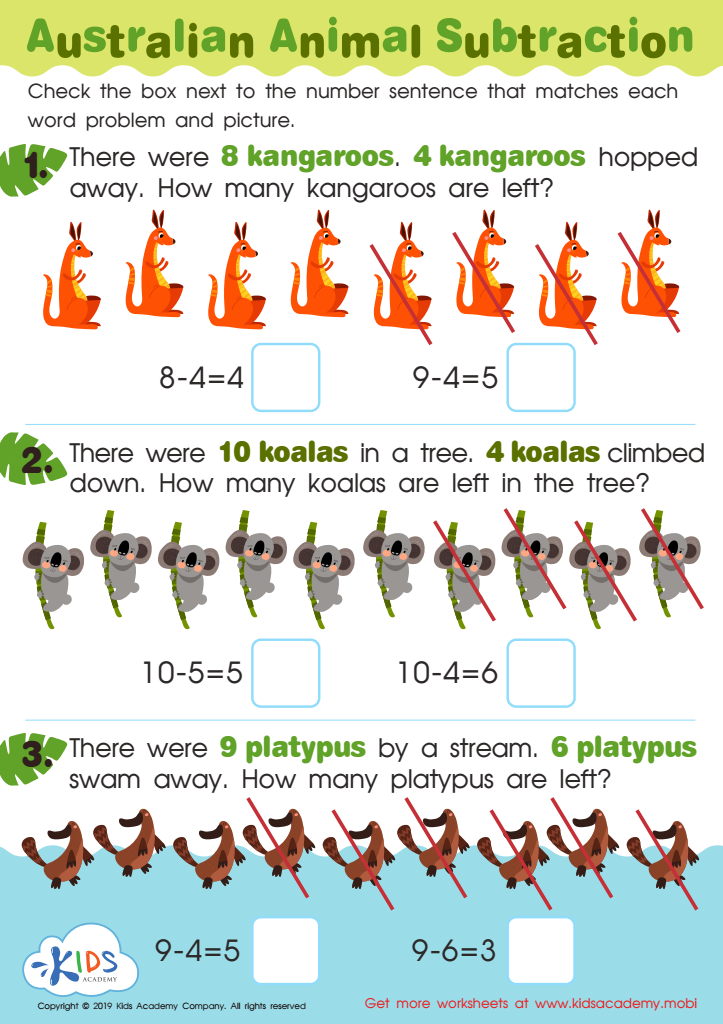
Australian Animal Subtraction Worksheet
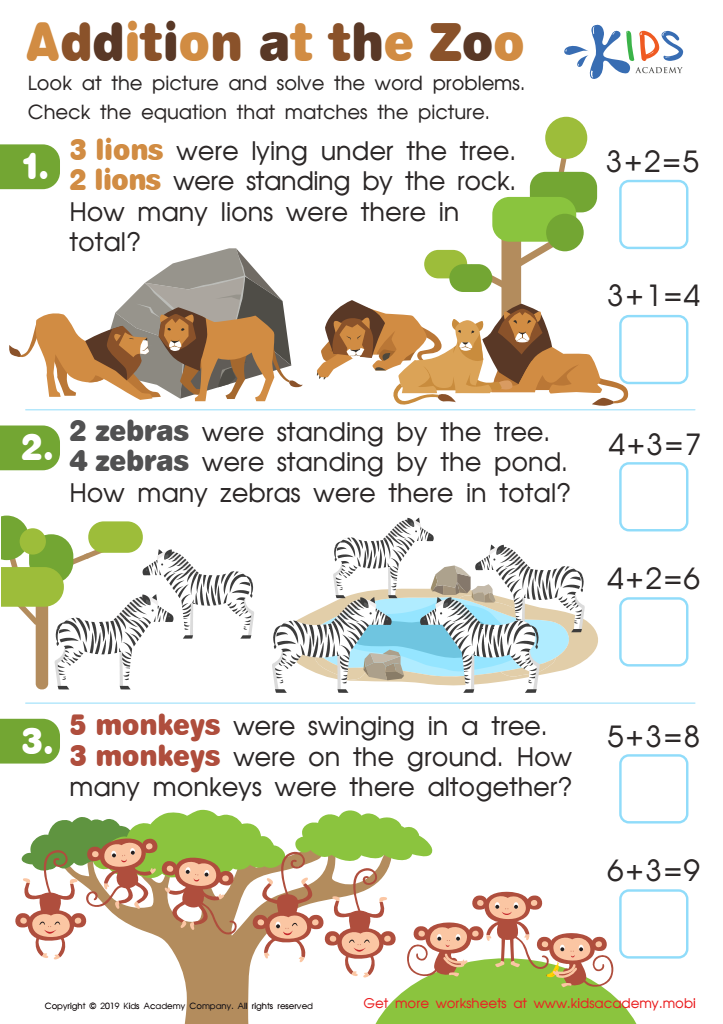
Addition at the Zoo Worksheet
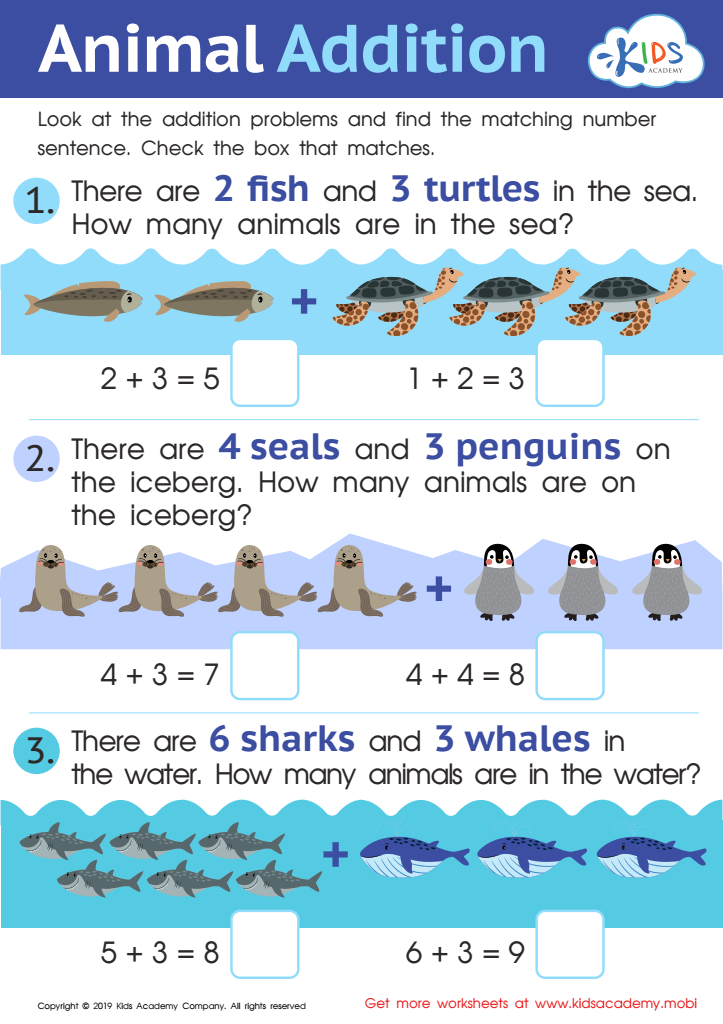
Animal Addition Worksheet








Animal recognition word problems are valuable educational tools for children ages 4-7, and both parents and teachers should care about their implementation in learning. At this formative stage, children are not only developing essential reading and comprehension skills but also engaging in early mathematical reasoning. Animal-related scenarios can capture young learners' attention, connecting academic concepts to their interests and experiences.
These word problems promote vocabulary development, as children learn new words related to animals and apply them in context. Solving these problems enhances critical thinking skills as students parse information, identify key details, and differentiate between relevant and irrelevant data. Additionally, using animals in word problems can foster a sense of empathy and curiosity about the natural world, nurturing young students' emotional and social development.
Moreover, integrating fun elements like animals keeps learning enjoyable, encouraging students to engage willingly. This approach not only builds foundational math skills like addition, subtraction, and comparison but also improves overall literacy. By caring about animal recognition word problems, parents and teachers can contribute to a holistic learning experience, fostering well-rounded development in young children that reaches far beyond academics.








