
Attention to Detail Building Vocabulary Worksheets for Ages 4-7
3 filtered results
Difficulty Level
Grade
Age
-
From - To
Subject
Activity
Standards
Our "Attention to Detail Building Vocabulary Worksheets for Ages 4-7" are designed to foster a keen sense of observation and vocabulary enrichment in young learners. These engaging worksheets blend fun activities with educational content, helping children focus on details while expanding their word knowledge. Perfect for kids aged 4-7, each worksheet includes exercises that challenge youngsters to identify differences, complete sentences, and match words to pictures. By incorporating creative and interactive methods, we ensure that learning becomes an enjoyable adventure, laying a strong foundation for reading comprehension and attentive learning in future academic pursuits.
Favorites
With answer key
Interactive
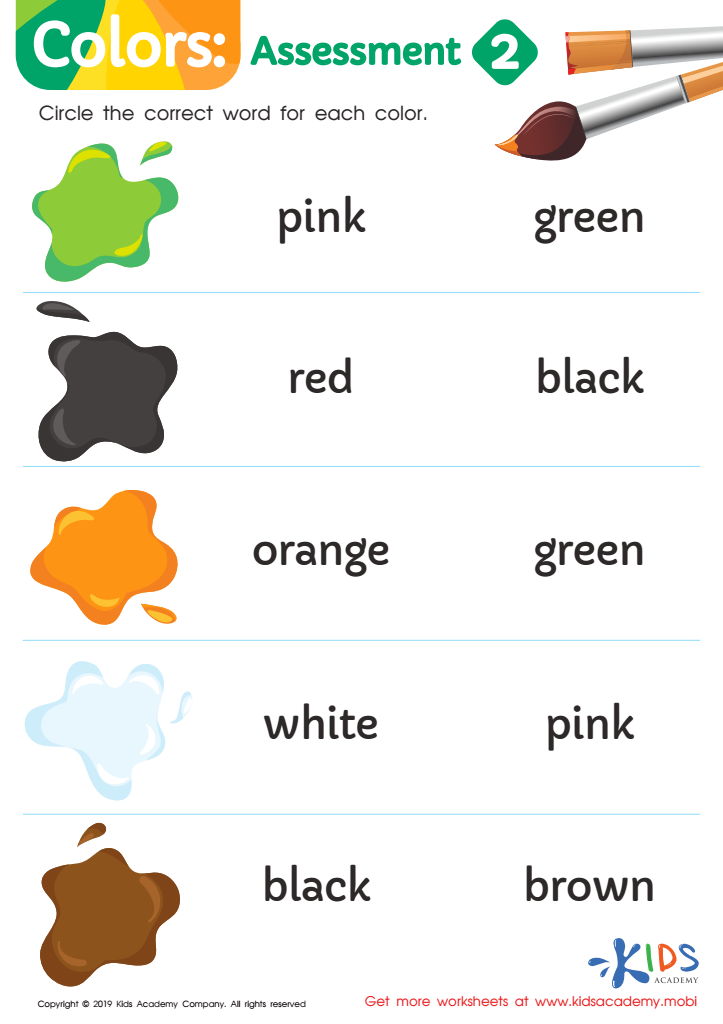
Colors: Assessment 2 Worksheet
Teach color words to young students to build fluency and confidence. Check knowledge with an assessment worksheet. Have students look at paint samples and circle the correct color word. This assessment helps parents and teachers measure a child’s accuracy when reading color words.
 Assign to My Students
Colors: Assessment 2 Worksheet
Worksheet











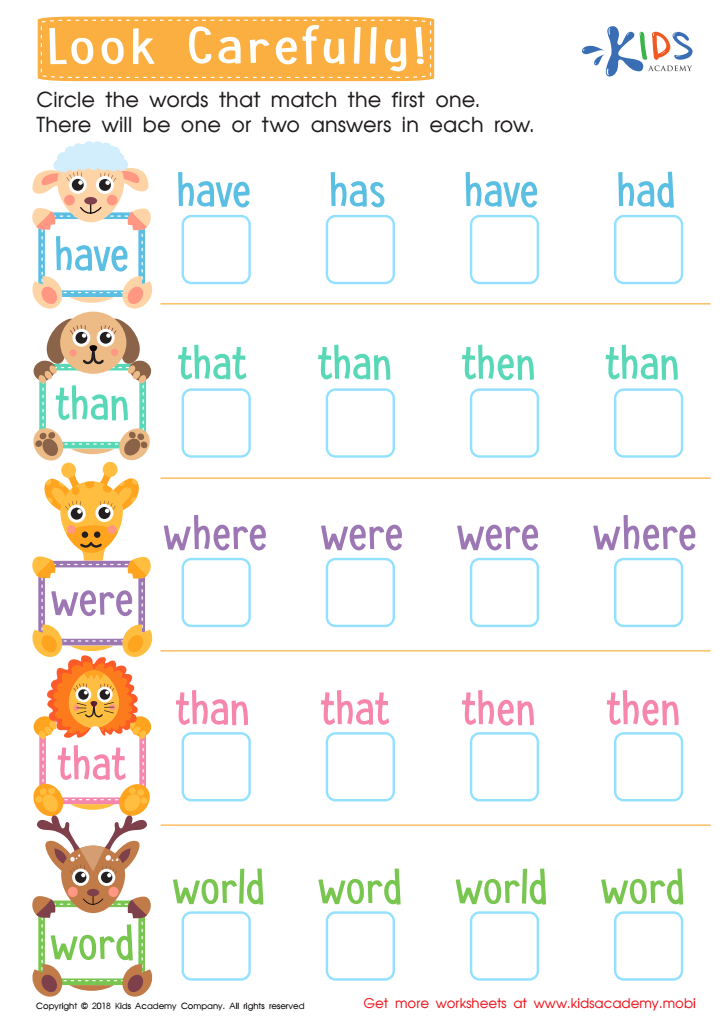
Look Carefully Worksheet
It's crucial to teach kids to identify sight words and become fluent readers. This free worksheet helps make it simpler for kids to learn the similarities and differences between similar words. They'll get practice by looking at the box word and selecting the one that matches from the row.
Look Carefully Worksheet
Worksheet
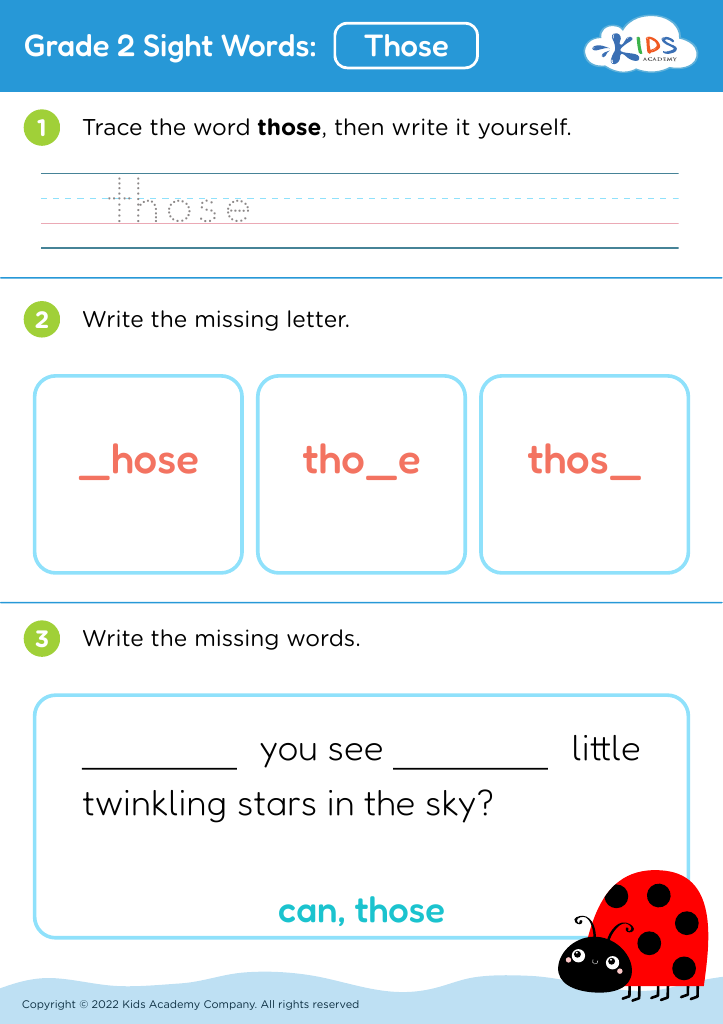
Join Kids Academy for Free
Who is primarily going to use this learning content?


.jpg)




.jpg)
Attention to detail is crucial when building vocabulary for children aged 4-7, and both parents and teachers play a pivotal role in this development. During these formative years, children's brains are especially malleable, rapidly absorbing new information. Fostering a rich vocabulary not only enhances their communication skills but also sets a strong foundation for future literacy and academic success.
When parents and teachers pay close attention to detail in vocabulary building, they help children grasp more precise meanings and usage of words. For example, teaching the subtleties between synonyms or the nuanced contexts in which certain words are appropriate broadens a child's understanding. This precision aids in reading comprehension, enabling children to follow stories more effectively and extract deeper meanings from texts.
Moreover, a detailed approach can spark curiosity and a love for learning. By highlighting interesting and specific words, adults can make language engaging and exciting for young learners, promoting a lifelong interest in reading and writing.
Additionally, strong vocabulary skills enhance social interactions. Children who can express themselves clearly and understand others easily are better equipped to form meaningful friendships and navigate social situations.
Ultimately, attention to detail in vocabulary development is a critical component of a child's overall cognitive and social growth. Parents and teachers need to nurture this aspect carefully to ensure well-rounded development.








