Develop critical thinking Building Vocabulary Worksheets for Ages 4-7
4 filtered results
-
From - To
Unlock your child's potential with our "Develop Critical Thinking Building Vocabulary Worksheets" designed specifically for ages 4-7. These engaging worksheets not only enhance vocabulary but also foster critical thinking skills essential for early learners. Through interactive activities, children will explore words in varied contexts, develop their comprehension abilities, and learn to analyze information meaningfully. Our resources encourage imaginative thinking and problem-solving while making learning fun and enjoyable. Ideal for home or classroom use, these worksheets create a foundation for lifelong literacy and cognitive skills. Empower your child’s journey to becoming a confident reader and thinker today!
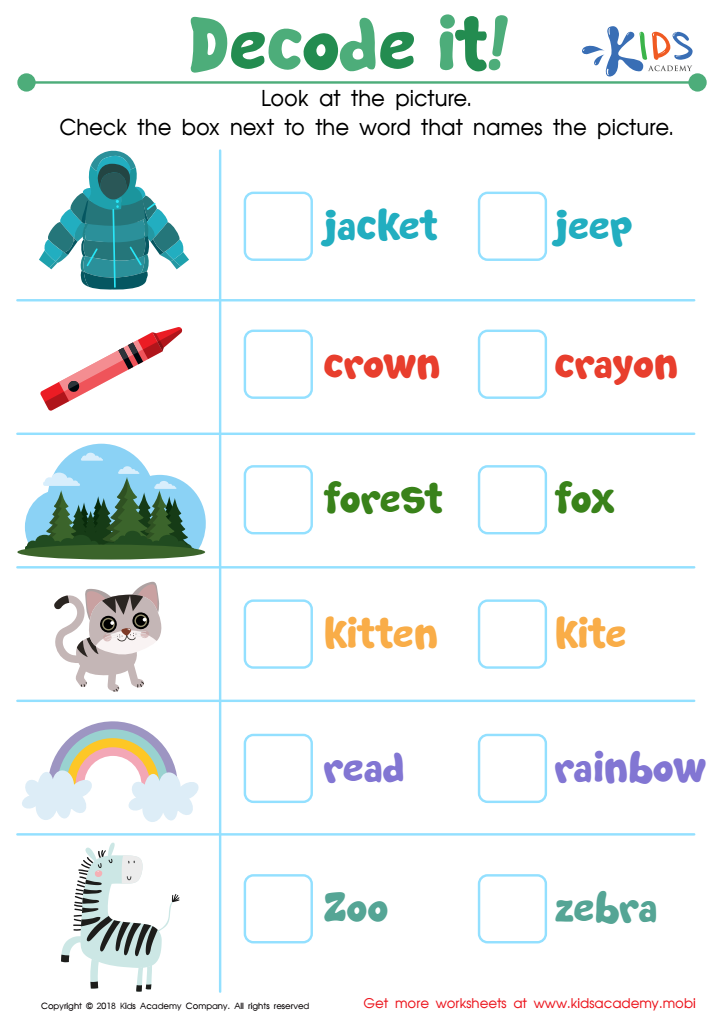
Reading: Decode It Worksheet
 Assign to My Students














.jpg)




Building critical thinking and vocabulary skills in children aged 4-7 is essential for their overall development and future success. During these formative years, children are naturally curious and eager to explore, making it an ideal time to nurture their critical thinking abilities. By engaging in activities that encourage questioning, problem-solving, and reasoning, parents and teachers can help children learn to analyze situations, make decisions, and devise creative solutions, laying the groundwork for independent and thoughtful learners.
Additionally, a strong vocabulary is foundational for effective communication and comprehension. A robust vocabulary enables children to express their thoughts clearly, understand what they read, and engage in conversations. This capacity not only enhances their literacy skills but also boosts their confidence when interacting with peers and adults. Furthermore, exposure to rich language experiences fuels imagination and creativity.
Moreover, critical thinking and vocabulary skills are intertwined; as children expand their vocabulary, they improve their ability to think critically and articulate their ideas. Prioritizing these skills in early education promotes academic achievements, enhances social skills, and prepares children for lifelong learning and challenges. By fostering an environment that values critical thinking and language development, parents and teachers set the stage for children to become informed, articulate, and proactive members of society.








