Phonics recognition Building Vocabulary Worksheets for Ages 4-7
3 filtered results
-
From - To
Boost your child's reading skills with our engaging Phonics Recognition Building Vocabulary Worksheets for ages 4-7. These expertly-designed resources introduce young learners to letter sounds and word recognition through fun, interactive activities. Perfect for early readers, each worksheet helps kids enhance their phonics skills, expand their vocabulary, and develop confidence in their reading abilities. Bright illustrations and easy-to-follow exercises make learning enjoyable and effective. Ideal for classroom use or at-home practice, our worksheets are tailored to support children's literacy journey from the basics through more complex phonetic patterns. Give your child the solid foundation they need to excel in reading!
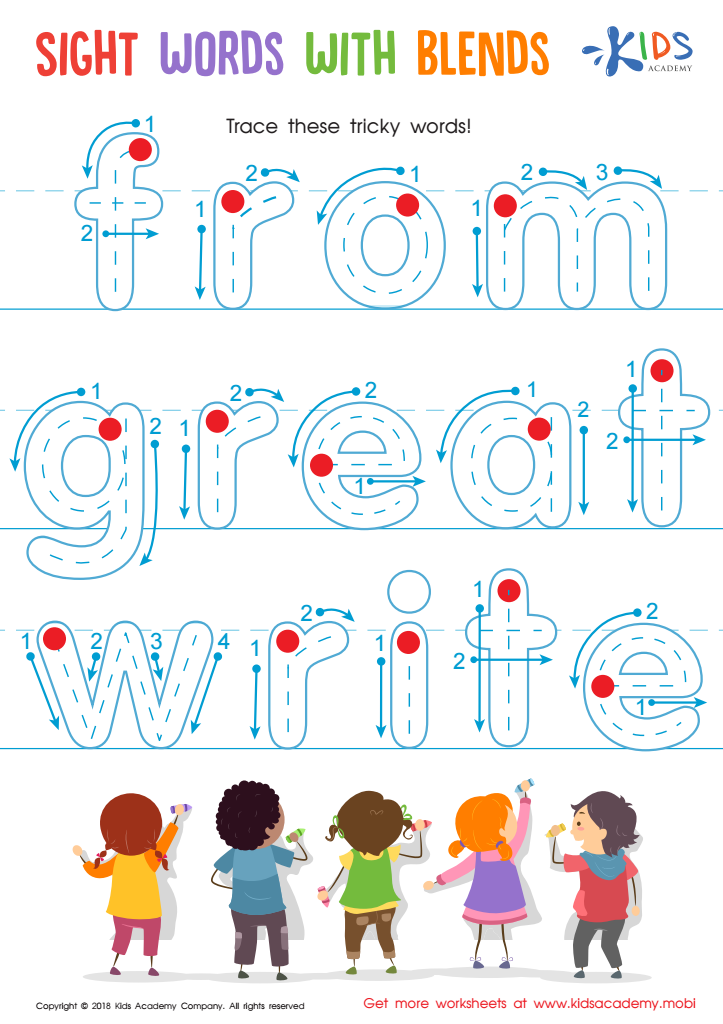
Sight Words with Blends Worksheet
 Assign to My Students











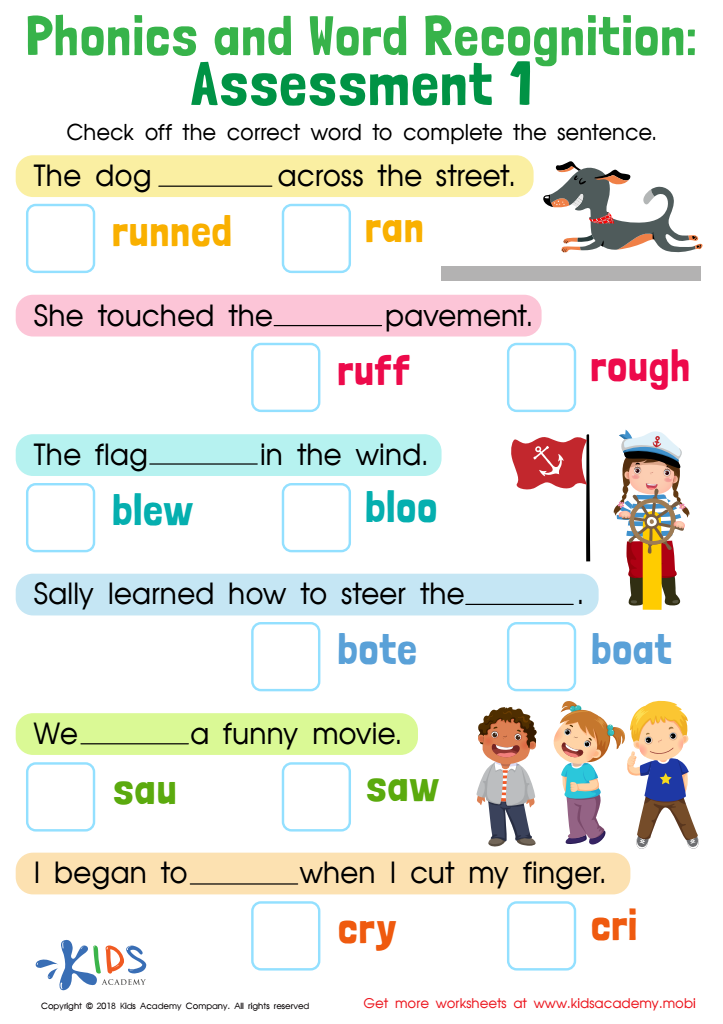
Phonics and Word Recognition: Assessment 1 Worksheet
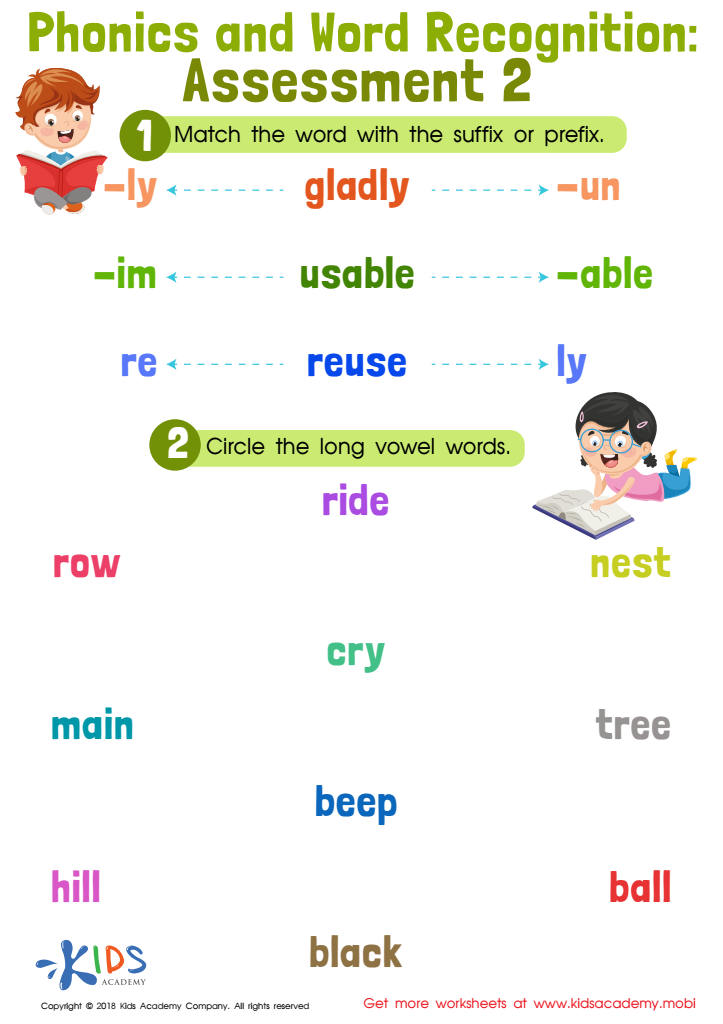
Phonics and Word Recognition: Assessment 2








Phonics recognition and vocabulary building are fundamental components of early literacy, crucial for the academic success of children aged 4-7. Phonics involves the relationship between sounds and their corresponding letters or groups of letters. Teaching phonics helps children decode words, enhancing their reading skills and enabling them to independently tackle new words—a foundational step in fostering a love for reading. Research shows that confident early readers tend to perform better academically across subjects because strong reading skills are intertwined with overall learning capability.
Building vocabulary is equally essential as it broadens children's language base, enriching their comprehension and expressive abilities. A robust vocabulary aids in understanding more complex texts and instructions, enhancing listening and communication skills. It also supports cognitive development, enabling children to articulate thoughts more precisely and engage meaningfully in conversations.
Given the critical role these skills play in a child's educational journey, parents and teachers should prioritize activities that promote phonics and vocabulary. These include interactive read-aloud sessions, phonics games, daily reading practice, and comprehensive language exposure. Encouraging an engaging and supportive literacy environment not only sets a strong educational foundation but also instills confidence, setting children on a path to lifelong learning and success.








