Visual interpretation Building Vocabulary Worksheets for Ages 4-7
3 filtered results
-
From - To
Enhance early literacy skills with our engaging Visual Interpretation Building Vocabulary Worksheets designed for children ages 4-7. These worksheets combine vibrant images and age-appropriate vocabulary exercises to foster a deeper understanding of language. By connecting words with visual cues, young learners can enrich their vocabulary, improve reading comprehension, and bolster critical thinking. Perfect for home or classroom use, these printable activities provide a fun, interactive way to support your child's educational journey, making learning enjoyable and effective. Ideal for parents and teachers seeking to support early learners’ language development in an exciting, visual manner.
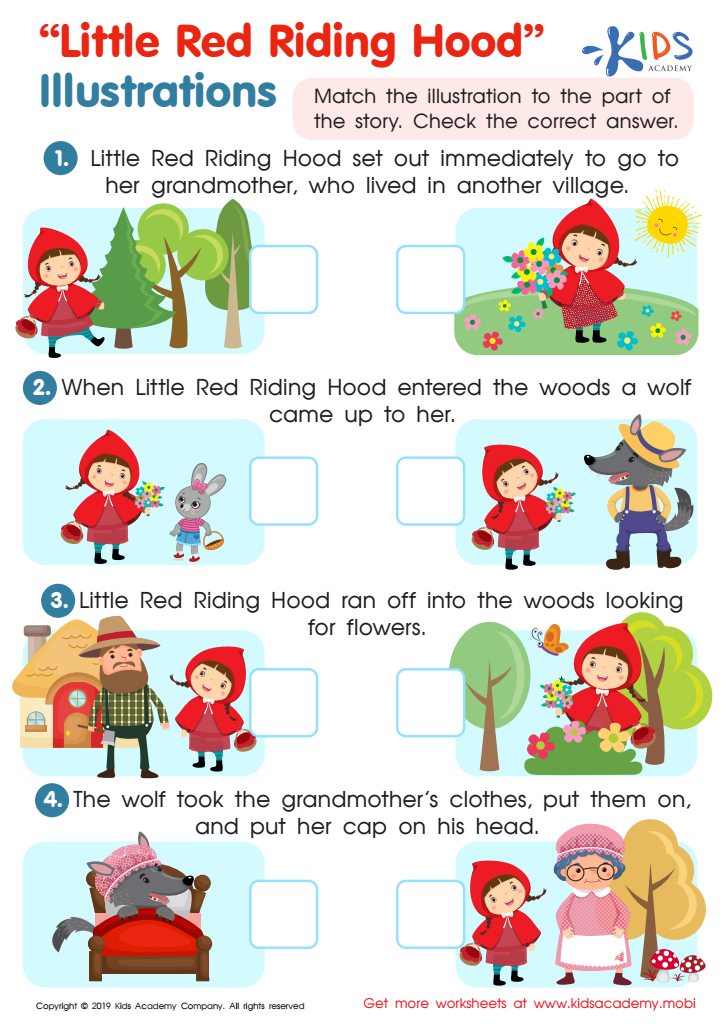
Little Red Riding Hood: Illustrations Worksheet
 Assign to My Students











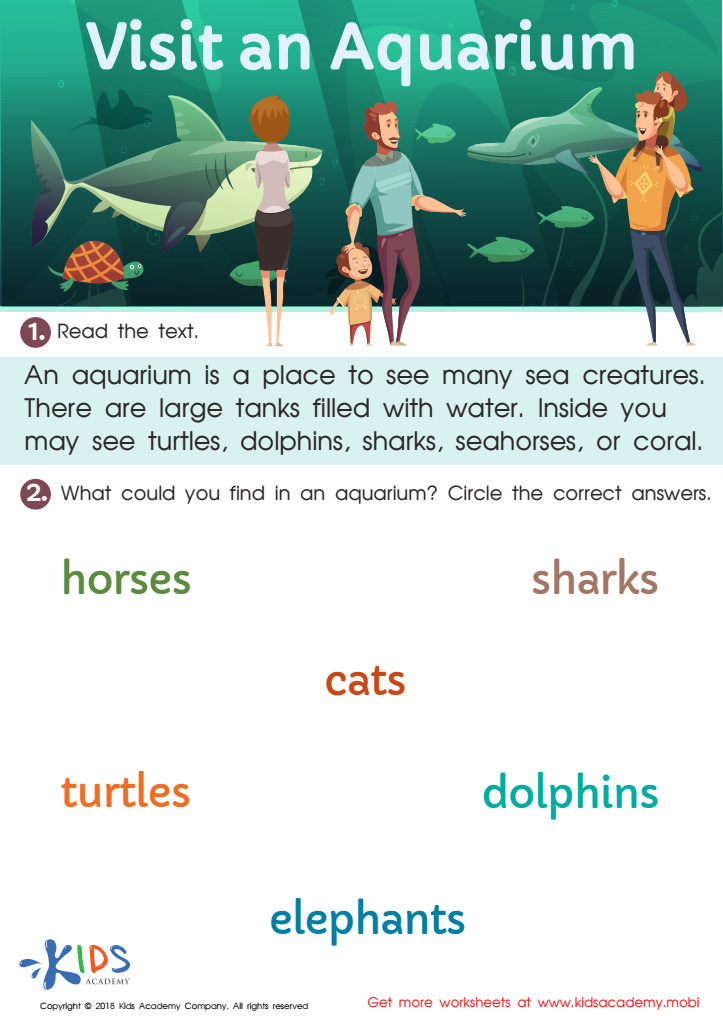
Visit an Aquarium Worksheet








Visual interpretation skills and vocabulary development are foundational elements in early childhood education that lay the groundwork for future academic success. At ages 4-7, children are in a crucial developmental stage, absorbing information rapidly and forming key cognitive connections.
Engaging with visual materials, such as picture books, educational videos, and interactive activities, helps children understand and retain new concepts more effectively. Visual learning aids comprehension, as the brain processes images faster than text, providing a context that makes words and ideas more memorable. When visuals are accompanied by verbal explanations or labels, children can associate images with language, which enhances their listening and speaking skills.
Building vocabulary at this age is equally important, as it impacts reading proficiency and overall communication abilities. A rich vocabulary enables children to express their thoughts clearly, understand instructions, and engage more actively in the classroom. It also fosters better reading comprehension as they encounter new texts.
Parents and teachers should incorporate visual interpretation exercises like storybooks with vivid illustrations, puzzles, and storytelling sessions into their daily routines and curricula. These strategies make learning engaging and fun, ensuring that children develop strong visual interpretation and vocabulary skills vital for their educational journey. By prioritizing these areas, adults are investing in the foundational skills that children need to succeed both academically and socially.








