Word identification Building Vocabulary Worksheets for Ages 4-7
3 filtered results
-
From - To
Enhance your child's language skills with our engaging Word Identification Building Vocabulary Worksheets, specifically designed for ages 4-7. These fun and interactive worksheets help young learners recognize and understand words, fostering essential early reading skills. With a variety of exercises, including matching, fill-in-the-blank, and word puzzles, children will enjoy exploring new vocabulary in an exciting way. Our worksheets align with early educational standards and support cognitive development, preparing your little ones for lifelong reading success. Perfect for both classroom and at-home learning, these resources ensure that building vocabulary is as enjoyable as it is educational. Explore our collection today!
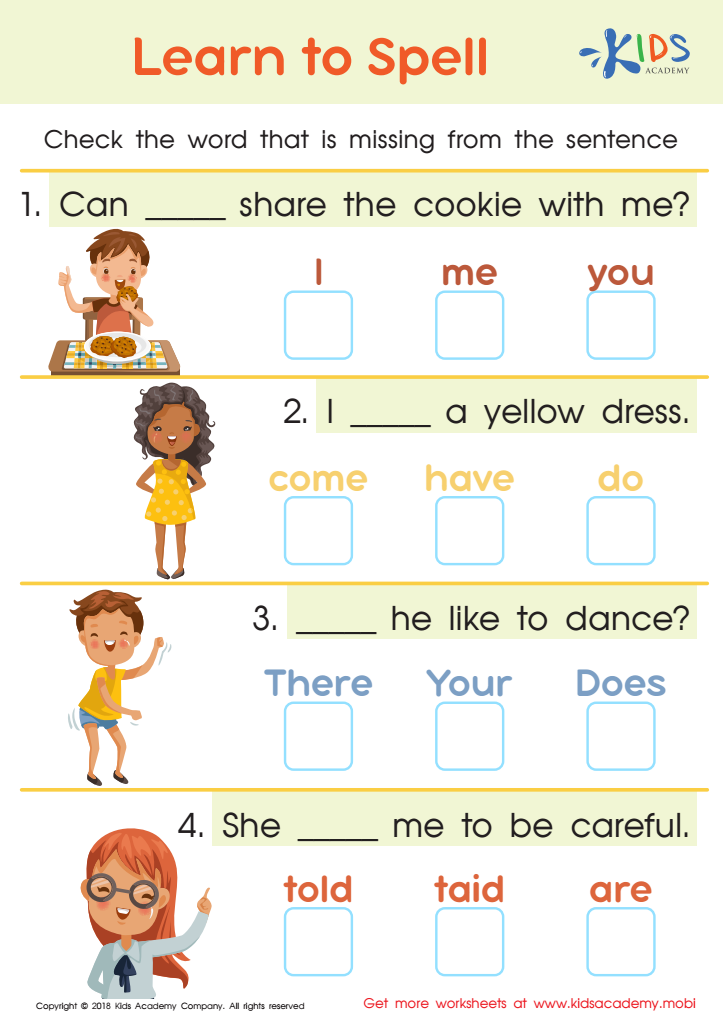
Learn to Spell Worksheet
 Assign to My Students











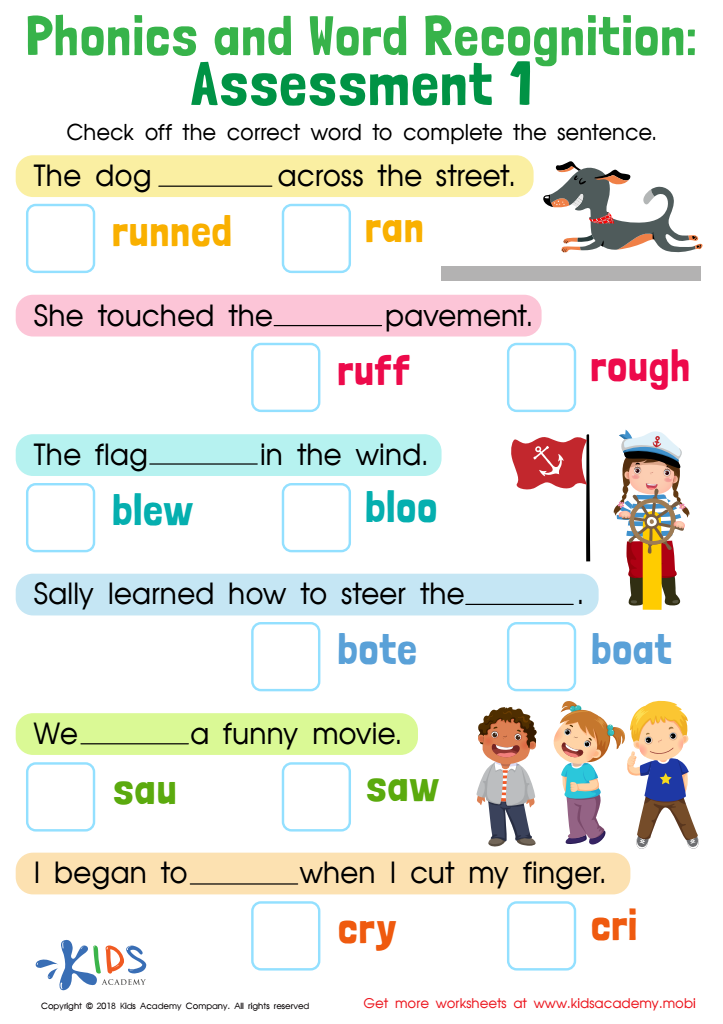
Phonics and Word Recognition: Assessment 1 Worksheet
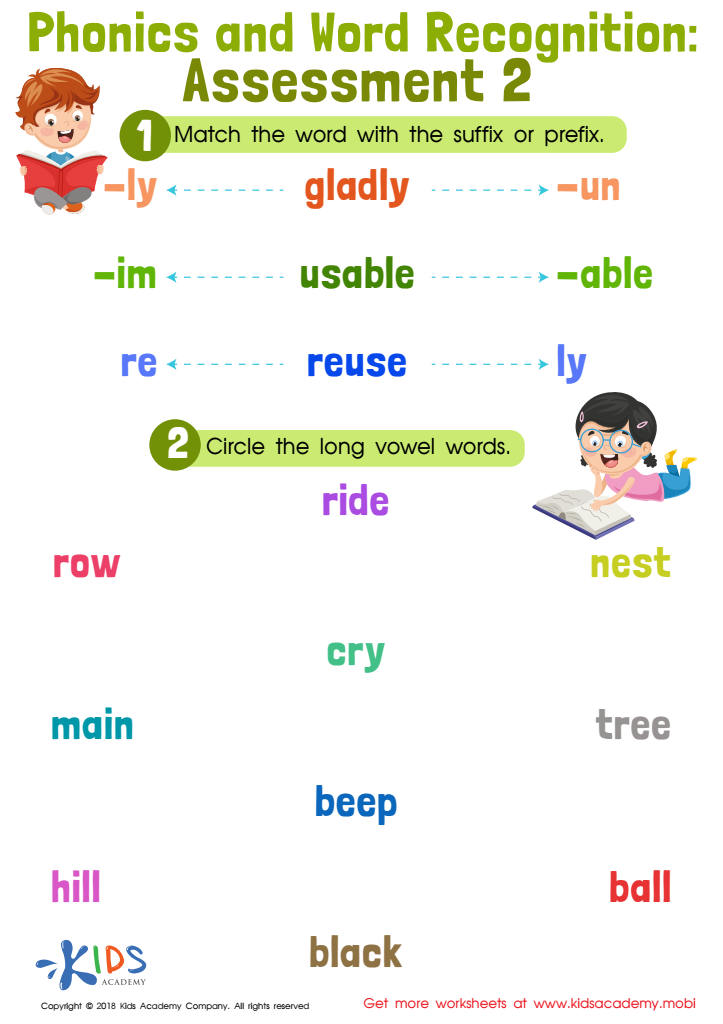
Phonics and Word Recognition: Assessment 2


.jpg)





Word identification and vocabulary building are crucial skills for children aged 4-7, forming the foundation for successful reading and communication. During these early years, children are like sponges, eagerly absorbing language from their environment. Engaging in word identification helps them recognize and understand words, which is essential for developing reading fluency and comprehension. A strong vocabulary empowers children to express their thoughts, feelings, and ideas effectively, enhancing their overall communication skills.
Parents and teachers should prioritize these skills as they directly impact a child's academic success and self-esteem. A well-developed vocabulary not only aids in understanding texts but also fosters a love for reading, paving the way for lifelong learning. Exposure to diverse words stimulates critical thinking and helps children navigate various social situations.
Moreover, vocabulary building plays a significant role in reducing achievement gaps among children from different backgrounds. By actively participating in word identification activities, such as reading aloud, playing word games, and engaging in discussions, adults can create a rich linguistic environment. This nurturing approach will help children become confident readers and learners, preparing them for future educational challenges. Ultimately, fostering these skills early on contributes to a well-rounded, literate individual.








