Fine Motor Skills Reading Fiction Worksheets for Ages 4-7
6 filtered results
-
From - To
Explore our "Fine Motor Skills Reading Fiction Worksheets for Ages 4-7," designed to engage young learners while enhancing their fine motor abilities. These interactive worksheets combine enjoyable fiction reading with activities that promote scissor skills, tracing, and handwriting. Perfect for preschool and early elementary students, our resources foster creativity and critical thinking through vibrant stories. Watch your child develop coordination and dexterity as they enjoy captivating narratives and imaginative exercises. Ideal for home or classroom use, these worksheets are an effective way to support literacy development and fine motor skills simultaneously, making learning both fun and educational! Dive in today!

Baa Baa Black Sheep Printable
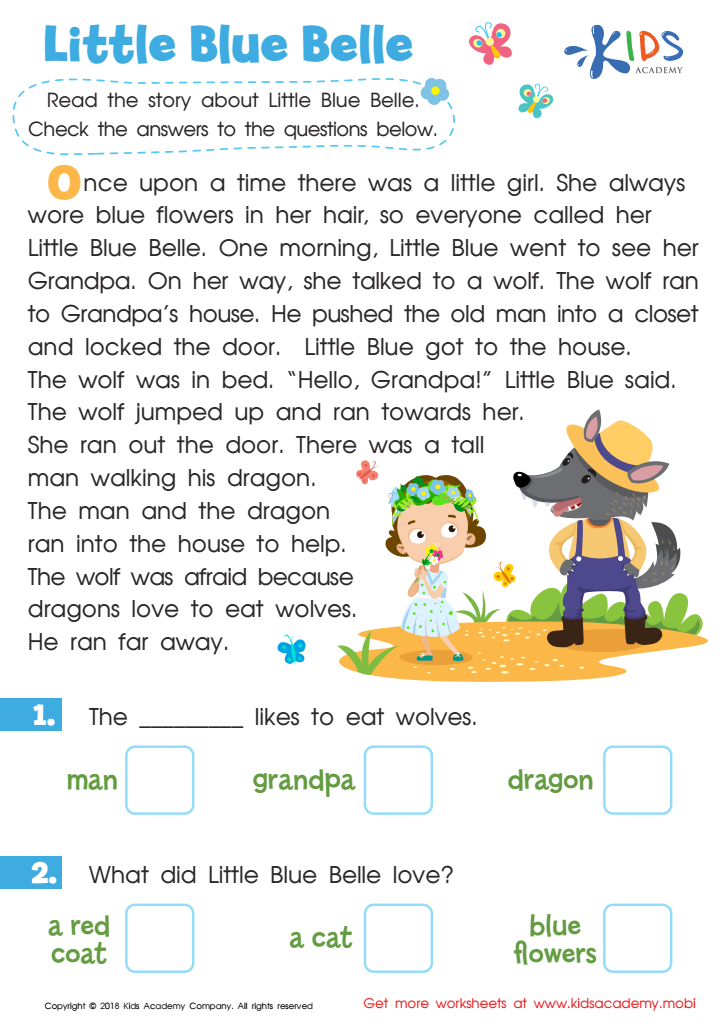
Little Blue Belle Worksheet

Twinkle Twinkle Little Star Coloring Page
 Assign to My Students
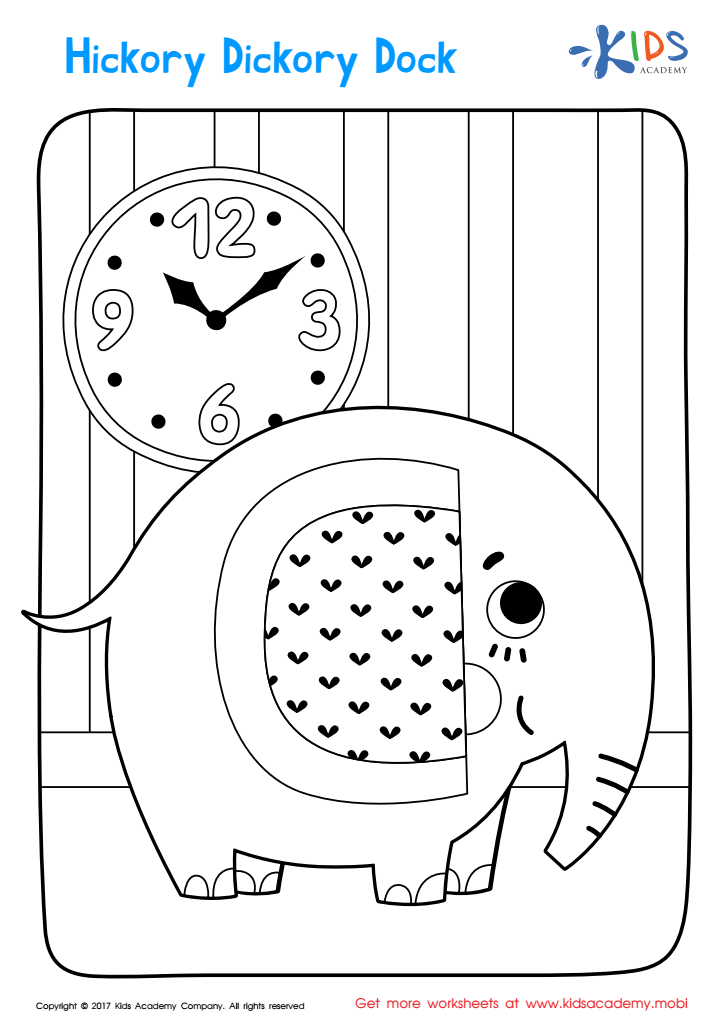
Hickory Dickory Dock Coloring Page
Assign to My Students

Red Riding Hood Coloring Page
Assign to My Students
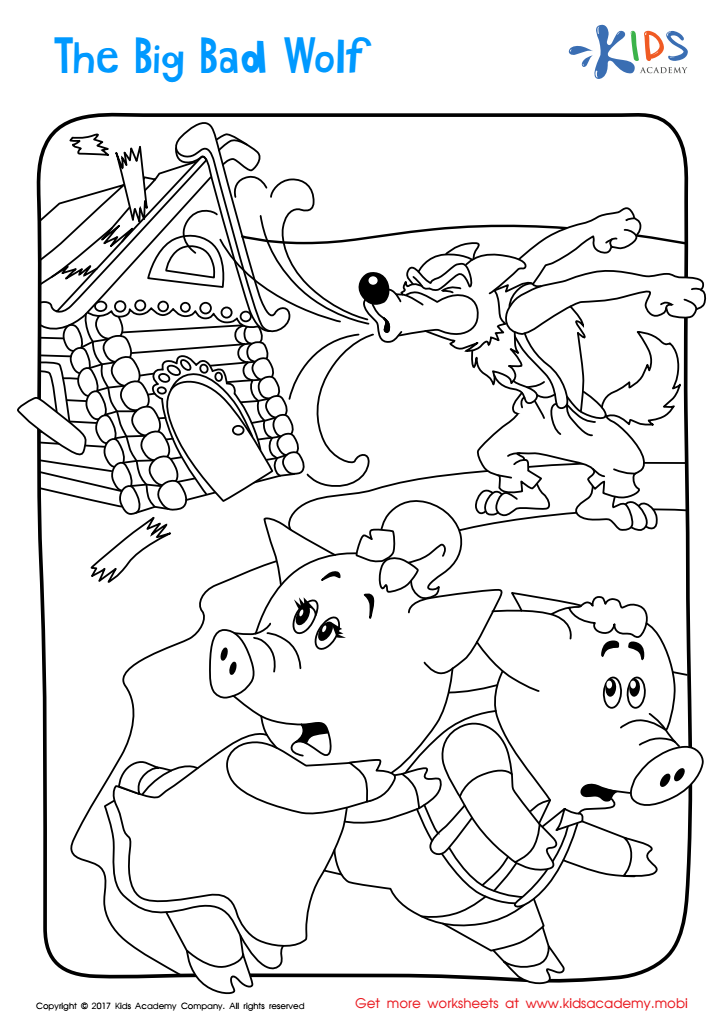
Big Bad Wolf Printable Coloring Page
Assign to My Students





.jpg)


Fine motor skills are crucial for children aged 4-7 as they are foundational for many everyday tasks, including writing, drawing, and self-care. The development of these skills directly impacts a child’s ability to hold a pencil, cut with scissors, and manipulate small objects, all of which enhance their writing and academic abilities.
When it comes to reading fiction, fine motor skills play a vital role in engaging young readers through activities such as page turning, playing interactive storytelling games, and manipulating story props. These activities not only foster a love for reading but also help improve hand-eye coordination and dexterity.
Incorporating fine motor skill activities with fiction reading also enhances comprehension as children interact with story elements hands-on, relating the narrative to real-life experiences. For example, crafting a character or acting out a story can deepen understanding and retention of the plot.
Parents and teachers should care because enhancing fine motor skills through engaging reading experiences sets the stage for lifelong learning. It promotes not only academic readiness but also confidence and a love for literacy, which are essential for children’s future success in school and beyond. Investing time in these areas now can significantly benefit children’s overall development.








