Moral understanding Reading Fiction Worksheets for Ages 4-7
4 filtered results
-
From - To
Introduce your young learners to essential moral values with our engaging “Moral Understanding Reading Fiction Worksheets” designed for ages 4-7. These captivating worksheets leverage beloved stories to teach key ethics such as kindness, honesty, and empathy. Through colorful illustrations and thought-provoking questions, children can explore and discuss diverse scenarios, enhancing their comprehension and critical thinking skills. Foster a love for reading while instilling vital principles that help shape noble character and positive social behavior. Perfect for both classroom and home settings, our worksheets provide a fun, educational experience for early grade students. Explore now and build a solid moral foundation for your child.
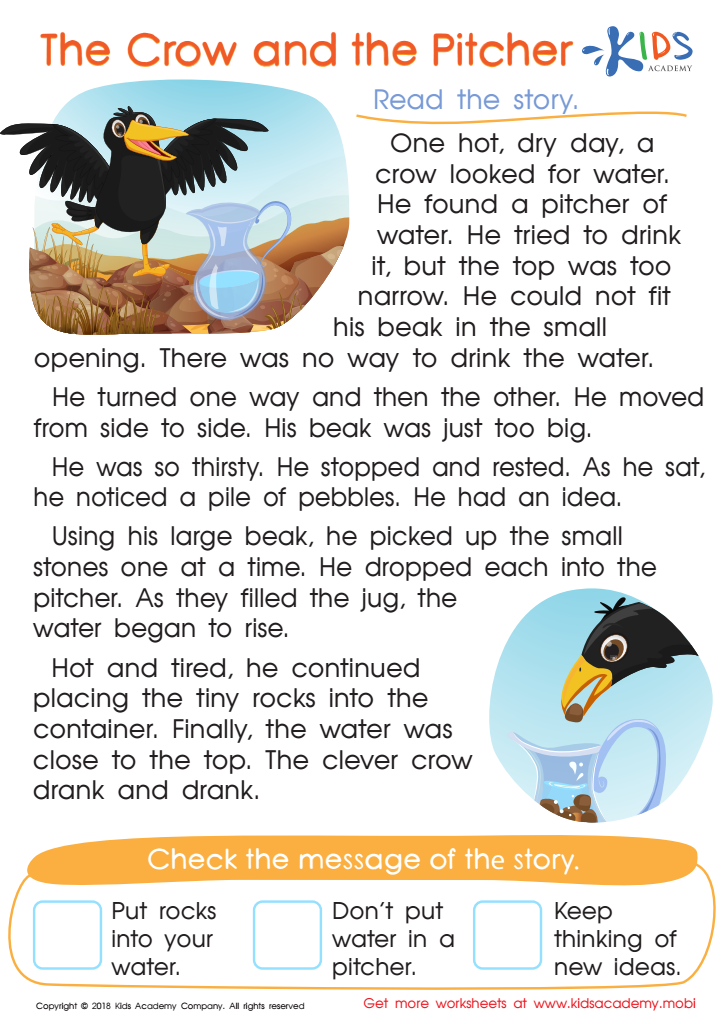
The Crow and the Pitcher Worksheet
 Assign to My Students
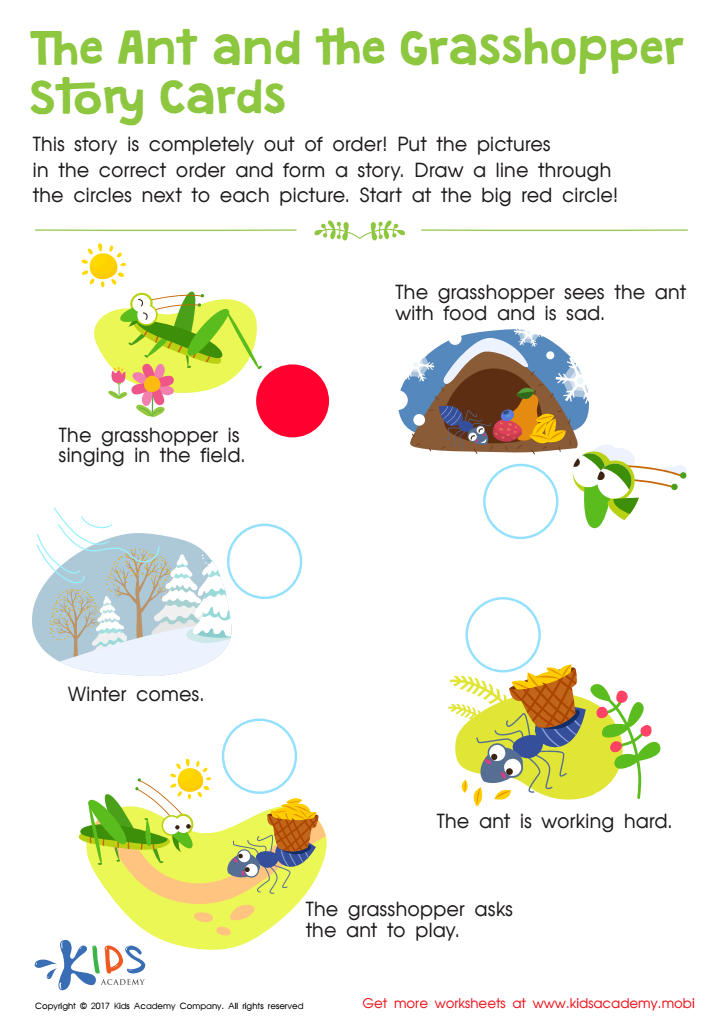
The Ant and The Grasshopper Worksheet
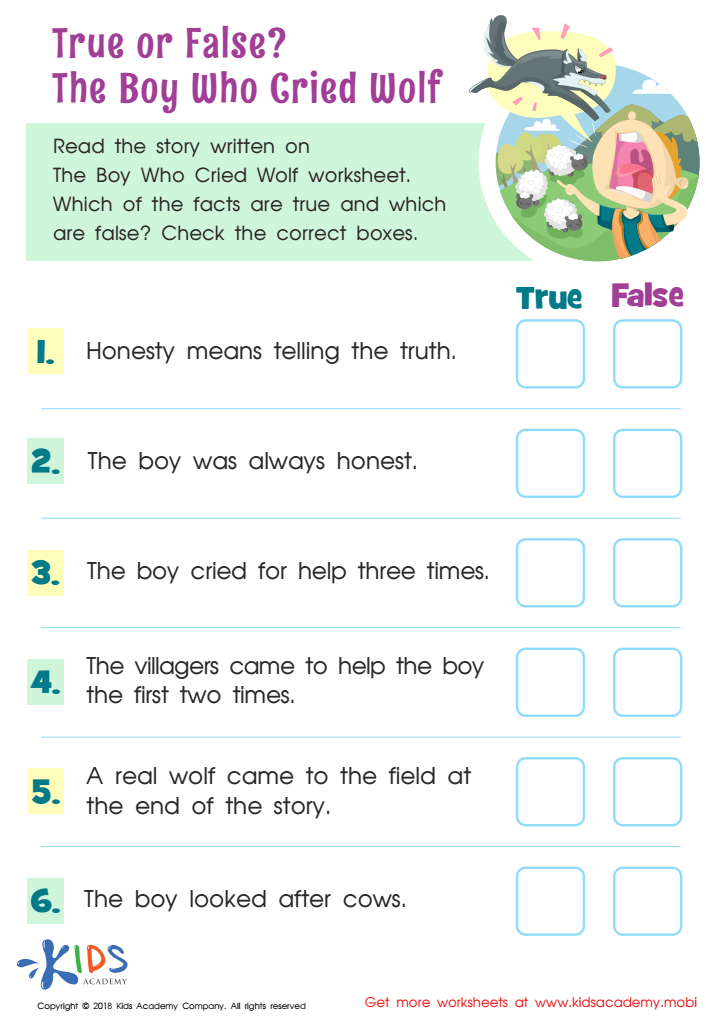
True or False? The Boy Who Cried Wolf Worksheet
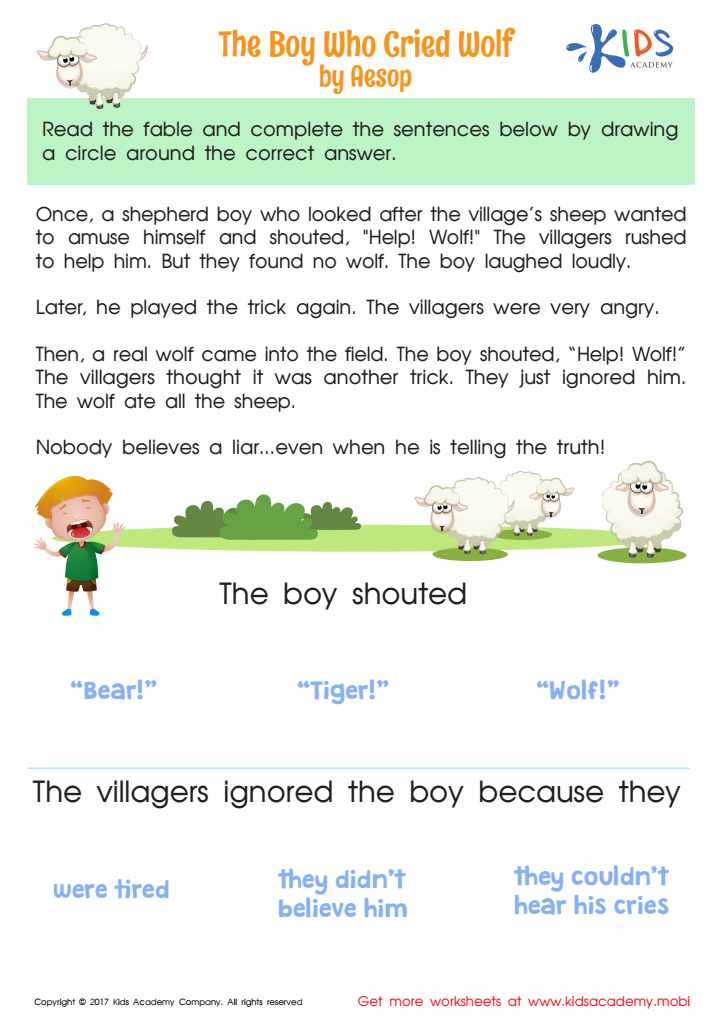
The Boy Who Cried Wolf Worksheet






.jpg)
Fostering moral understanding in children ages 4-7 through reading fiction is critical because this foundational age sets the stage for their future development. For parents and teachers, introducing stories that combine engaging narratives with moral lessons helps children grasp complex concepts like empathy, fairness, kindness, and honesty in an accessible manner. Stories enable children to see the consequences of good and bad behavior in a safe, imaginative setting, cultivating their ability to make ethical decisions in real life.
By reading fiction that illustrates diverse perspectives and situations, children can develop empathy and social awareness. Recognizing the feelings and experiences of different characters broadens their understanding and acceptance of others, fostering inclusivity and shared societal values. Moreover, morally rich stories often present characters faced with dilemmas that prompt discussions about right and wrong, enhancing a child’s critical thinking and moral reasoning abilities.
Furthermore, shared reading experiences create wonderful opportunities for parent-child and teacher-student bonding. These interactions are golden moments to nurture a strong moral compass, rely on mutual trust, and value communication.
Ultimately, integrating moral lessons into enjoyable fiction prepares children not only for academic success but also for a well-rounded, compassionate approach to the world around them. Through these stories, young kids learn not just to read, but to think virtuously.








