Enhancing Reading Comprehension Reading Non-Fiction Worksheets for Ages 4-7
3 filtered results
-
From - To
Enhance your child's reading comprehension skills with our engaging non-fiction worksheets designed for ages 4-7. These printable resources focus on building vital comprehension strategies, encouraging young learners to explore real-world topics while developing critical thinking abilities. Each worksheet is tailored to spark curiosity and promote understanding of various subjects through captivating text and interactive activities. Perfect for both classroom and home learning, our non-fiction resources help children make connections, ask questions, and summarize information effectively. Ignite a passion for reading and empower your child with the skills they need to succeed in their educational journey! Explore and download today!
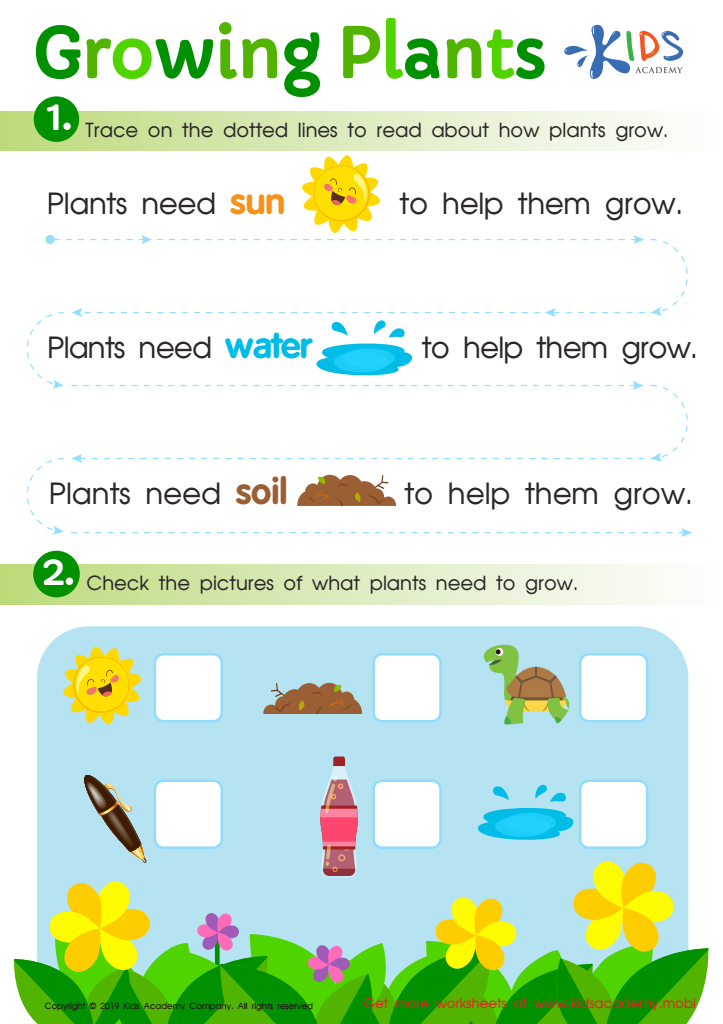
Growing Plants Worksheet
 Assign to My Students
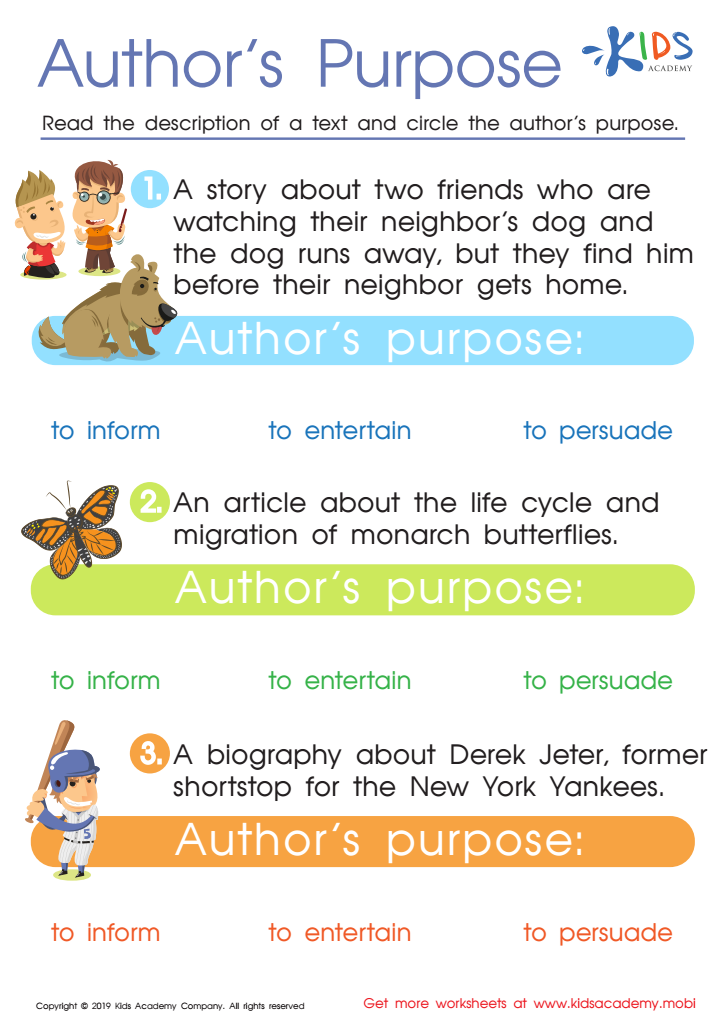
Author's Purpose Worksheet
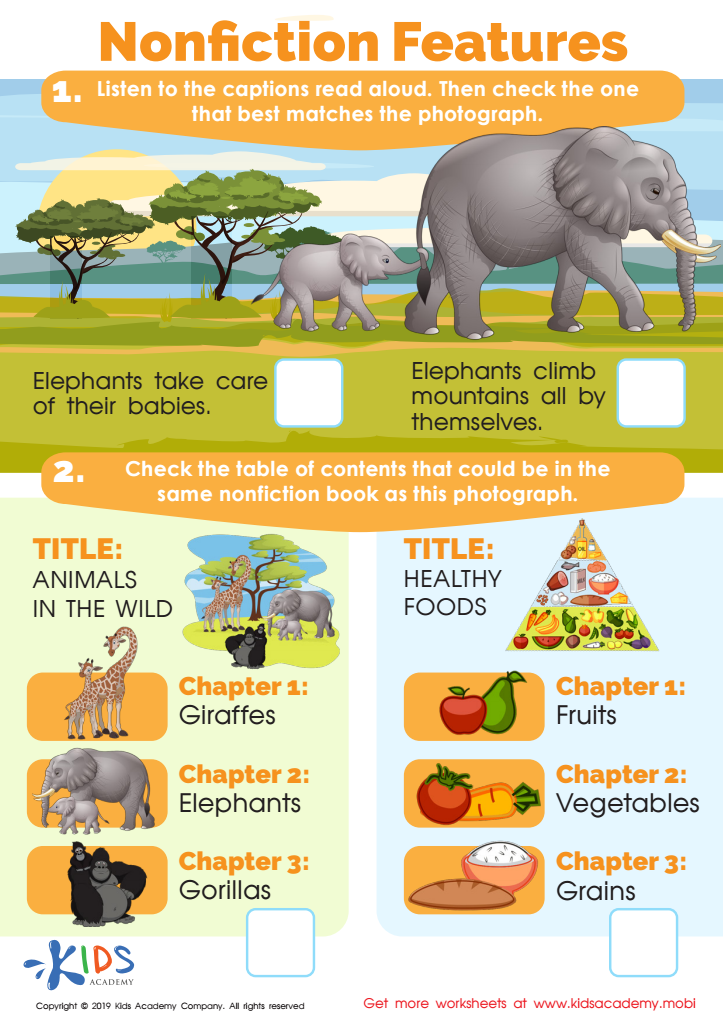
Nonfiction Features Worksheet








Enhancing reading comprehension of non-fiction texts for ages 4-7 is crucial for several reasons. First, at this developmental stage, children are captivated by the world around them, and non-fiction texts offer a rich opportunity to explore real-life concepts, ideas, and experiences. Engagement with factual content promotes curiosity and encourages questions, laying the groundwork for critical thinking skills.
Moreover, reading non-fiction enhances vocabulary and language skills, which are vital for effective communication. As young learners encounter diverse terminology, they build a robust language foundation that supports all aspects of literacy. Comprehension strategies learned through non-fiction reading also translate to better understanding of fiction texts, as both genres contribute to overall literacy development.
Parental and teacher involvement in fostering a love for non-fiction not only enhances comprehension but also nurtures a lifelong interest in learning. By exposing children to a variety of topics—ranging from animals to space exploration—educators and parents can cultivate a sense of agency, encouraging children to relate content to their own lives and experiences. In summary, prioritizing reading comprehension of non-fiction at this age enriches children's cognitive, linguistic, and emotional growth, setting them up for future academic success.








