Fine Motor Skills Reading Non-Fiction Worksheets for Ages 4-7
3 filtered results
-
From - To
Discover a fun and engaging way to enhance your child's fine motor skills with our Non-Fiction Reading Worksheets, specifically designed for ages 4-7. These printable worksheets combine informative text with hands-on activities, encouraging young learners to explore the world around them. As children practice tracing, cutting, and coloring, they simultaneously improve their hand-eye coordination and dexterity. Each worksheet is crafted to stimulate curiosity and foster a love for reading, making learning enjoyable. Perfect for classrooms or home use, our resources are designed to support early literacy and fine motor development, setting a foundation for a lifetime of learning.
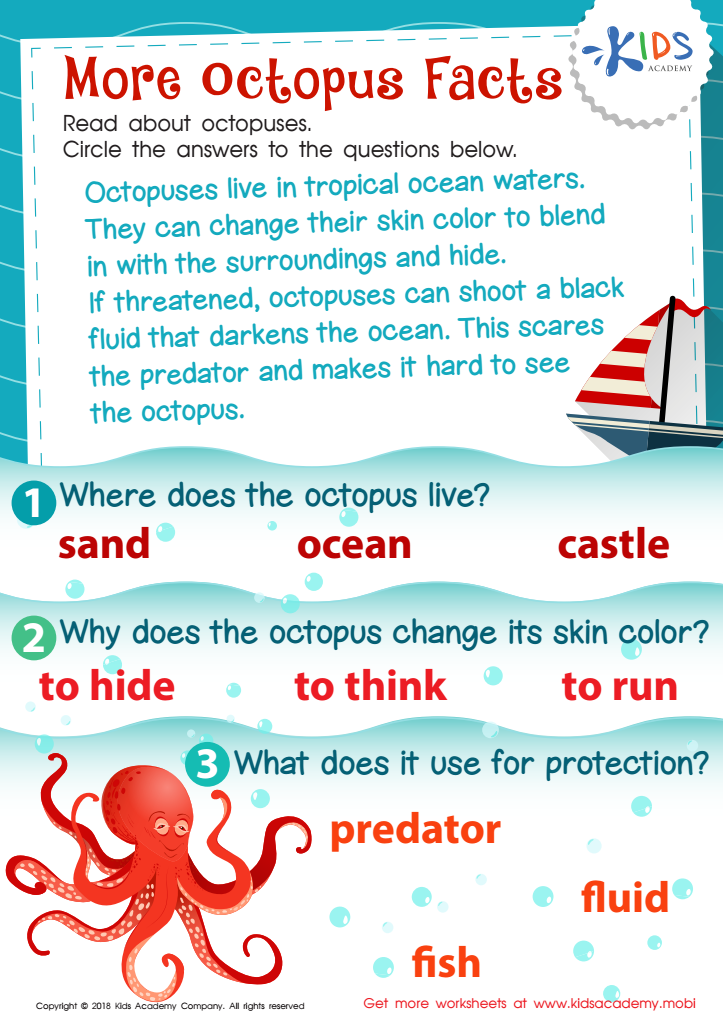
More Octopus Facts Worksheet
 Assign to My Students
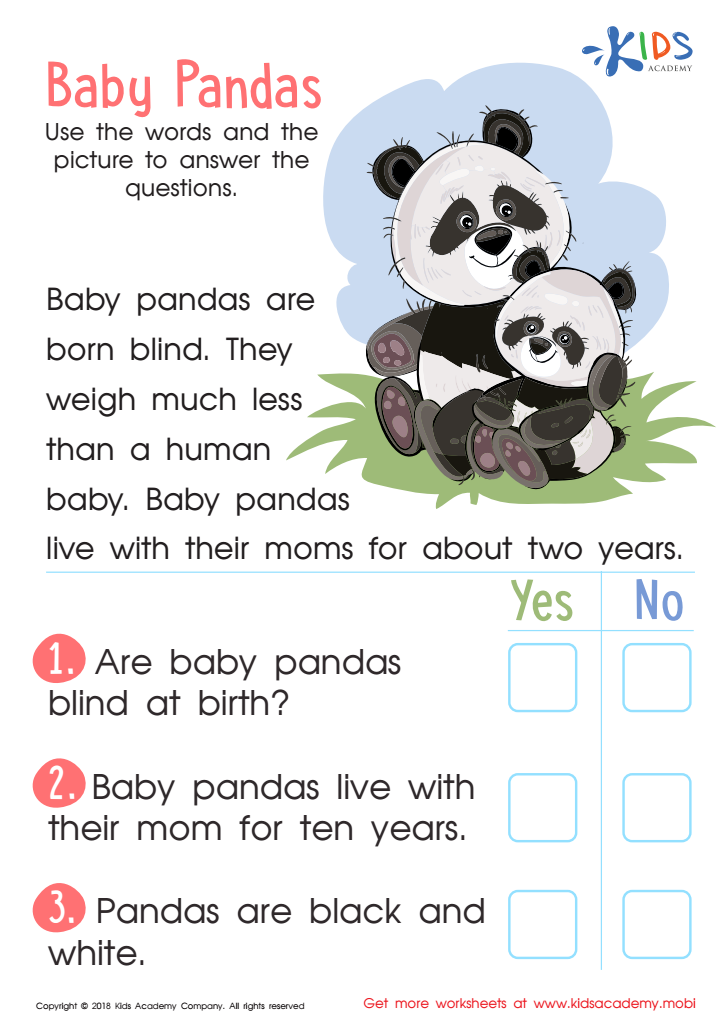
Baby Pandas Worksheet
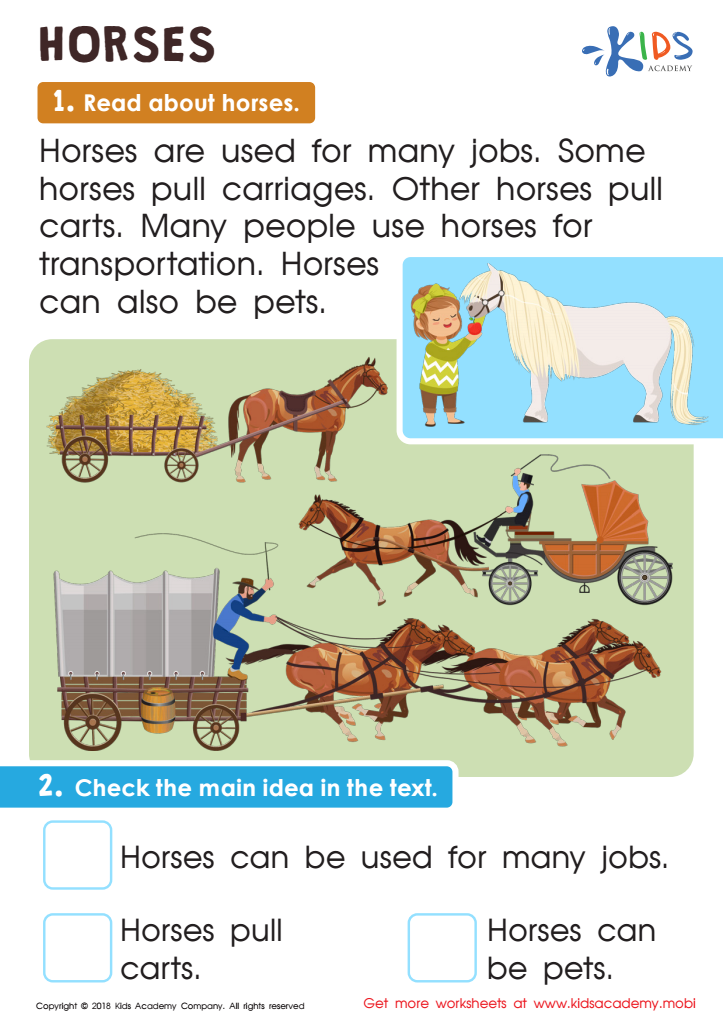
Horses Worksheet








Fine motor skills are essential for young children as they lay the groundwork for later academic success and daily life tasks. For children aged 4-7, these skills are particularly important when it comes to activities like reading non-fiction. Fine motor skills involve the small muscles in hands and fingers, enabling tasks like holding a book, turning pages, and writing. These abilities contribute significantly to literacy development.
Reading non-fiction becomes an engaging way to develop these skills. When children explore books filled with real-life information and facts, they often interact more actively—pointing to pictures, tracing letters, or turning pages, thus reinforcing their dexterity. Such interactions can spark curiosity and motivate them to learn, fostering a love for reading while enhancing cognitive development.
Additionally, children learn to manipulate different materials, such as paper, glue, and scissors, when creating projects related to non-fiction topics. This adds an element of creativity and hands-on learning that complements reading. Parents and teachers should prioritize fine motor skill development, particularly with non-fiction reading, to equip children with the skills needed for writing, comprehension, and other crucial academic pursuits throughout their educational journey. Ultimately, it empowers them to navigate the world around them knowledgeably and confidently.








