Vocabulary development Animals Worksheets for Ages 4-7
4 filtered results
-
From - To
Enhance your child's language skills with our "Vocabulary Development Animals Worksheets for Ages 4-7." Tailored for young learners, these engaging printable activities feature a variety of animals to help build essential vocabulary. Kids will enjoy colorful illustrations and interactive exercises designed to reinforce word recognition, pronunciation, and usage in a fun, educational setting. Perfect for classroom or at-home learning, these worksheets not only foster a love for animals but also set a solid foundation for future reading and communication skills. Watch your child confidently expand their vocabulary and explore the animal kingdom with excitement!
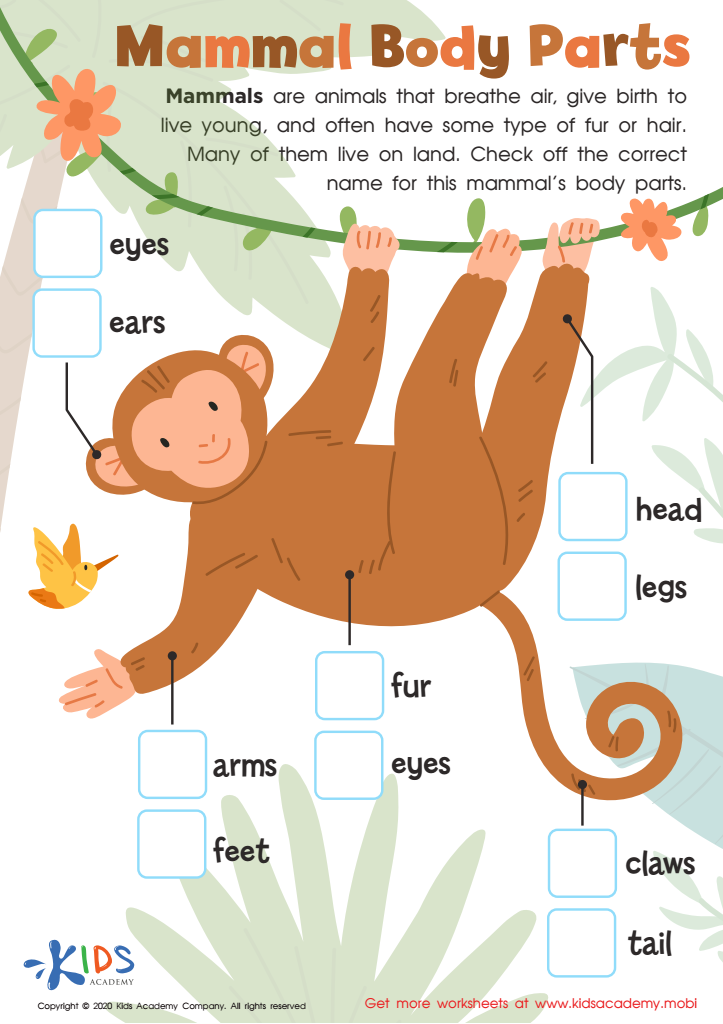
Mammal Body Parts Worksheet
 Assign to My Students
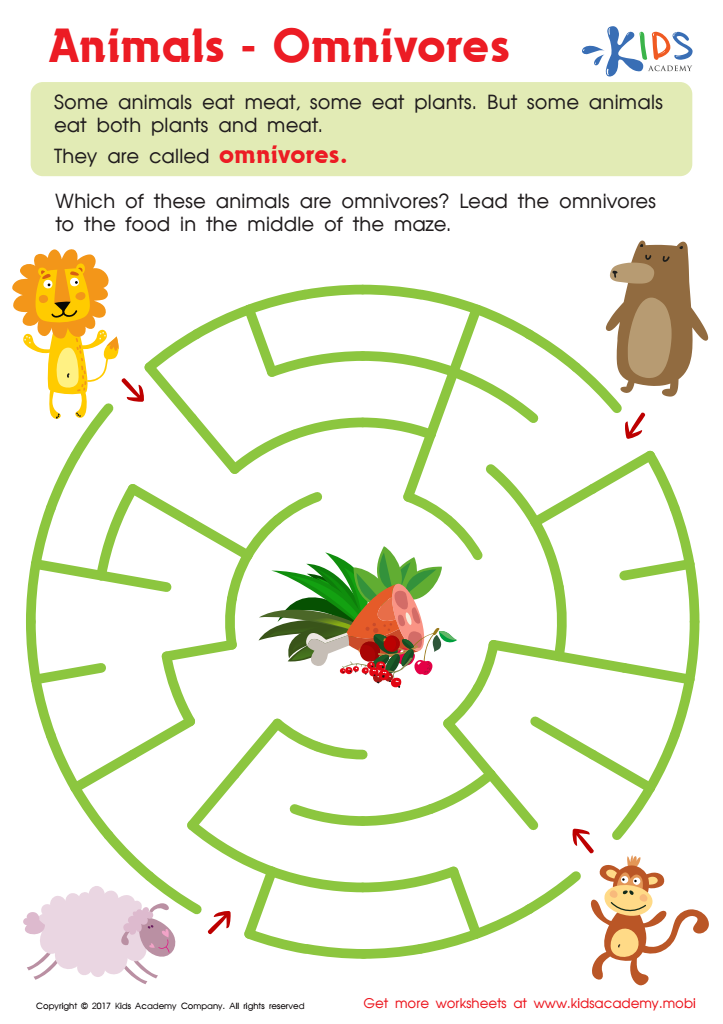
Omnivores Animals Worksheet
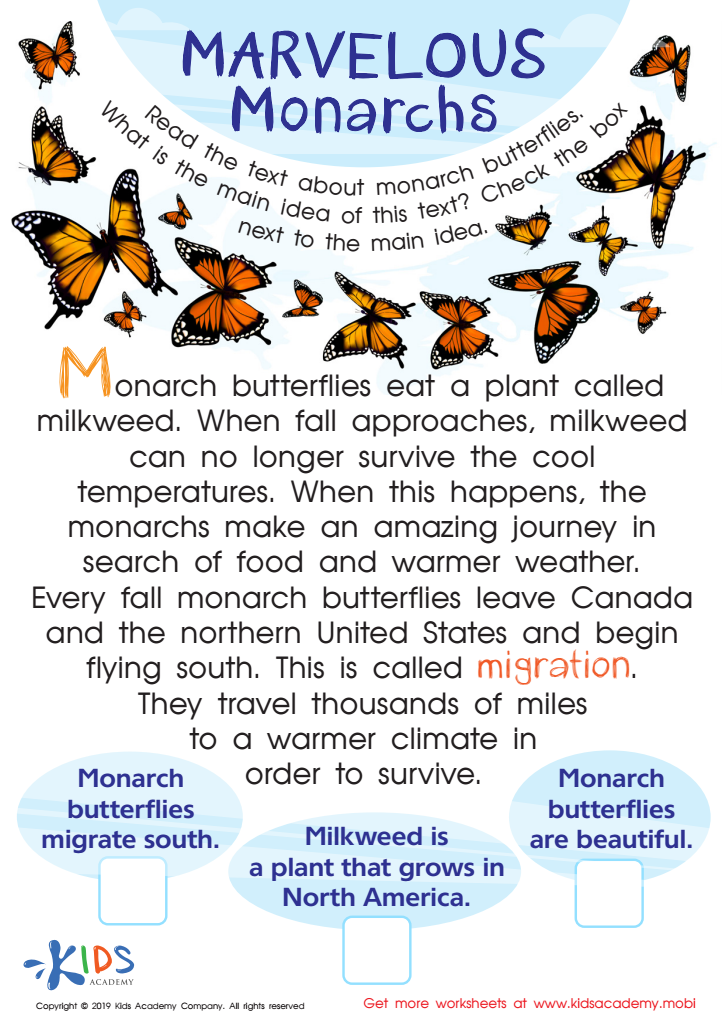
Marvelous Monarchs Worksheet
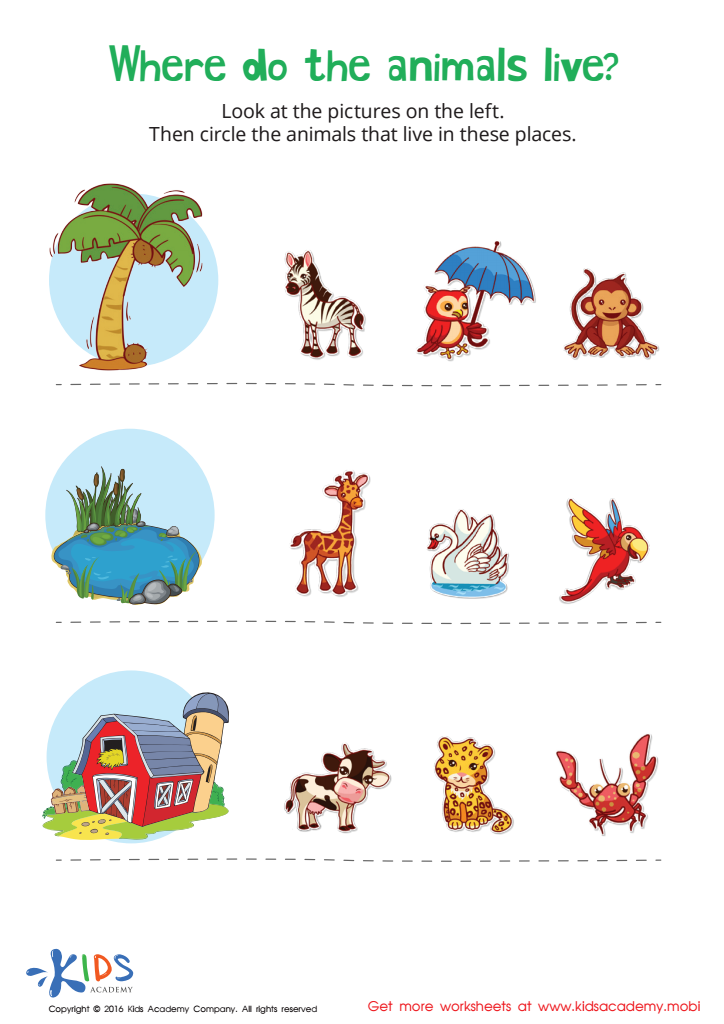
Where Animals Live Worksheet





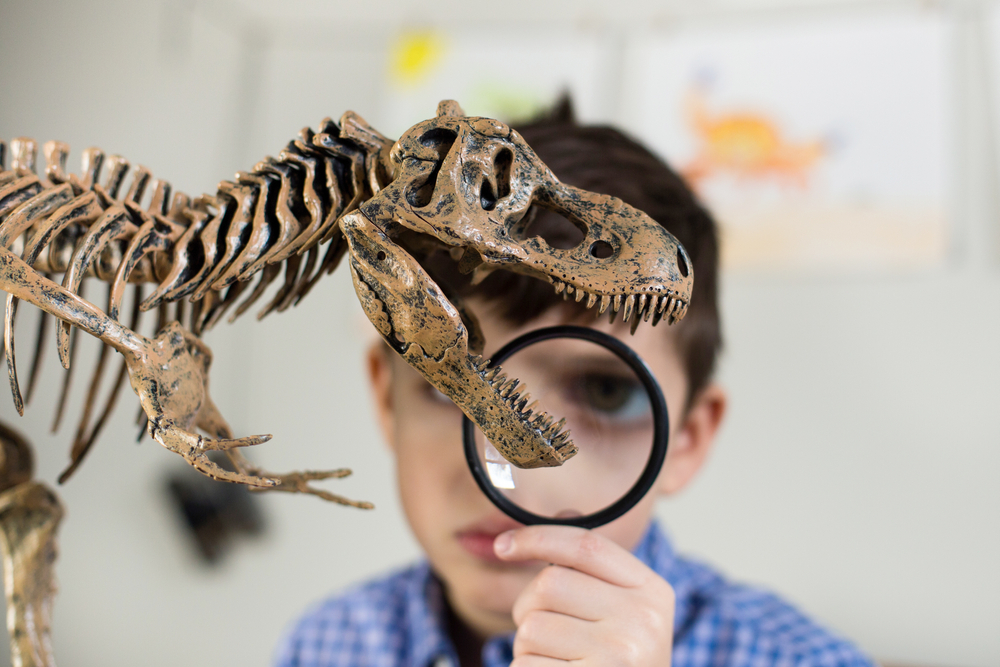


Vocabulary development, especially related to animals, is vital for children ages 4-7 and deserves significant attention from both parents and teachers. At this tender age, children's brains are highly receptive, and they learn best through engagement and exploration. Introducing them to a robust vocabulary, particularly one related to animals, has numerous benefits.
Firstly, knowledge of animal names, characteristics, and habitats enhances language skills. As children categorize animals by specific traits or habitats, such as "feathers" for birds or "fins" for fish, they develop critical thinking skills and can draw important distinctions, boosting cognitive development.
Secondly, discussing animals fosters curiosity and encourages a love for nature and science. This early curiosity can lay the foundation for lifelong learning and environmental stewardship. Children begin to understand the importance of biodiversity and can develop a sense of empathy for living creatures, fostering emotional development and social awareness.
Finally, animals are universally engaging subjects. Whether it's a lion's roar or the hop of a rabbit, animals captivate young imaginations, making learning fun and memorable. Enriching a child’s vocabulary with animal-related terms not only aids in linguistic and cognitive development but also taps into their natural enthusiasm, thereby promoting a positive and interactive learning environment. By focusing on this area, parents and educators can support a child’s foundational skills that are essential for later academic success and personal growth.








