Weather identification Weather Worksheets for Ages 4-7
4 filtered results
Difficulty Level
Grade
Age
-
From - To
Subject
Activity
Standards
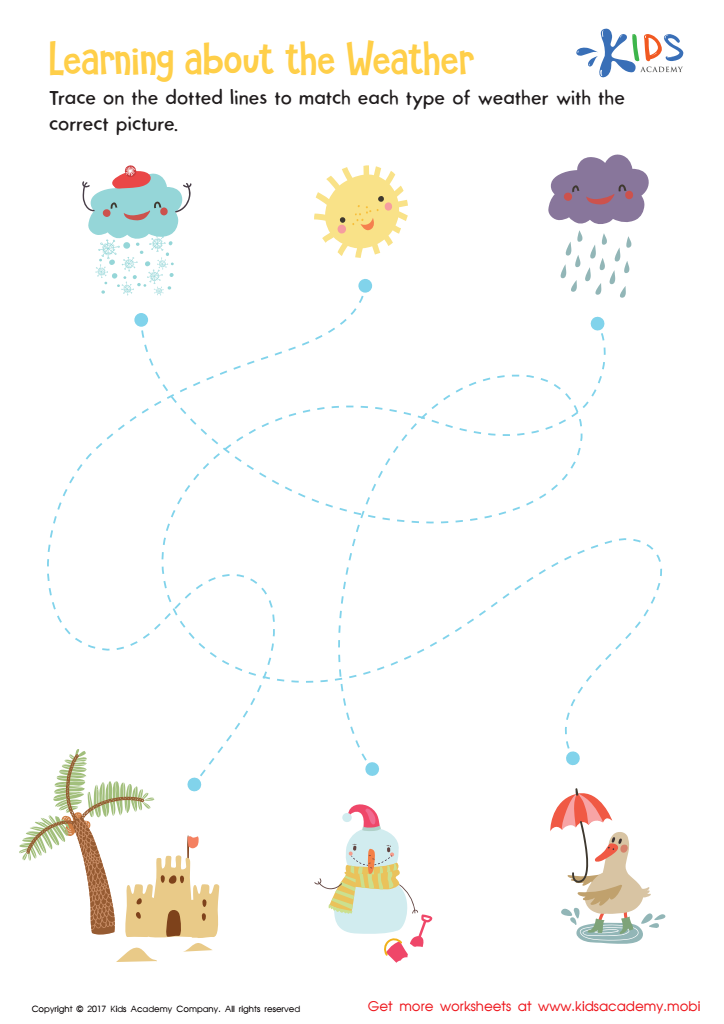
Unlock the wonders of the weather with our engaging Weather Identification Worksheets designed for ages 4-7. These interactive activities promote early learning through fun exercises that help young children recognize various weather conditions, such as sunny, rainy, snowy, and stormy. Each worksheet is crafted to enhance critical thinking, observation skills, and vocabulary development while aligning with educational standards. Perfect for preschool and kindergarten classrooms, as well as homeschooling, these resources make learning about the world around us exciting and enjoyable. Download our Weather Identification Worksheets today to inspire curiosity and knowledge about weather patterns in the youngest learners!
Favorites
With answer key
Interactive
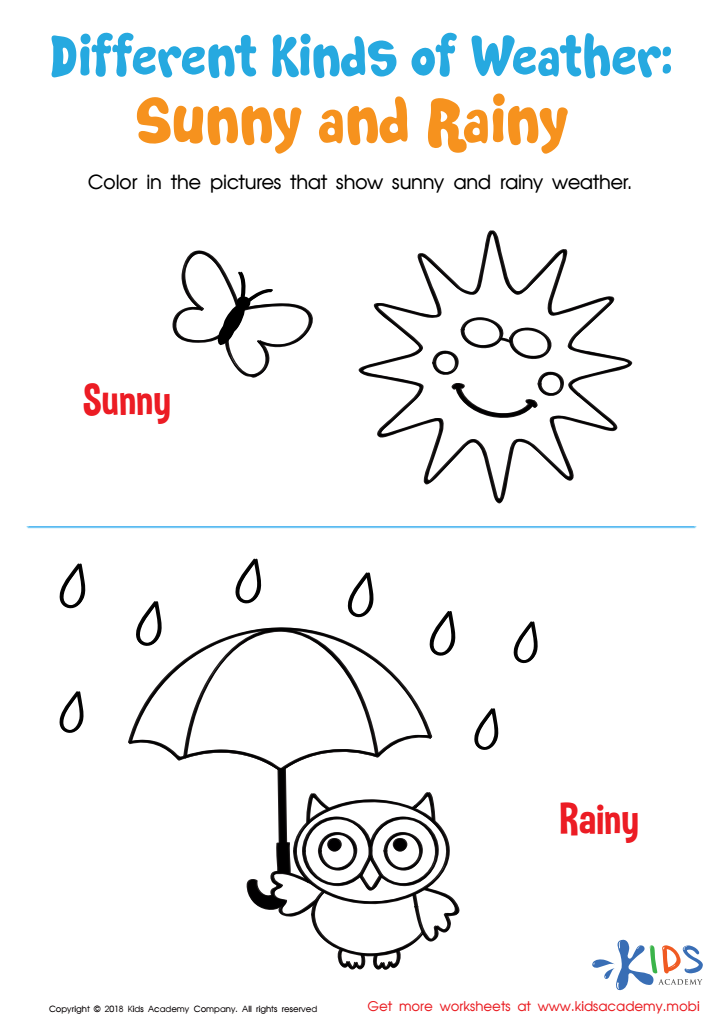
Different Kinds of Weather: Sunny and Rainy Worksheet
Kids will love coloring this fun worksheet that helps them learn about different types of weather. They'll hone their fine motor skills while reinforcing the cyclical nature of natural events. Download this free PDF to give kids a basic understanding of weather concepts and lay the groundwork for further learning.
Download (PDF)
 Assign to My Students
Assign to My Students
Different Kinds of Weather: Sunny and Rainy Worksheet
Worksheet
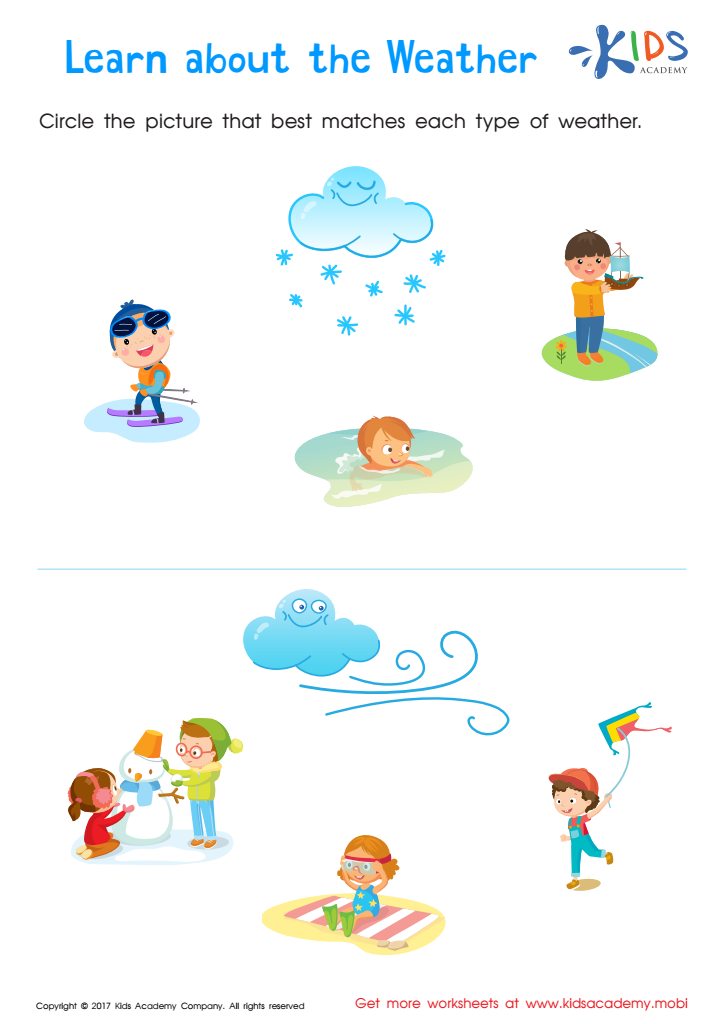
About the Weather Printable
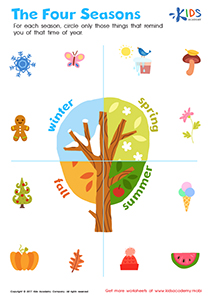
This worksheet is perfect for reinforcing knowledge about changing weather and activities that suit each season. Help your child use their life experiences to observe the weather and complete the worksheet. Fun and colorful, it's a great way to learn about weather and seasons. Let's get started!
About the Weather Printable
Worksheet
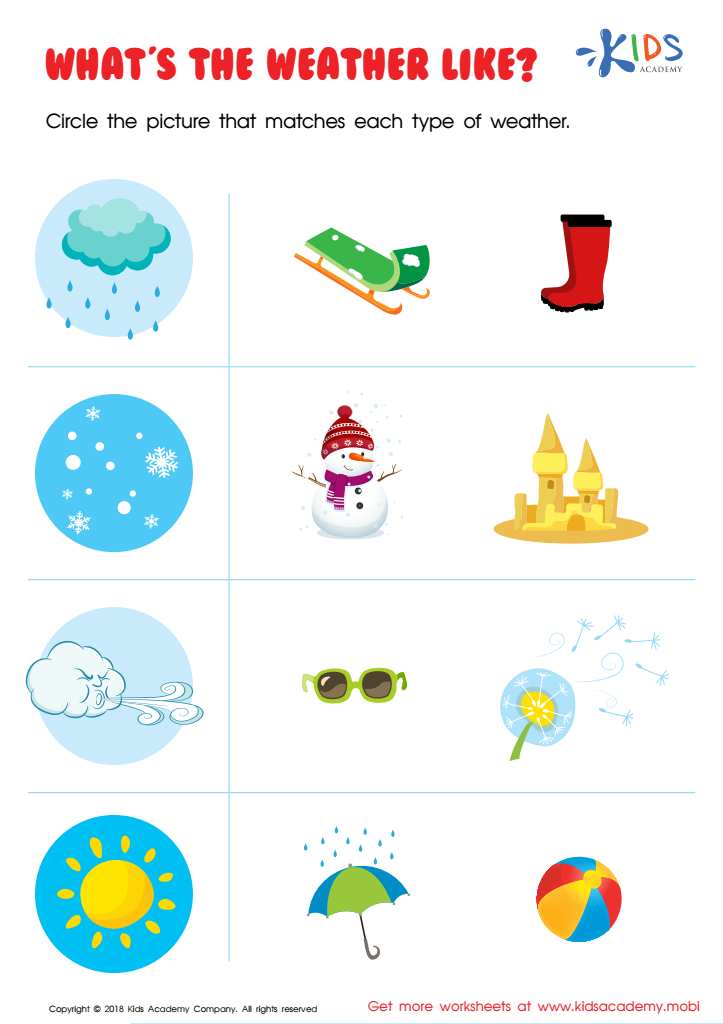
What's the Weather Like? Worksheet
Help budding meteorologists practice matching weather to seasons with this PDF worksheet. Picture clues help identify seasons and fine motor skills are practiced circling the correct weather patterns. Bright and engaging characters make learning fun and reinforce weather knowledge.
What's the Weather Like? Worksheet
Worksheet
Join Kids Academy for Free
Who is primarily going to use this learning content?







Understanding weather is essential for children aged 4-7 as it lays the foundation for scientific literacy and critical thinking. At this young age, kids are naturally curious about their environment, making it the perfect opportunity to teach them about different weather conditions. Engaging kids in weather identification helps cultivate their observational skills and encourages them to ask questions about the world around them.
Weather affects daily activities, clothing choices, and outdoor play, which makes it relevant to their everyday lives. Teaching weather concepts can foster independence and decision-making skills, as children learn to dress appropriately or plan outings based on the forecast. Furthermore, recognizing different weather patterns can enhance connectivity to natural seasons (like rain, sunshine, and snow) and instill an appreciation for nature.
For teachers and parents, incorporating weather identification into activities can make learning interactive and fun. Use of visual aids, songs, and hands-on experiments makes it relatable for young learners. Overall, caring about weather education equips children with essential life skills while making learning enjoyable, thereby nurturing a lifelong love for discovering more about their world. Through weather identification, children become more informed, adaptable, and engaged individuals, ready to embrace challenges in everyday life.