Weather Vocabulary Weather Worksheets for Ages 4-7
3 filtered results
-
From - To
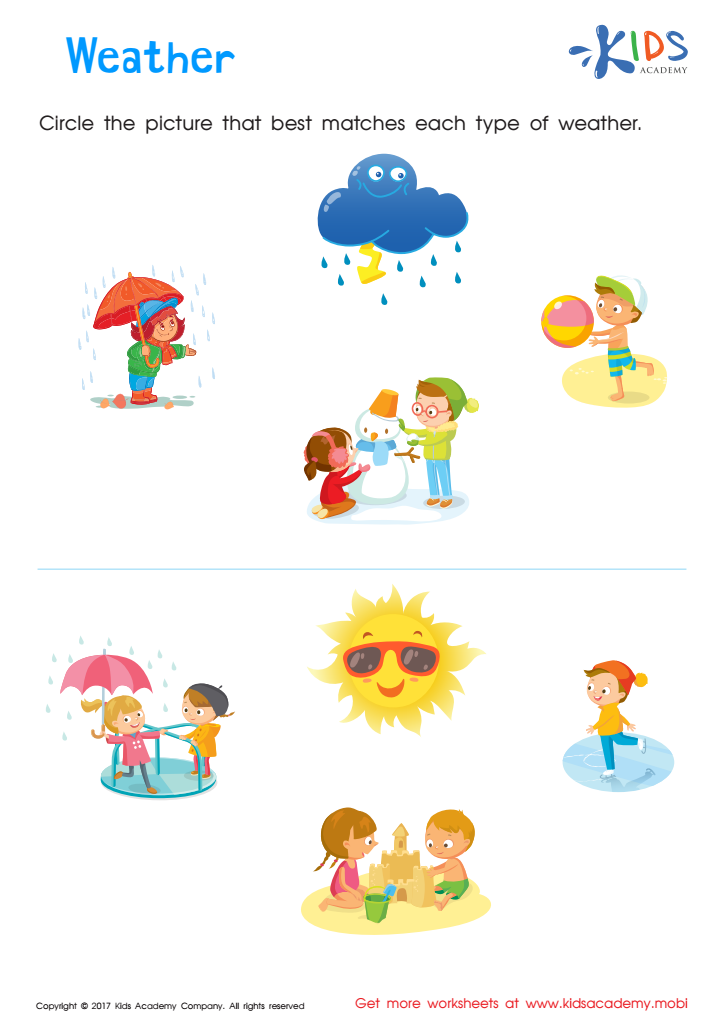
Boost your child's understanding of the fascinating world of weather with our engaging Weather Vocabulary Worksheets designed for ages 4-7! These fun and interactive resources introduce young learners to essential weather terms, helping them develop critical vocabulary and comprehension skills. Through colorful illustrations and straightforward activities, children will explore different weather conditions, such as sunny, rainy, windy, and snowy, while enhancing their language abilities. Our worksheets are perfect for home or classroom use, making learning about the world around us enjoyable and effective. Dive into the exciting realm of weather vocabulary and watch your little ones thrive in their learning journey!
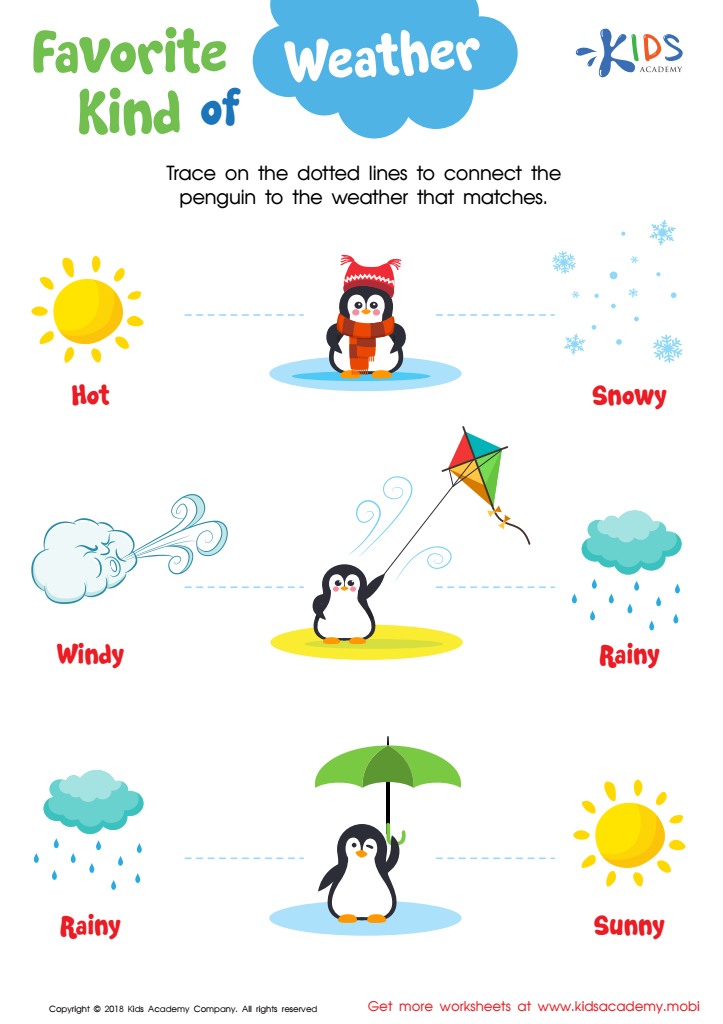
Favorite Kind of Weather Worksheet
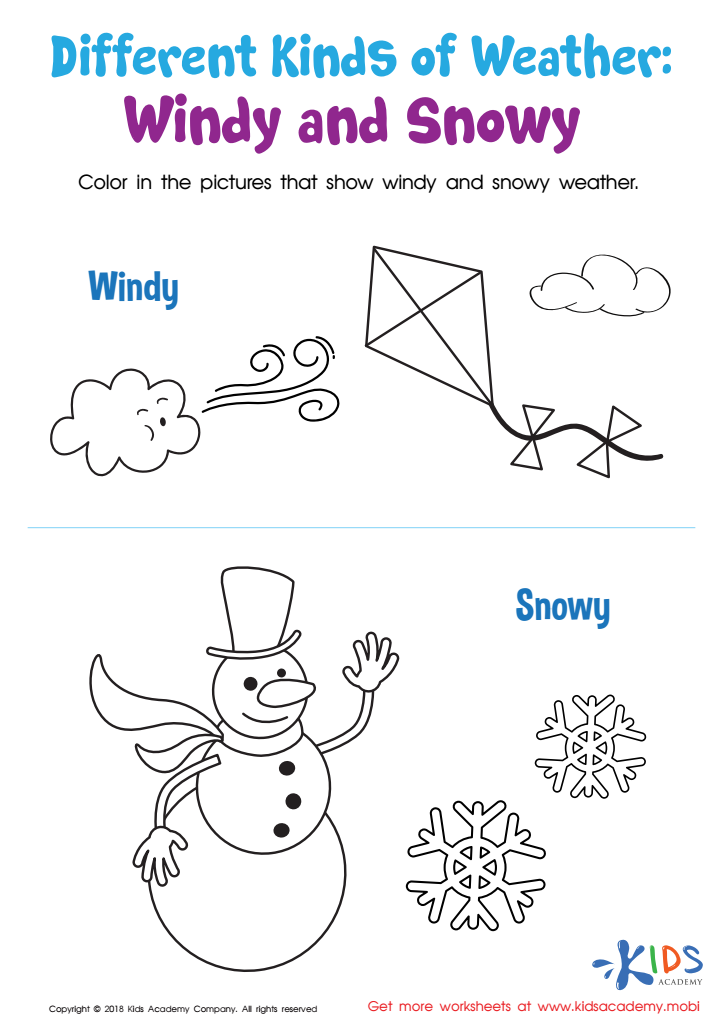
Different Kinds of Weather: Windy and Snowy Worksheet
 Assign to My Students








Understanding weather vocabulary is essential for young children aged 4-7 as it lays the foundation for their comprehension of the world around them. Parents and teachers should prioritize teaching this vocabulary for several reasons. First, weather influences daily activities, routines, and safety. Teaching children terms like "sunny," "rainy," "stormy," or "cloudy" helps them understand when to wear appropriate clothing or engage in outdoor play.
Additionally, weather vocabulary encourages curiosity and conversation. When children learn to express what they observe in the sky, they become more engaged and interested in their environment, fostering observational skills and critical thinking. It’s also a gateway to scientific concepts, introducing ideas about climate, seasons, and even ecology.
Moreover, discussing weather can enhance communication skills, as children learn to articulate their thoughts and ask questions. This engagement helps develop their literacy as they start to read simple weather-related books and stories. Importantly, familiarity with weather vocabulary promotes emotional understanding; recognizing weather-related emotions—like excitement on a snowy day or sadness on a rainy one—can enhance empathic skills.
In conclusion, weather vocabulary not only serves practical benefits but also supports children's cognitive and emotional development.