Improving vocabulary Grammar Worksheets for Ages 4-7
5 filtered results
-
From - To
Enhance your child's language skills with our "Improving Vocabulary Grammar Worksheets" designed specifically for ages 4-7! These engaging worksheets promote vocabulary building and grammar mastery through fun activities tailored to young learners. Each printable worksheet encourages creativity and critical thinking, making learning enjoyable. Perfect for use at home or in the classroom, our resources nurture essential skills while developing a love for language. With vibrant illustrations and age-appropriate challenges, your child will gain confidence in their writing and communication abilities. Discover the joy of learning while enriching your child's vocabulary with our thoughtfully crafted worksheets. Start their journey to language proficiency today!
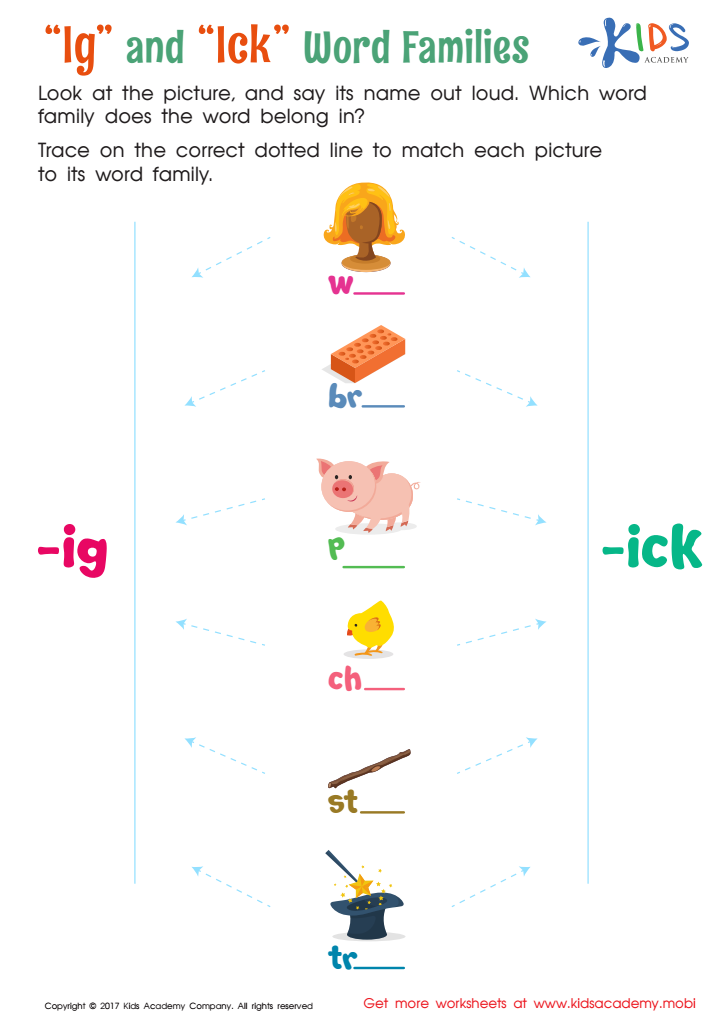
Words Families "ig" and "ick" Spelling Worksheet
 Assign to My Students
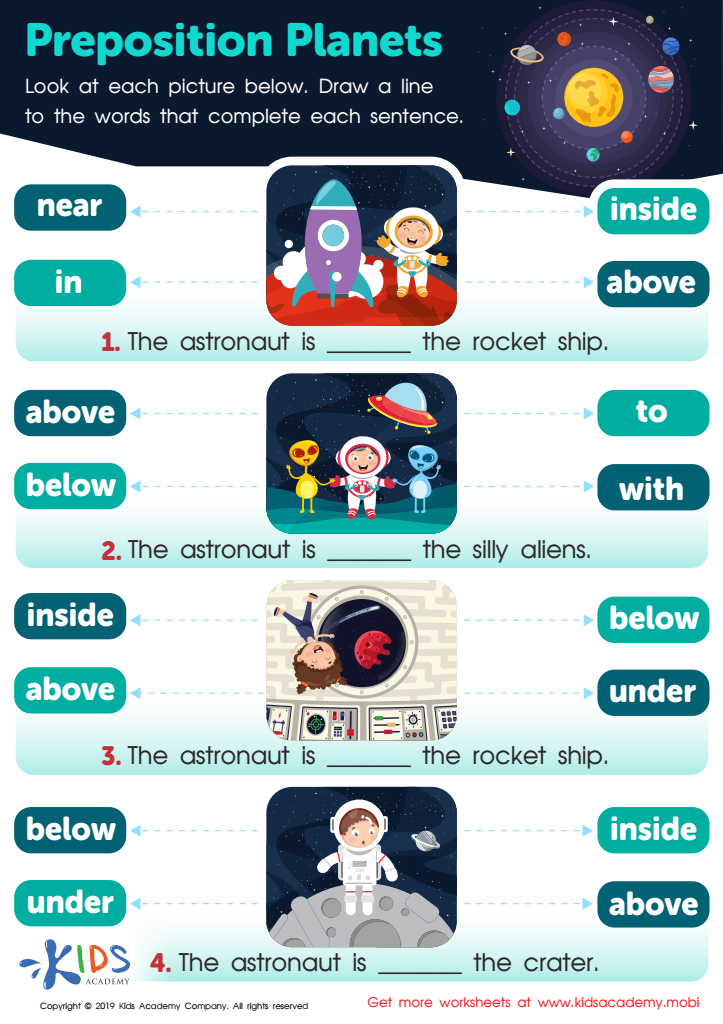
Preposition Planets Worksheet
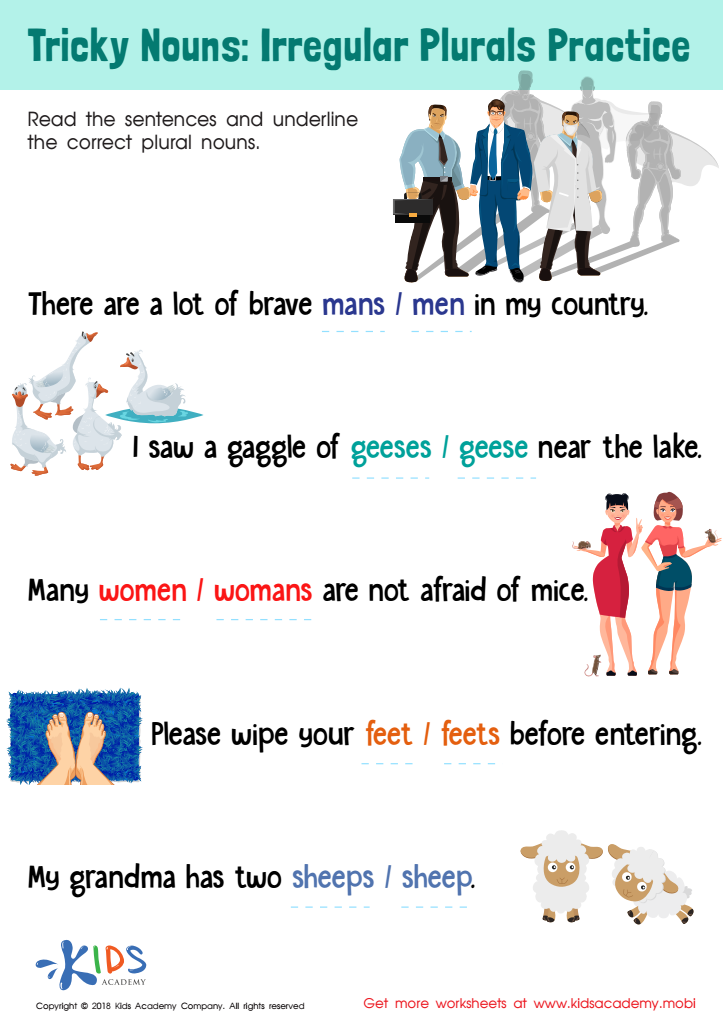
Tricky Nouns: Irregular Plurals Practice Worksheet
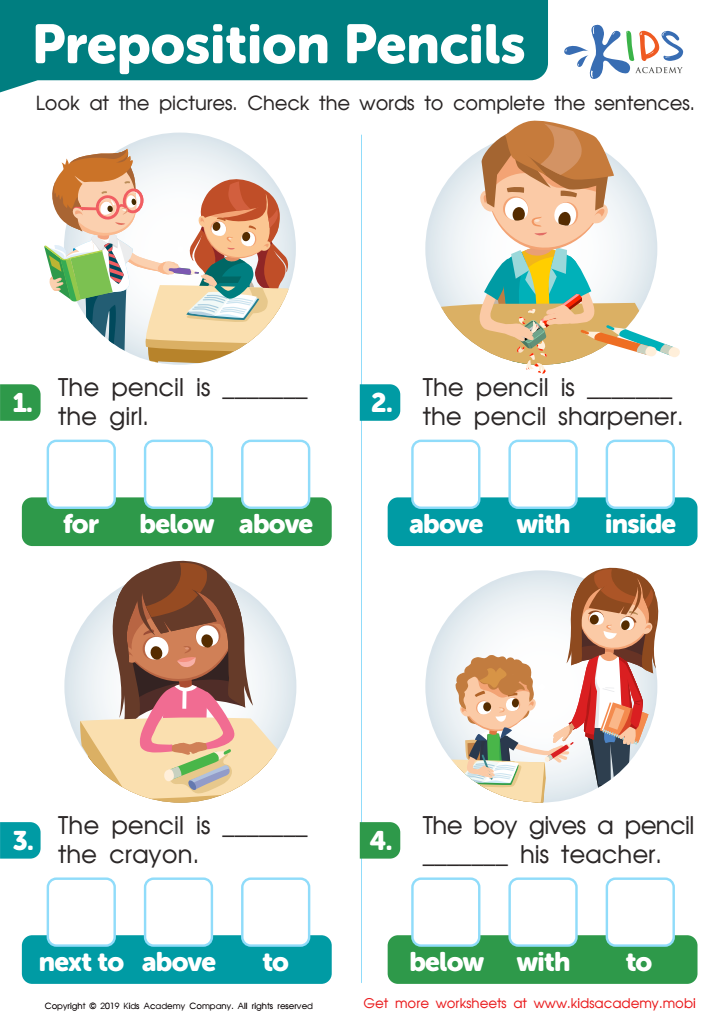
Preposition Pencils Worksheet
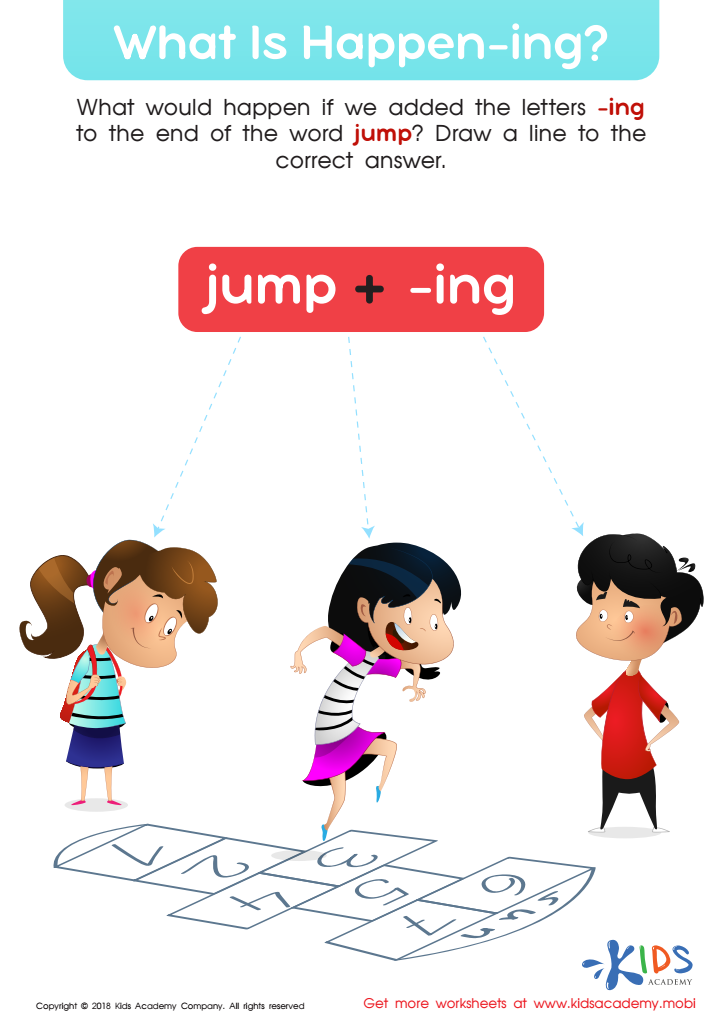
What Is Happen-Ing? Worksheet






.jpg)
Improving vocabulary and grammar in children ages 4-7 is crucial for their overall language development and academic success. During these formative years, children are like sponges, absorbing new words and grammatical structures from their environments. A rich vocabulary enhances their ability to express thoughts, emotions, and ideas, fostering effective communication skills. For parents and teachers, supporting vocabulary growth can significantly contribute to a child's literacy skills, laying a solid foundation for reading and writing in the future.
Moreover, mastering grammar helps children construct coherent sentences, which aids in following instructions and engaging in conversations. A firm grasp of language mechanics boosts a child's confidence, encouraging them to participate freely in discussions and school activities.
Additionally, strong vocabulary and grammar skills are linked to better comprehension abilities, helping children understand stories more fully, participate in group discussions, and solve problems effectively. This early investment in language skills can lead to long-term academic benefits, enabling learners to achieve higher levels of literacy. Ultimately, prioritizing vocabulary and grammar strengthens a child's social connections, self-expression, and enjoyment of learning, making it essential for parents and educators to engage actively in this developmental process.








