
Letter recognition Beginning Sounds Worksheets for Ages 4-8
3 filtered results
Difficulty Level
Grade
Age
-
From - To
Subject
Activity
Standards
Enhance your child's literacy skills with our engaging Letter Recognition Beginning Sounds Worksheets, specially designed for ages 4-8. These worksheets offer a fun and interactive way to help young learners identify letters and the sounds they make. Through various activities, including coloring and sorting, children will improve their phonemic awareness while developing the foundational skills necessary for reading and writing. Our carefully crafted worksheets aim to build confidence and independence in every child, making learning a joyful experience. Explore our diverse collection today and watch your little ones flourish as they discover the world of letters and sounds!
Favorites
With answer key
Interactive
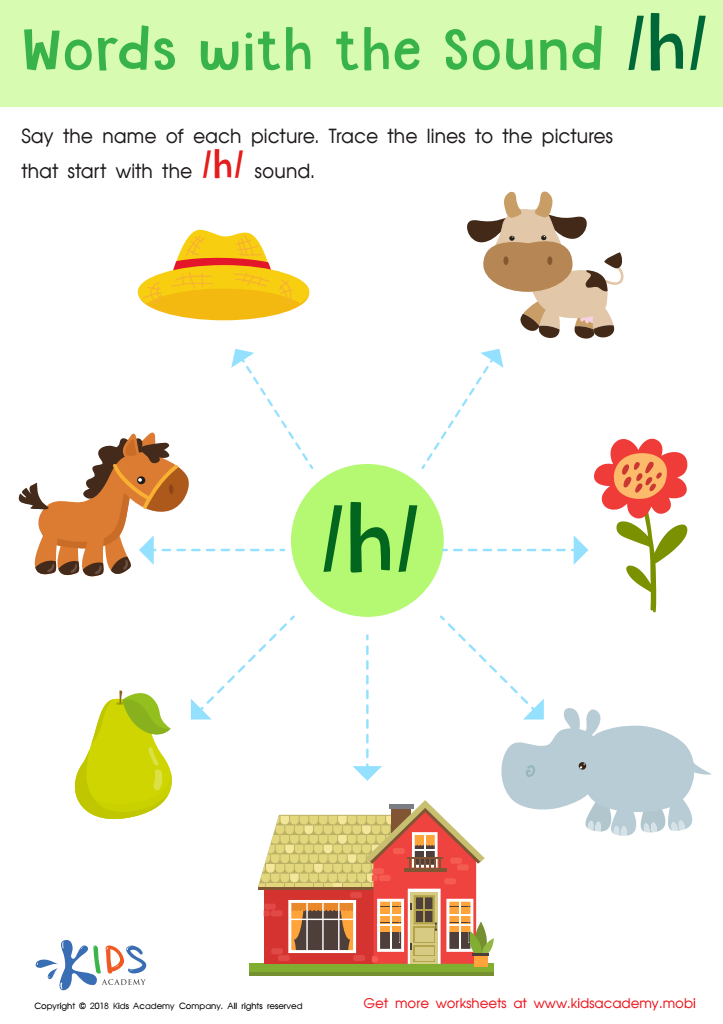
Words with sound h Reading Worksheet
The letter H can often be heard in words! Check your child's knowledge with an engaging worksheet from Kids Academy. Ask them to go around a circle and name each image aloud. Listen for the starting sound and trace the line from the middle letter to the images with the sound. This is a great way to practice phonics!
 Assign to My Students
Words with sound h Reading Worksheet
Worksheet
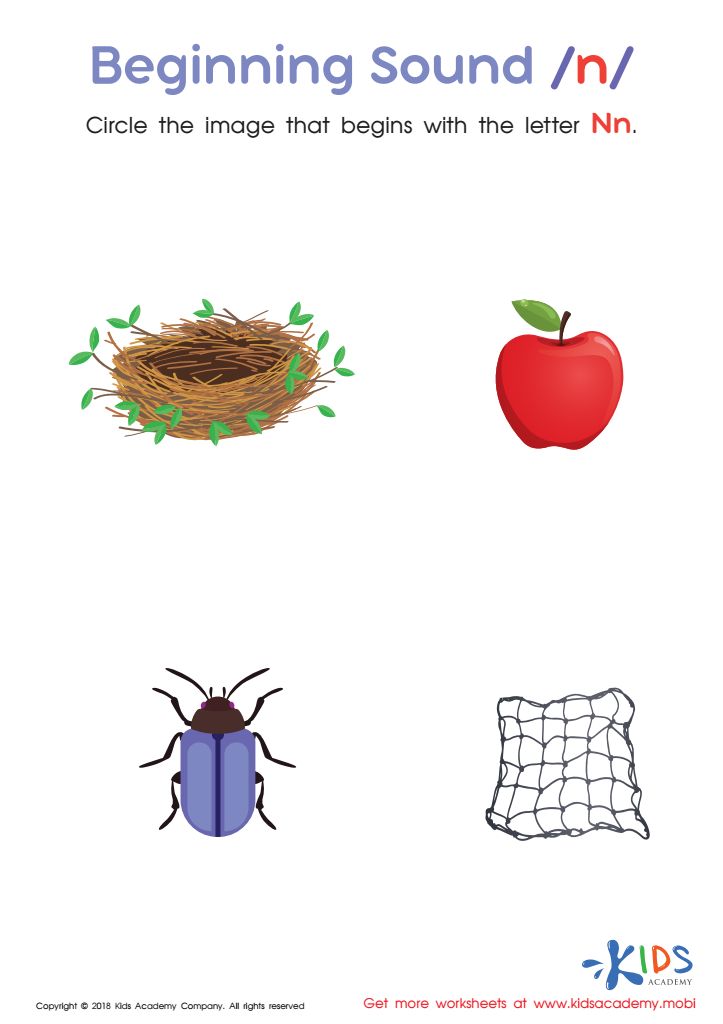
Beginning Sound «n» Worksheet
Help your emerging reader learn the initial «n» sound with this free PDF worksheet! Strengthen fine motor skills by tracing circles around words beginning with «n». Pictures are clear and engaging, giving beginning Phonics learners the right amount of practice and the confidence to succeed.
Beginning Sound «n» Worksheet
Worksheet
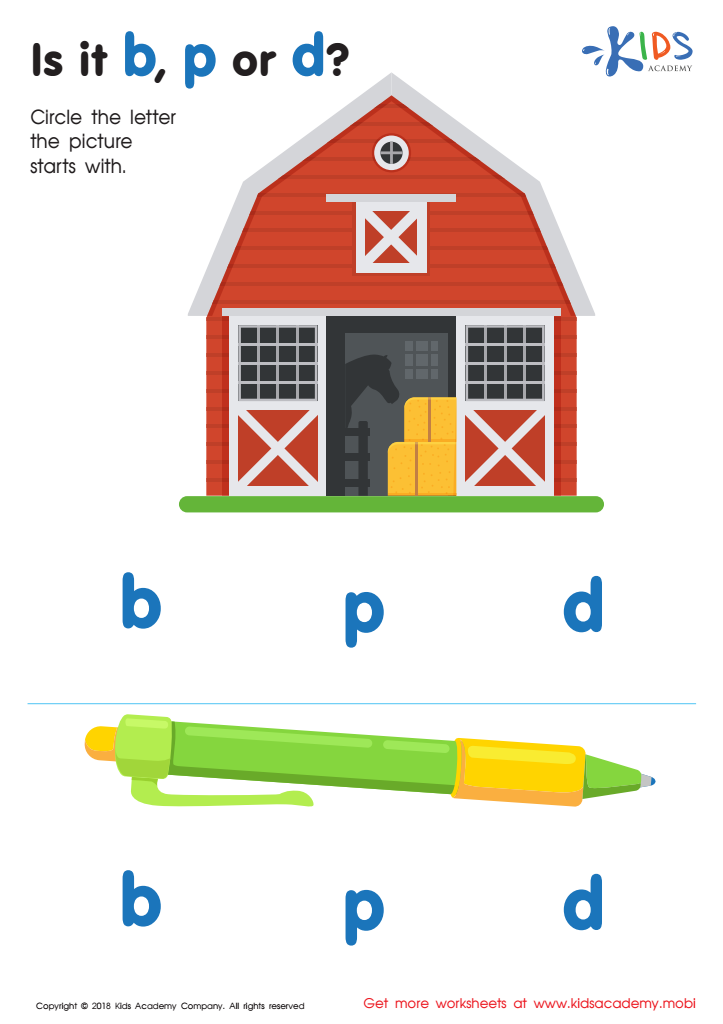
Is it b, p or d? Worksheet
Test your child's identification skills with this worksheet. They must identify the image and then circle the letter it begins with: 'b', 'p', or 'd' (e.g. an image of the sun would mean they circle 's').
Is it b, p or d? Worksheet
Worksheet
Join Kids Academy for Free
Who is primarily going to use this learning content?








Letter recognition and understanding beginning sounds are crucial foundational skills for young learners aged 4-8. These early literacy skills foster a child’s ability to read and write, which are essential for academic success. Parents and teachers should prioritize these skills for several reasons.
First, letter recognition allows children to identify letters in both isolation and within words, serving as a gateway to reading. Becoming familiar with letters helps children decode words, building their confidence as they encounter new texts.
Secondly, understanding beginning sounds facilitates phonemic awareness, the ability to hear, identify, and manipulate sounds in spoken language. This awareness plays a significant role in learning to read, as it helps children to break down words into their individual sounds, making reading more accessible.
Furthermore, these skills have a direct correlation with vocabulary development and overall communication abilities. Engaging in activities that enhance letter recognition and beginning sounds encourages phonetic pattern learning, ultimately leading to improved reading fluency.
Incorporating fun, interactive activities like letter games, songs, and storytelling can make the learning process enjoyable. Thus, prioritizing letter recognition and beginning sounds lays the groundwork for lifelong literacy development, making it vital for parents and educators.







