Vocabulary enhancement Beginning Sounds Worksheets for Ages 4-8
3 filtered results
-
From - To
Boost your child's vocabulary with our engaging "Beginning Sounds Worksheets" designed for ages 4-8! These printable activities focus on phonetics and word recognition, helping young learners associate letters with the sounds they represent. By exploring a variety of interactive exercises, children will enhance their vocabulary and improve their reading skills in a fun and effective way. Our worksheets not only reinforce early literacy concepts but also encourage creativity and critical thinking. Perfect for classroom use or at-home learning, these resources set the foundation for a lifelong love of language. Download the worksheets today and watch your child's vocabulary thrive!
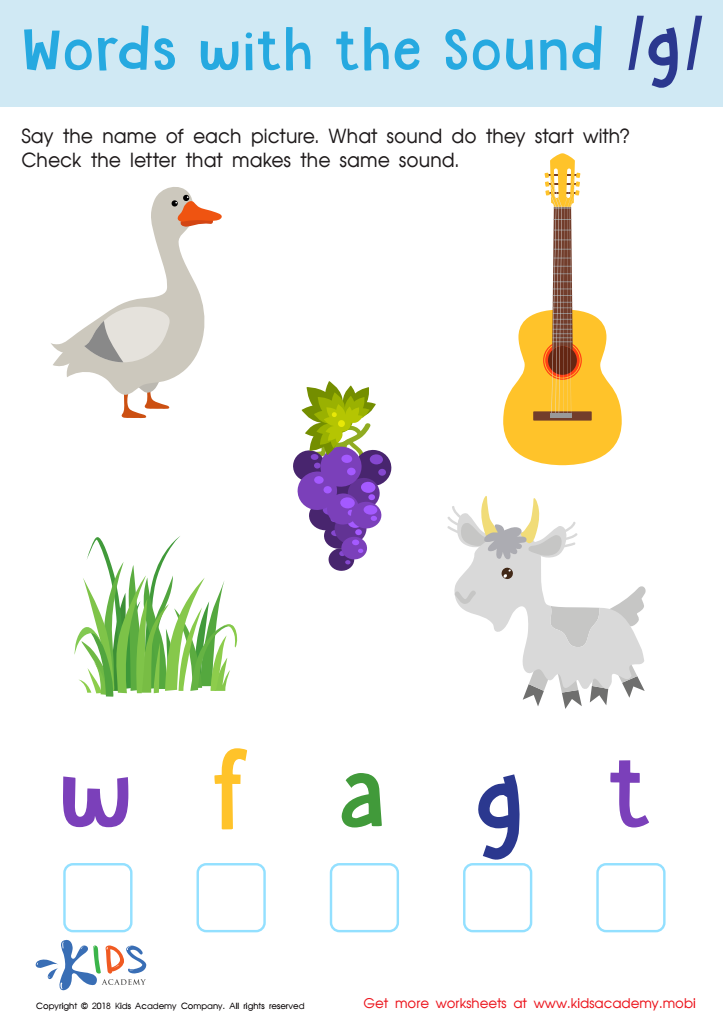
Words with sound g Reading Worksheet
 Assign to My Students
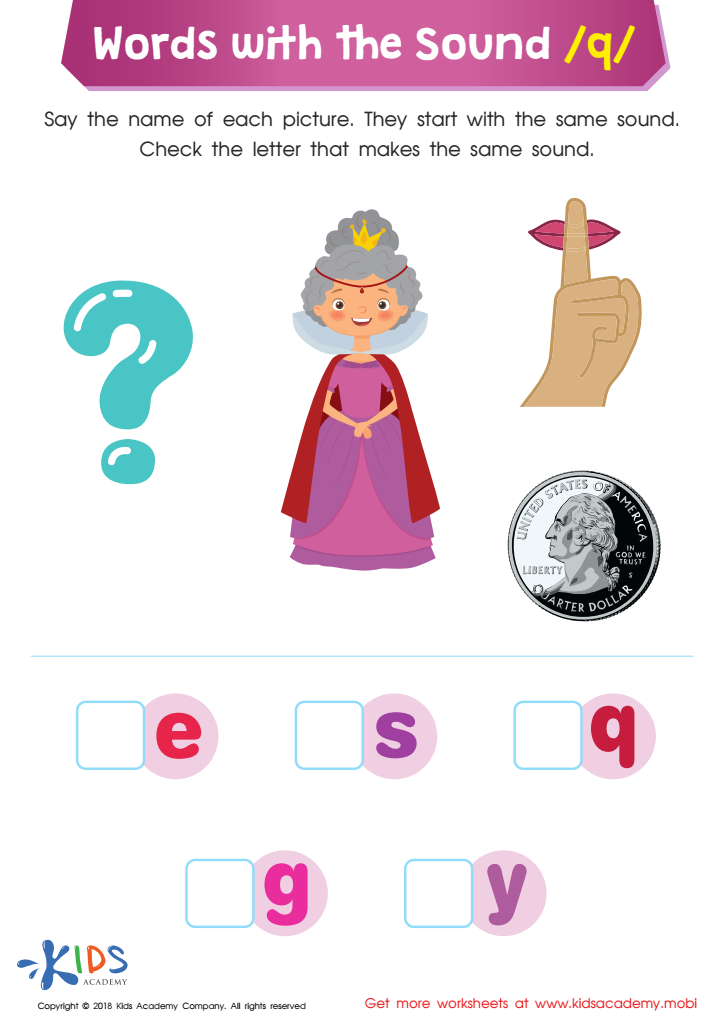
Words with Sound Q Reading Worksheet
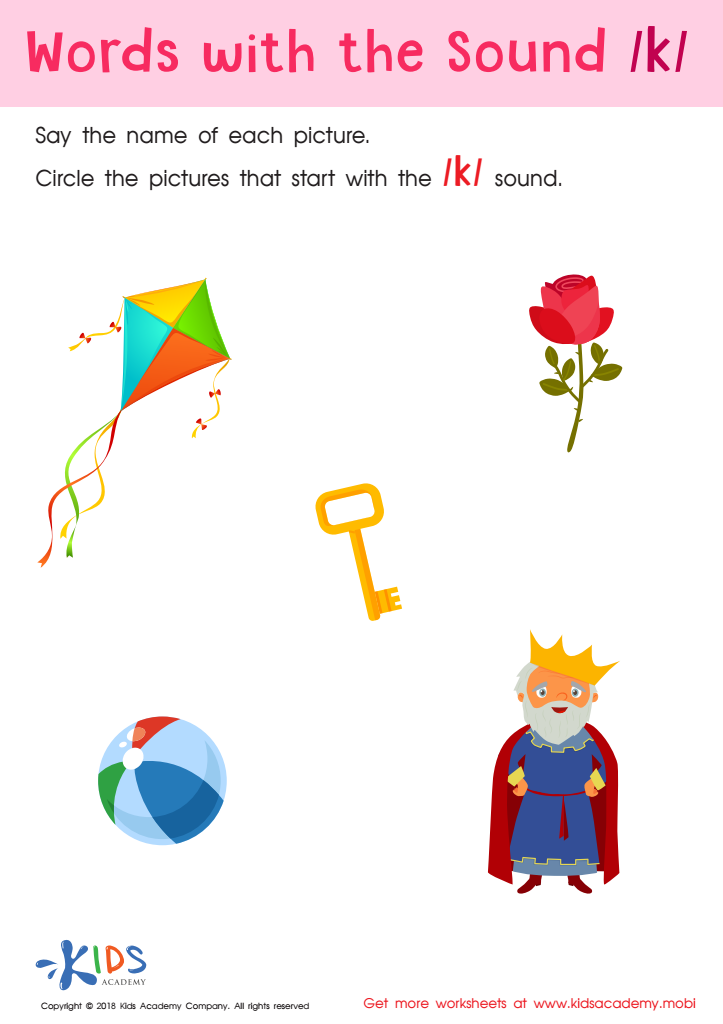
Words with sound k Reading Worksheet








Vocabulary enhancement and a focus on beginning sounds play a crucial role in the language development of children aged 4-8. At this pivotal stage, children are forming the foundational skills they need for reading, writing, and overall communication. Understanding beginning sounds— the initial phonemes in words— is vital for developing phonemic awareness, a key factor in successful reading.
By emphasizing vocabulary enhancement, parents and teachers can provide children with a richer language experience. This supports not only literacy but also cognitive development, as children learn to express thoughts, emotions, and ideas more effectively. A broad vocabulary allows children to comprehend stories more fully, making reading enjoyable and encouraging a lifelong love for literacy.
Moreover, building skills around beginning sounds helps with decoding and word recognition. Children who excel in these areas are typically more confident readers, which can positively impact their academic performance and enthusiasm in the classroom. Ultimately, investing time in vocabulary enhancement and focusing on beginning sounds lays a strong foundation for literacy skills, academic success, and improved communication— essential tools that children will carry with them throughout their lives. Therefore, it is vital for parents and teachers to prioritize these aspects in early education.







