Letter-sound correlation Letter Sounds Worksheets for Ages 4-8
4 filtered results
-
From - To
Discover our engaging Letter Sounds Worksheets designed for children ages 4-8 to enhance their understanding of letter-sound correlations. These worksheets offer fun, interactive activities that support early literacy development, helping young learners identify and connect letters with their corresponding sounds. By incorporating colorful visuals and playful exercises, children will enjoy exploring the alphabet while building a strong foundation for reading and writing. Perfect for parents and teachers alike, our printable resources promote independent learning and strengthen phonemic awareness. Encourage your child’s journey to literacy with our thoughtfully crafted letter sound activities today!
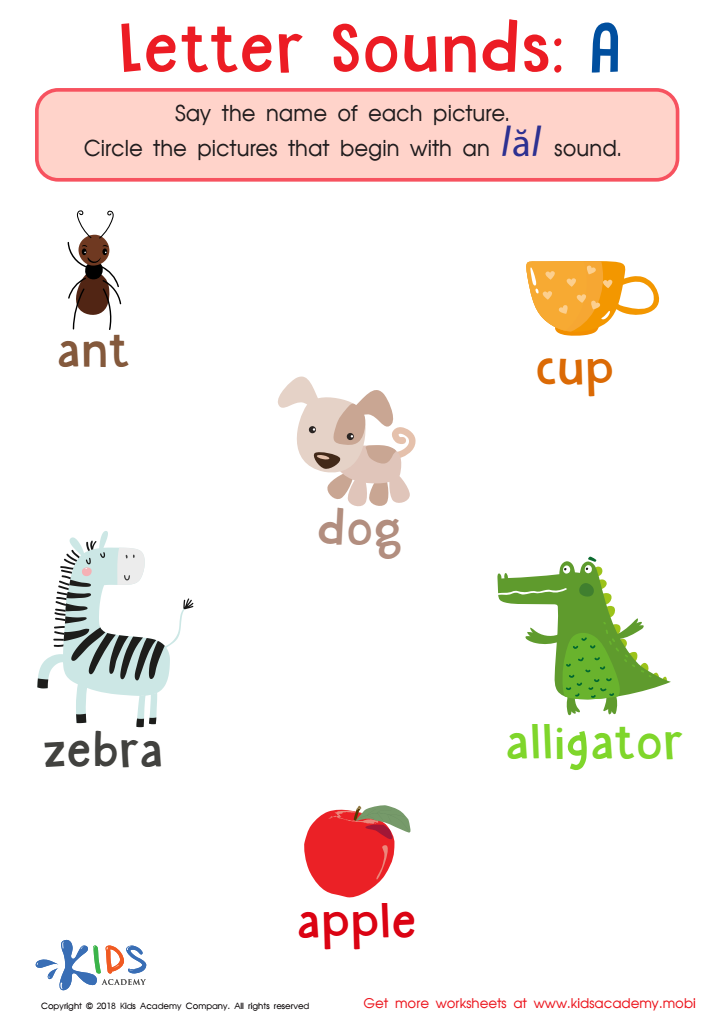
Letter A Sounds Worksheet
 Assign to My Students
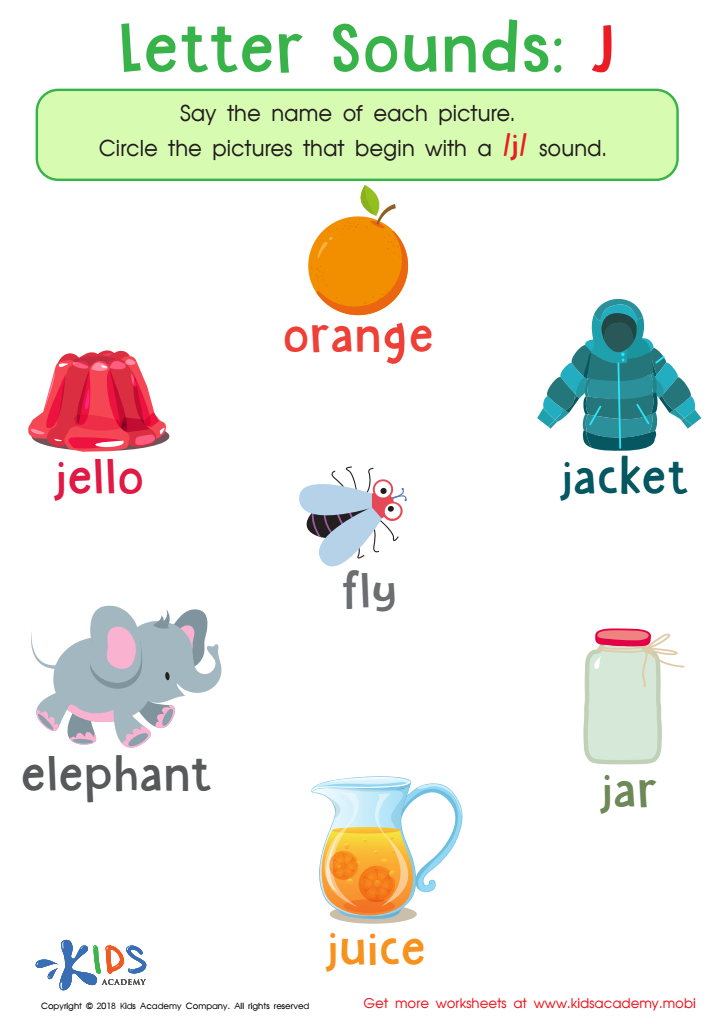
Letter Sounds: J Printable Worksheet
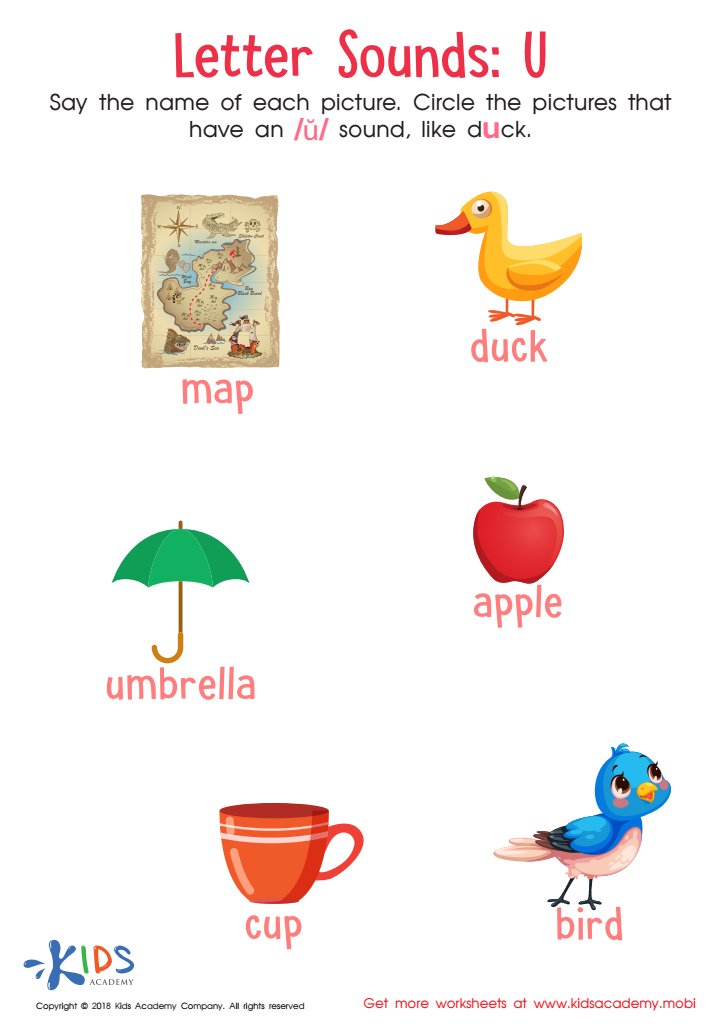
Letter U Sounds Worksheet
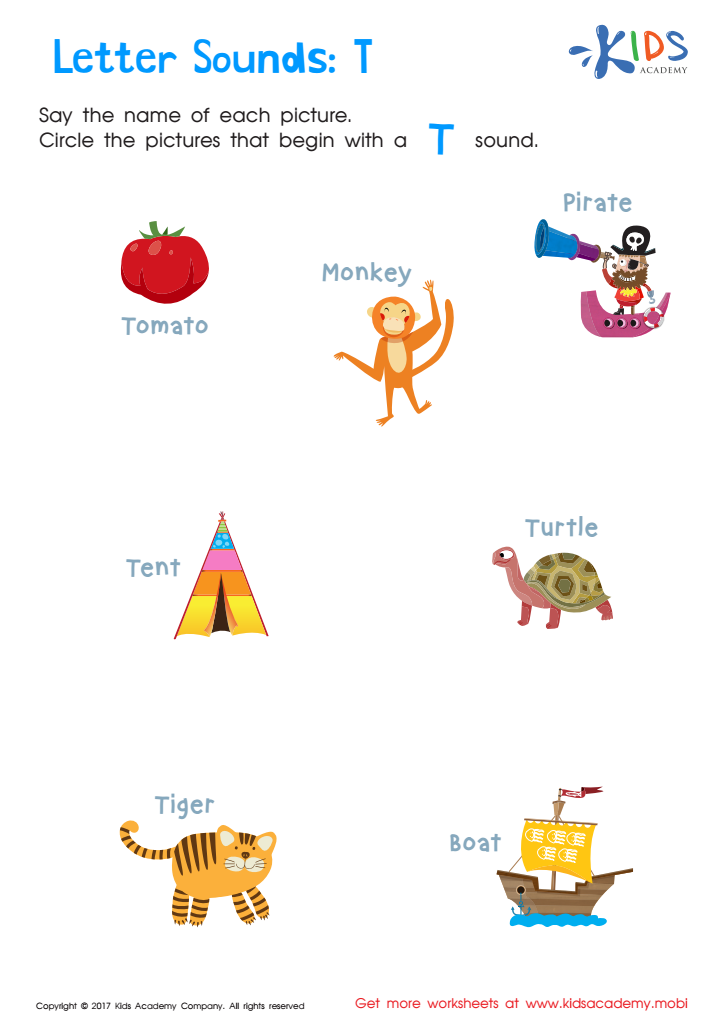
Letter T Sounds Worksheet








Letter-sound correlation, or phonics, is vital for children aged 4-8 as it forms the foundation for reading and writing skills. Understanding the relationship between letters and their associated sounds allows young learners to decode words, enhancing their ability to read independently. This skill not only boosts literacy but also builds confidence, encouraging children to explore the world of books and storytelling.
When parents and teachers prioritize letter-sound correlation, they help children develop critical thinking and phonemic awareness, which are necessary for spelling and vocabulary development. These skills contribute to overall literacy development, laying a strong groundwork for academic success throughout the child's education.
Additionally, this foundational knowledge enables children to recognize patterns and relationships within language, facilitating their ability to learn new words more easily. This early literacy skill significantly impacts their performance in reading comprehension and writing tasks as they progress through school.
By fostering an environment that highlights the importance of letter sounds, parents and teachers can ignite a long-lasting passion for reading, which is crucial for lifelong learning. Encouraging children to embrace reading enhances their cognitive and social-emotional development, making it imperative for adults involved in their education to focus on this essential aspect of literacy.







