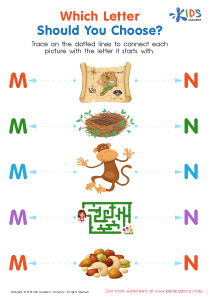
Handwriting practice Lowercase/Small Letters Worksheets for Ages 4-8
8 filtered results
-
From - To
Enhance your child's writing skills with our engaging Handwriting Practice Lowercase/Small Letters Worksheets, designed specifically for ages 4-8. These structured worksheets offer young learners the opportunity to master their lowercase letters through fun and interactive exercises. Each worksheet features colorful illustrations and creative activities that motivate children to practice handwriting with clarity and confidence. Ideal for homeschools, classrooms, or extra practice at home, our resources support fine motor development and reinforce letter recognition. Give your child the tools they need for strong writing foundations while enjoying the learning process. Download your free worksheets today and watch their skills flourish!
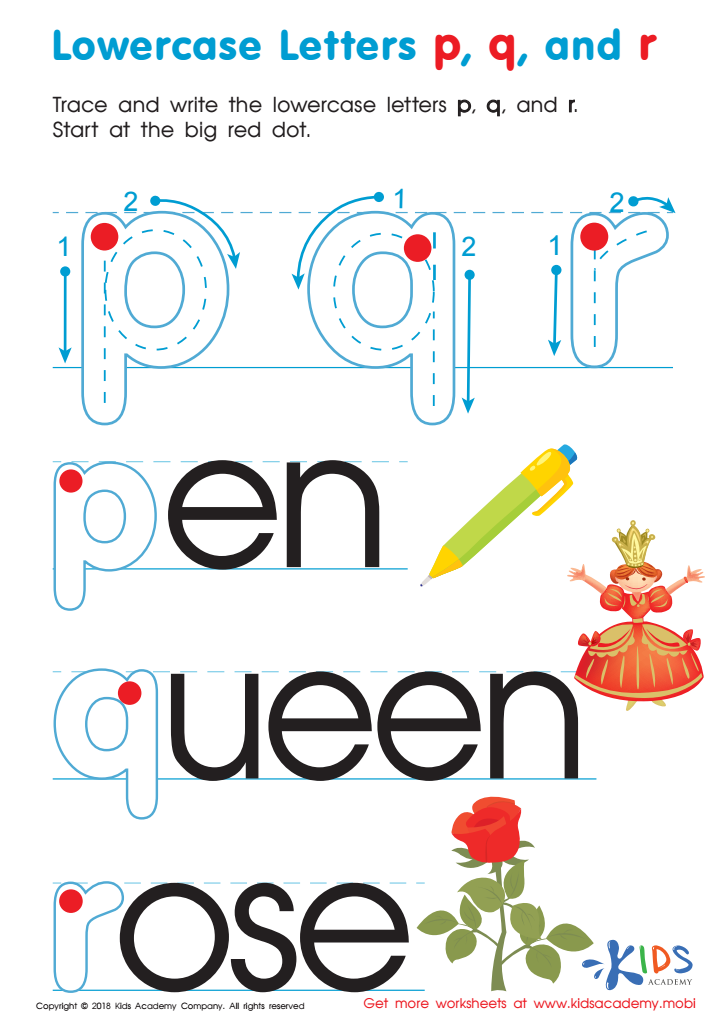
Lowercase Letters p q r Worksheet
 Assign to My Students
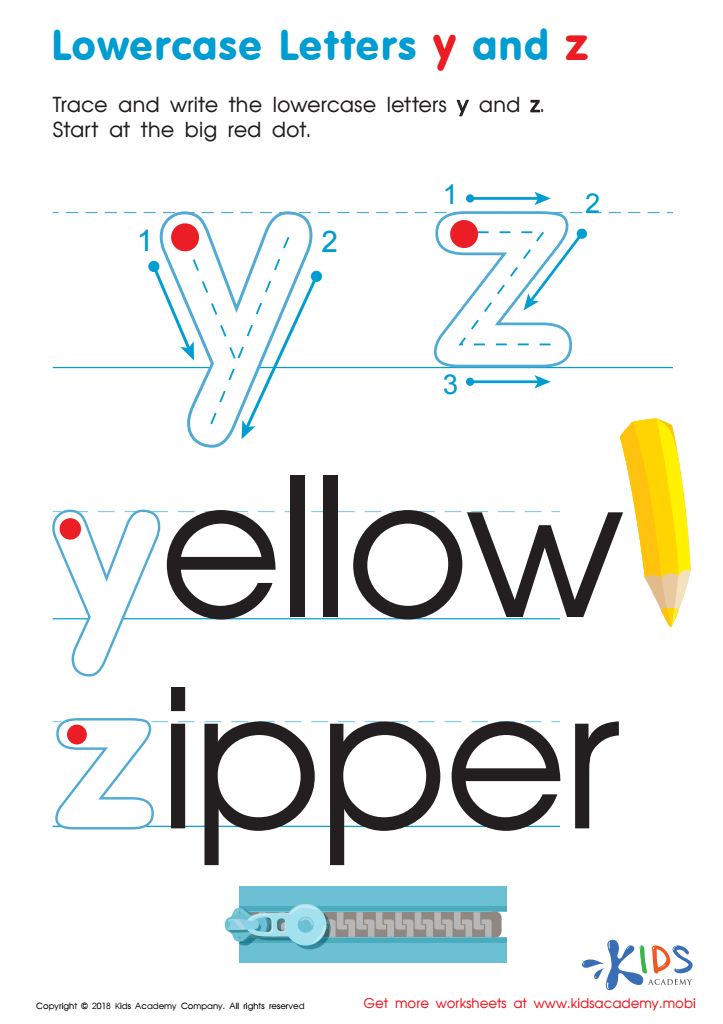
Lowercase Letters y z Worksheet
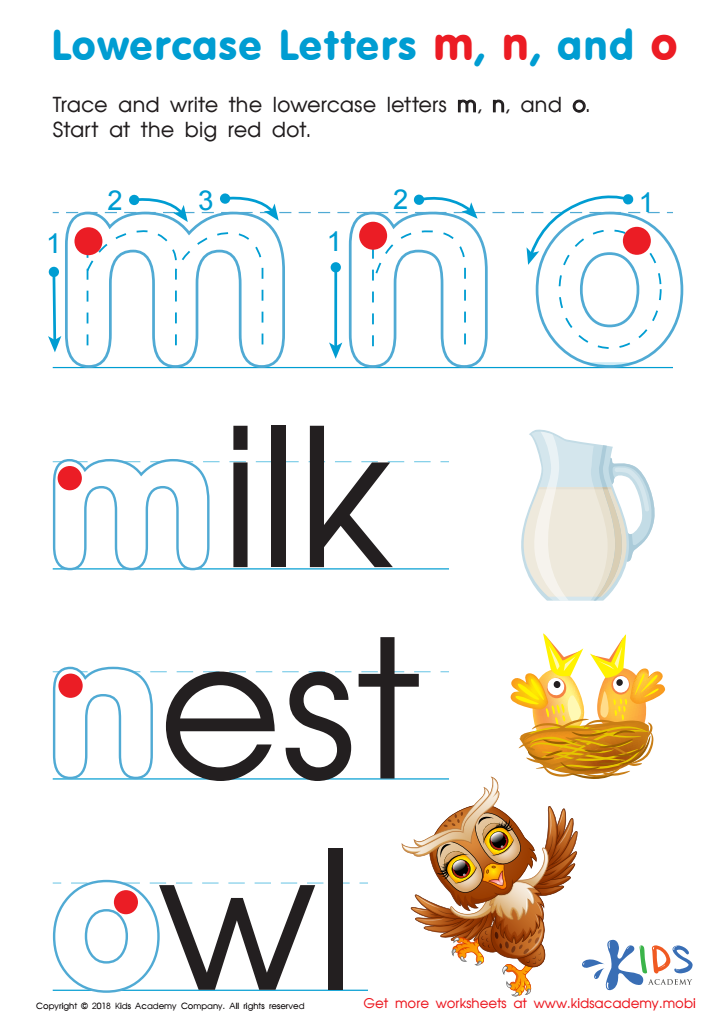
Lowercase Letters m n o Worksheet
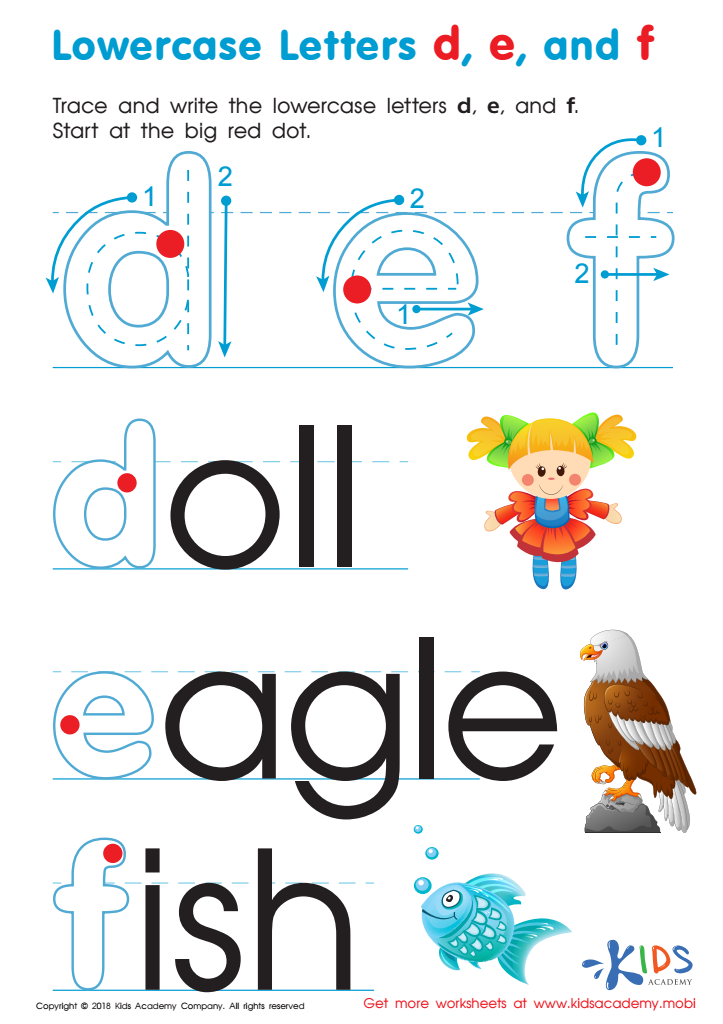
Lowercase Letters d e f Worksheet
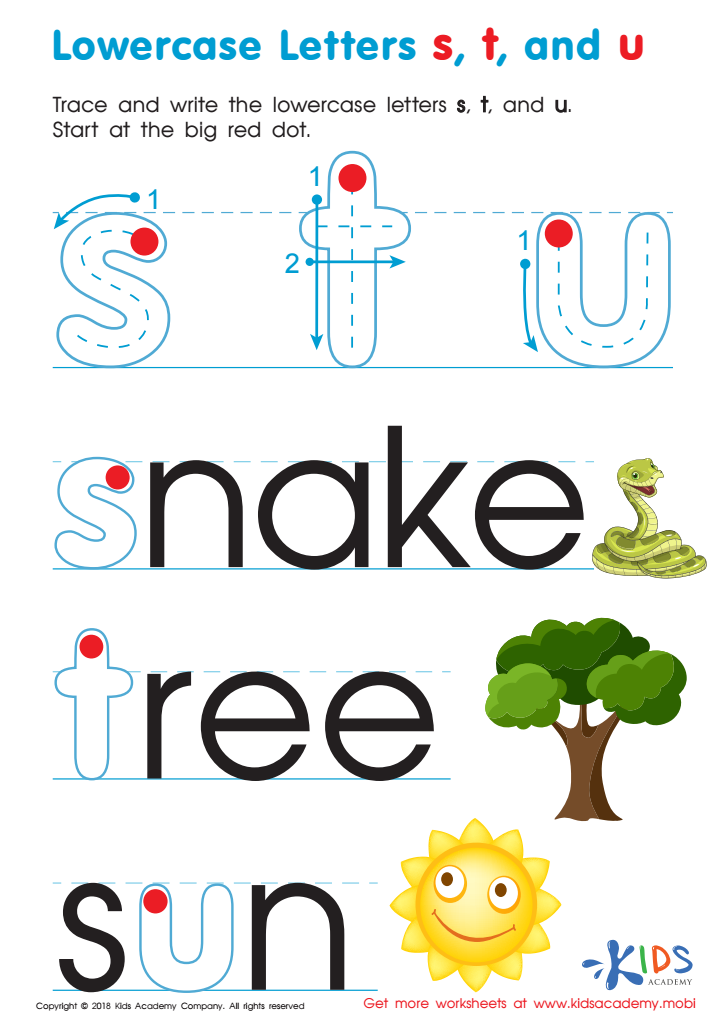
Lowercase Letters s t u Worksheet
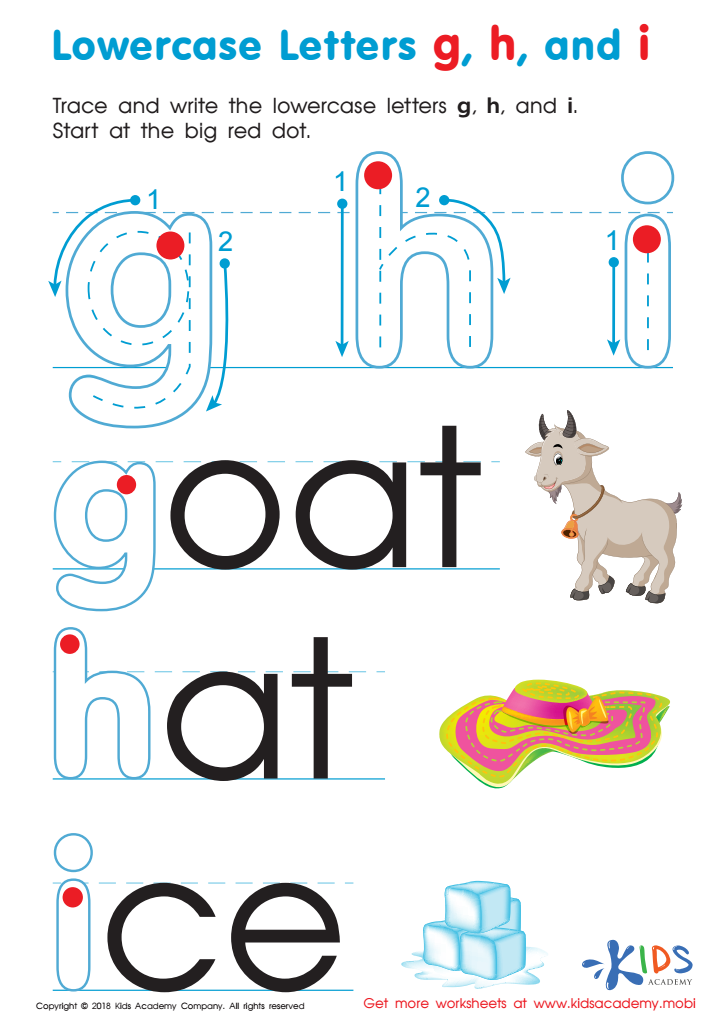
Lowercase Letters g h i Worksheet
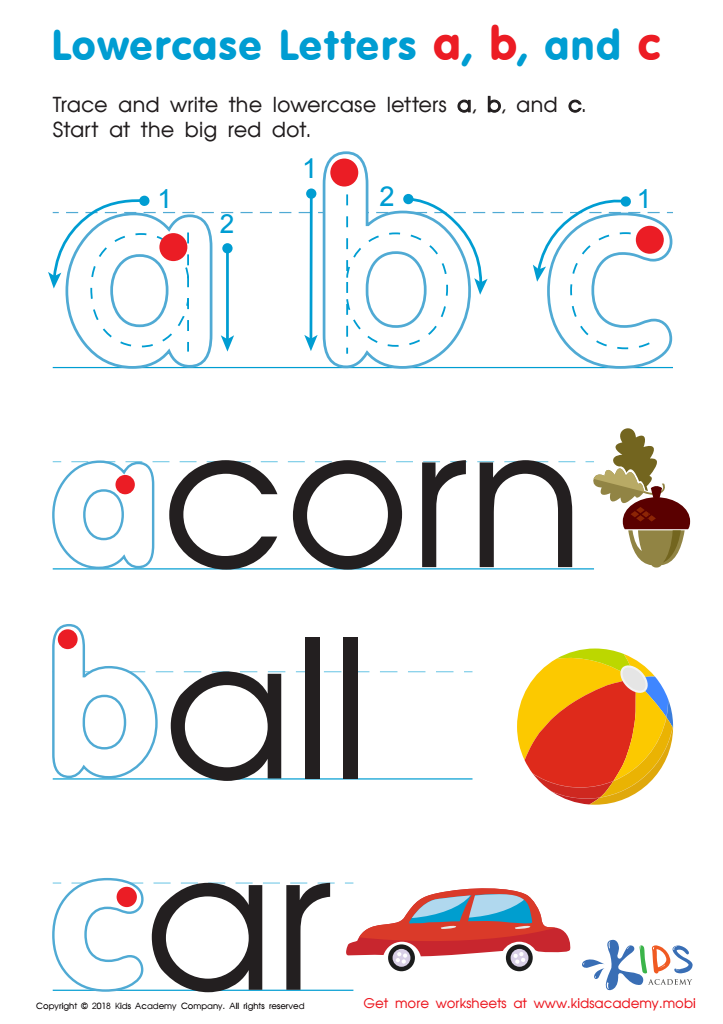
Lowercase Letters a b c Worksheet
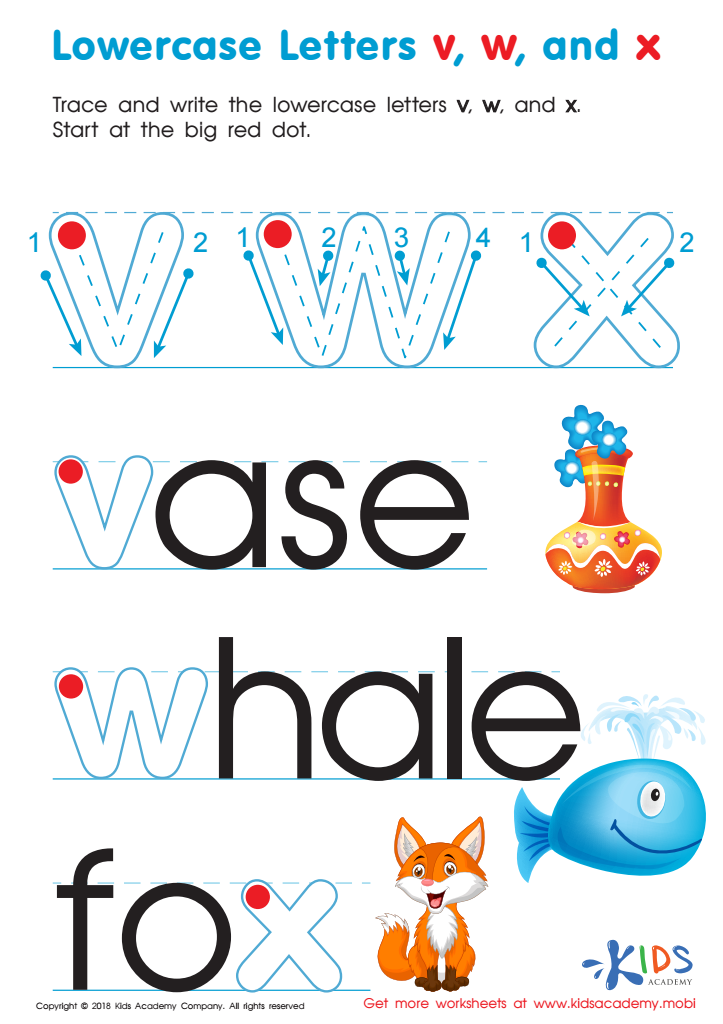
Lowercase Letters v w x Worksheet


Handwriting practice, particularly for lowercase letters, is crucial for children aged 4-8 as it lays a foundational skill for effective communication and literacy development. This early stage in a child's education is when fine motor skills and cognitive functions are rapidly developing. Practicing handwriting helps strengthen these skills, enabling children to control a pencil or crayon properly, which leads to better writing expression.
Additionally, understanding how to properly form lowercase letters enhances children’s reading abilities. Since most texts are written in lowercase, proficiency in recognizing and writing these letters aids in fluency and comprehension.
Handwriting practice also promotes patience and focus. As children learn to take their time with the formation of letters, they develop concentration skills that are transferable to other academic areas.
Moreover, the emotional element of pride in mastering writing builds self-confidence and encourages a positive attitude towards learning. When children can express themselves through writing, they engage more deeply with their ideas and opinions.
Parents and teachers should prioritize handwriting practice because mastering these early writing techniques fosters not only intellectual development but also emotional and social skills, creating a well-rounded foundation for future learning.