
Reading comprehension Rhyming Worksheets for Ages 4-8
11 filtered results
Difficulty Level
Grade
Age
-
From - To
Subject
Activity
Standards
Enhance your child's reading skills with our engaging Rhyming Worksheets designed for ages 4-8! These worksheets focus on reading comprehension while introducing the fun and rhythmic world of rhyming words. Our carefully crafted activities help children recognize patterns, connect sounds, and build vocabulary, fostering a love for reading from an early age. Perfect for both classroom and at-home learning, these worksheets provide step-by-step instructions and vibrant illustrations to keep young learners motivated. With a variety of exercises that cater to different learning levels, our Rhyming Worksheets will empower your child’s reading abilities and spark their curiosity in language!
Favorites
With answer key
Interactive
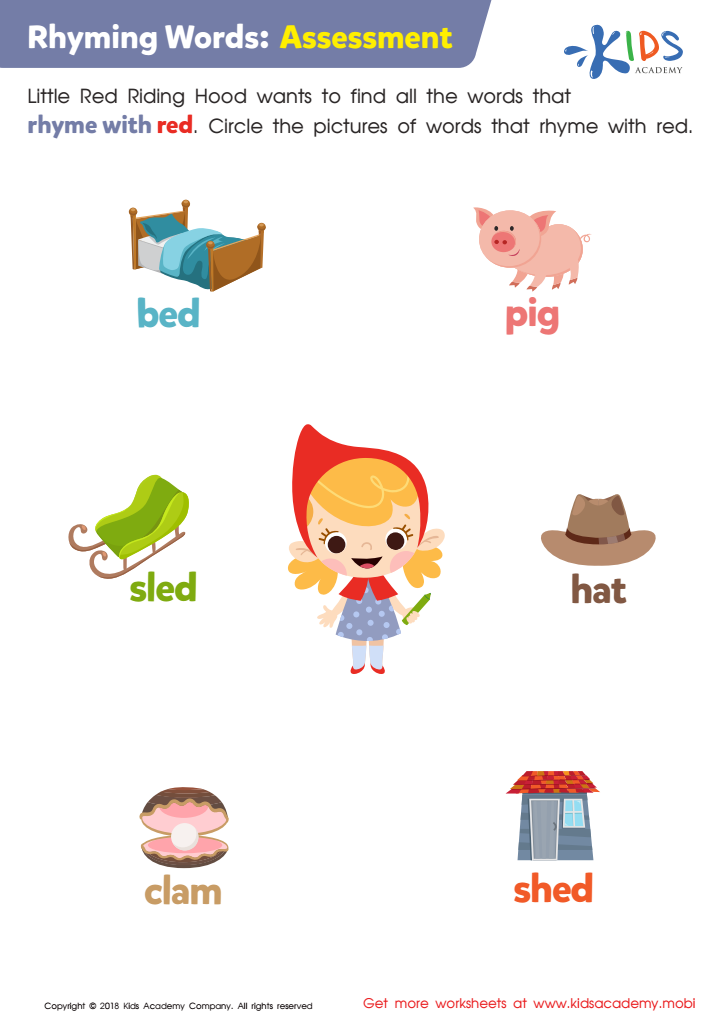
Rhyming Words: Assessment Worksheet
Help Little Red Riding Hood find rhyming words with "red". Download and print this worksheet. Have your child circle the rhyming words and pictures. Get them to say each word out loud and compare it to the word "red". When they're done, review the answers and talk about any words that don't rhyme.
 Assign to My Students
Rhyming Words: Assessment Worksheet
Worksheet
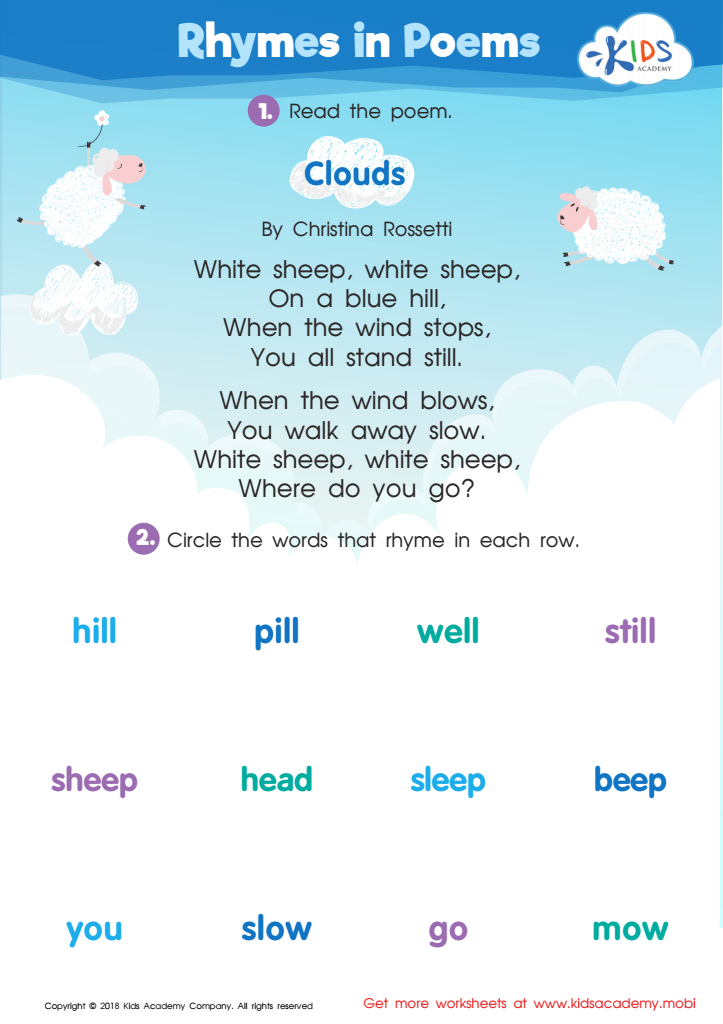
Rhymes in Poems Worksheet
Poems are lovely works of literature; some with rhymes, and some without. This poem for kids is full of rhymes and tells the tale of a sheep. Read it aloud to your kids, then help them circle the rhyming words.
Rhymes in Poems Worksheet
Worksheet
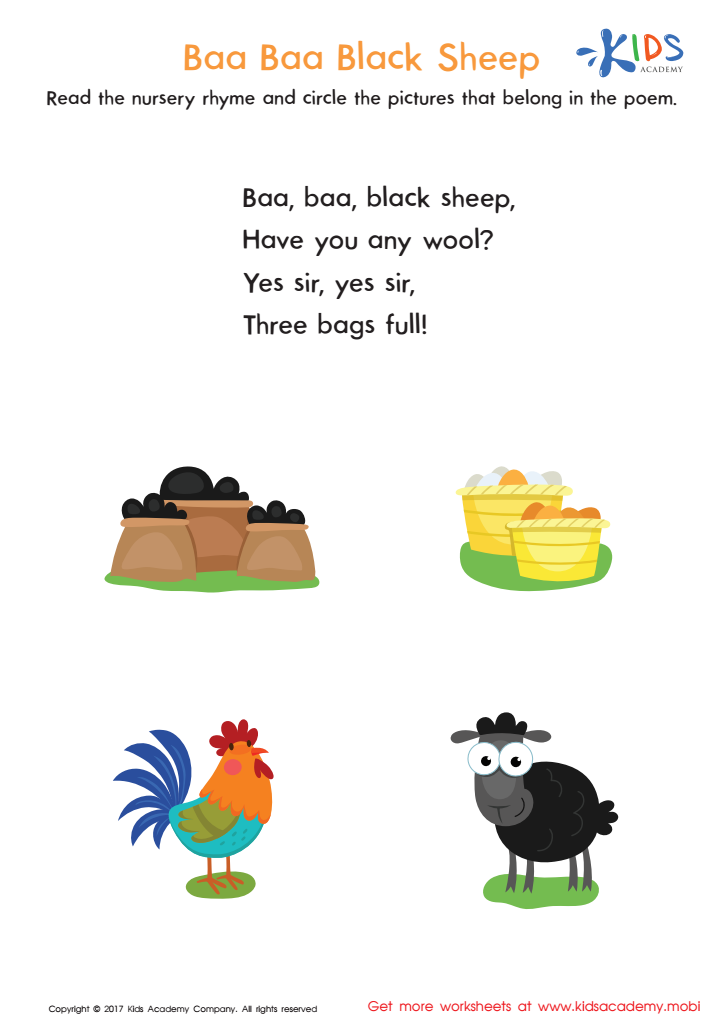
Baa Baa Black Sheep Printable
Jumpstart your child's reading skills with this printable Baa Baa Black Sheep worksheet! Recite the lines with them, then have them select the pictures associated with the poem to test comprehension. Fun and educational!
Baa Baa Black Sheep Printable
Worksheet
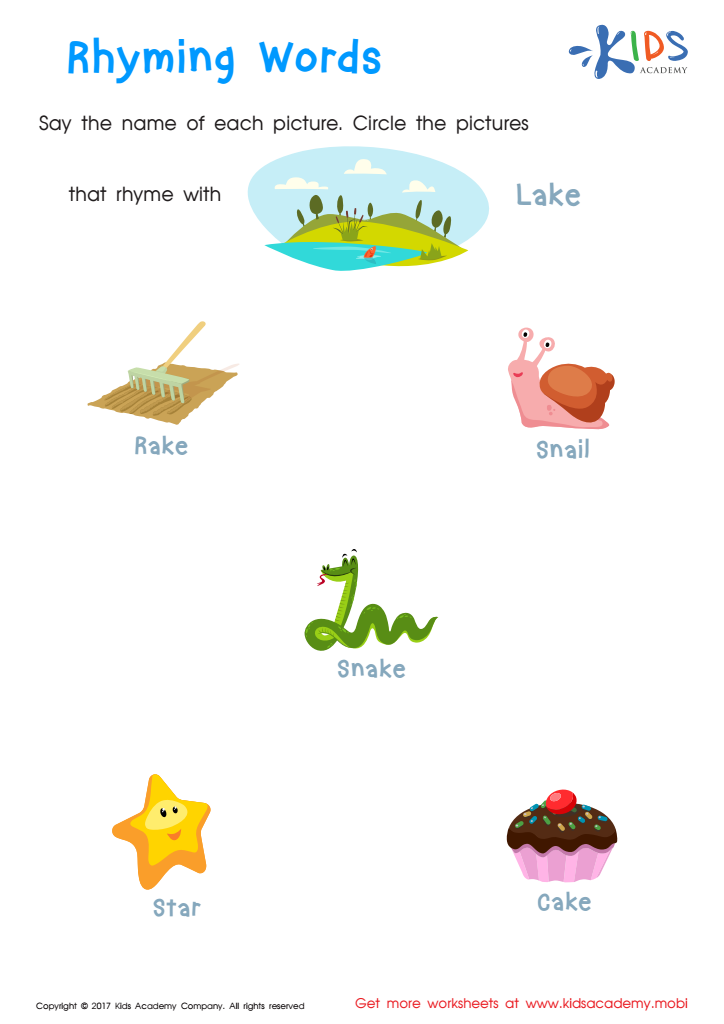
Rhyming Words Rhyming Worksheet
This worksheet is great for honing pre-reading skills. It helps kids make connections between pictures and written words, use problem-solving, and recognize sounds and words that rhyme. Have fun exploring rhyming words with your child, and they'll be rhyming in no time!
Rhyming Words Rhyming Worksheet
Worksheet
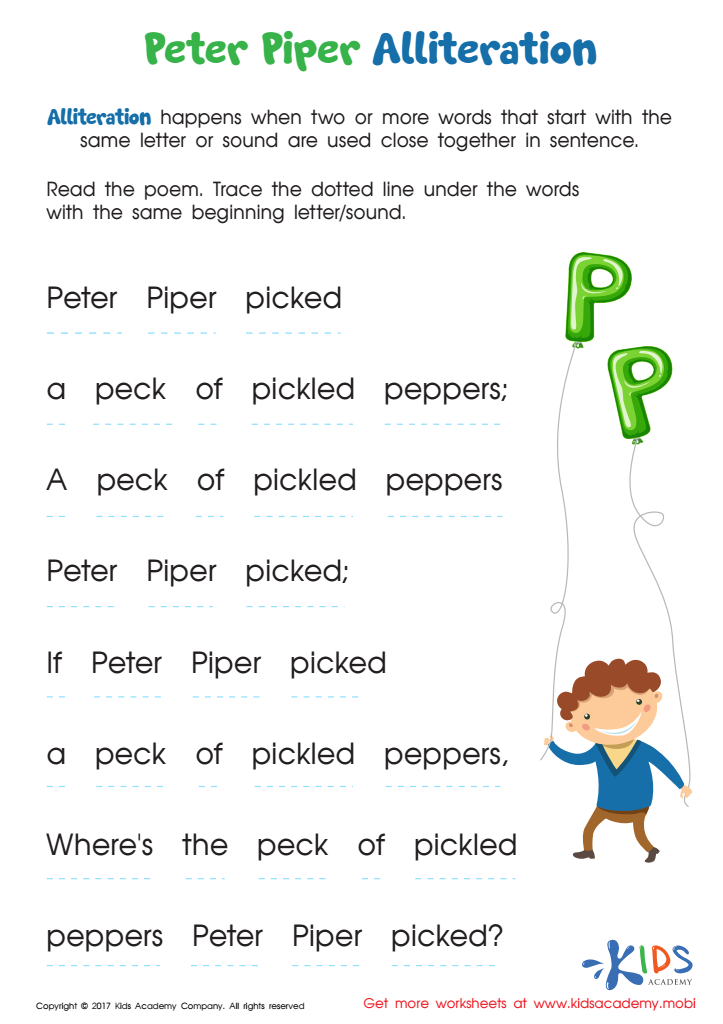
Peter Piper Alliteration Worksheet
Kids love tongue twisters! This worksheet familiarizes them with alliteration through Peter Piper, a beloved nursery rhyme. They underline words that start with the same letter sound, learning to recognize alliteration.
Peter Piper Alliteration Worksheet
Worksheet
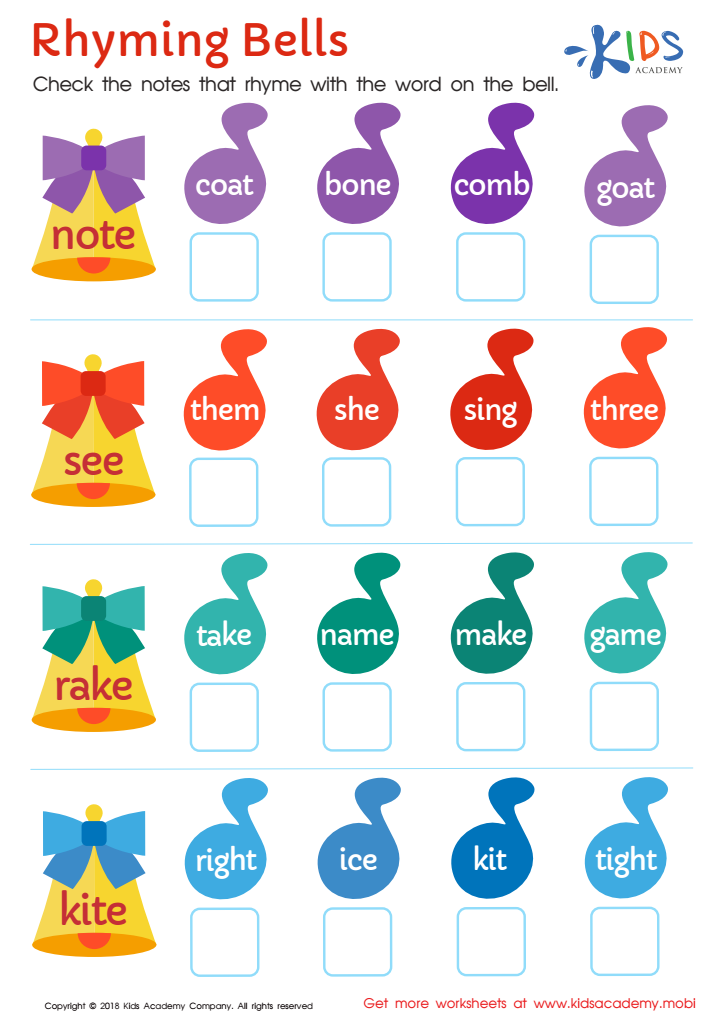
Rhyming Bells Worksheet
This printable worksheet helps students recognize rhyming words. Read a word, then pick the 4 words that rhyme. Look out for words with different spellings but same ending sound. It's a great exercise to improve understanding of rhyming words.
Rhyming Bells Worksheet
Worksheet
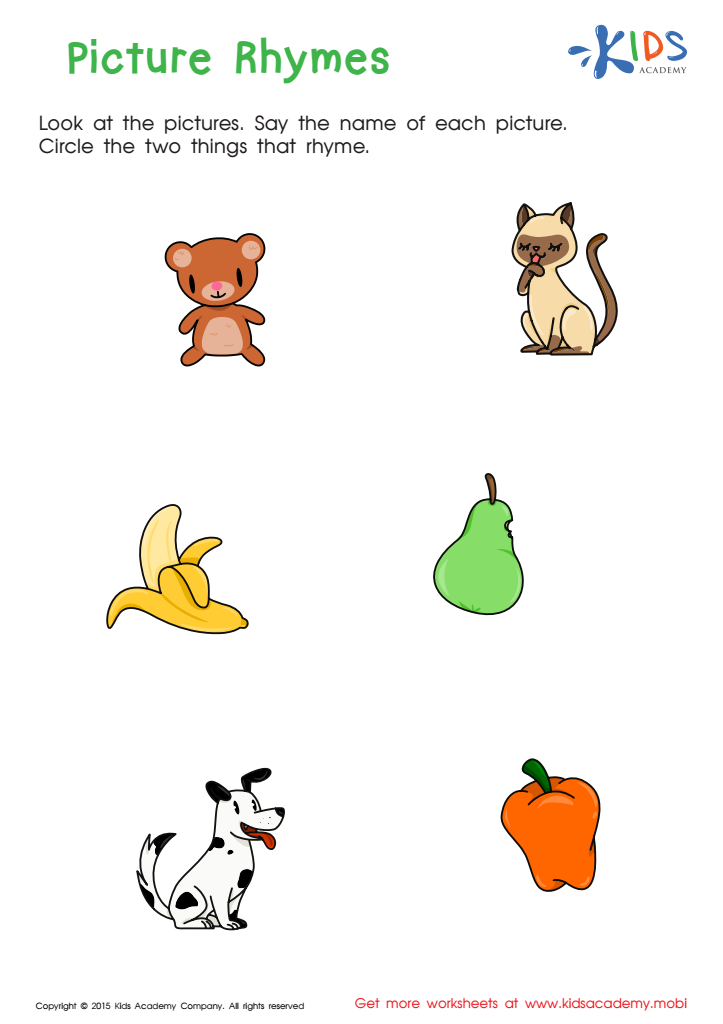
First Words: Picture Rhymes Worksheet
Rhyming helps kids understand language, read and write better. This printable worksheet boosts problem-solving and cognitive skills with vibrant pictures. It teaches kids to identify words, recognize rhymes, complete mental tasks and write words. An extra activity: show them how rhyming words share some of the same letters.
First Words: Picture Rhymes Worksheet
Worksheet
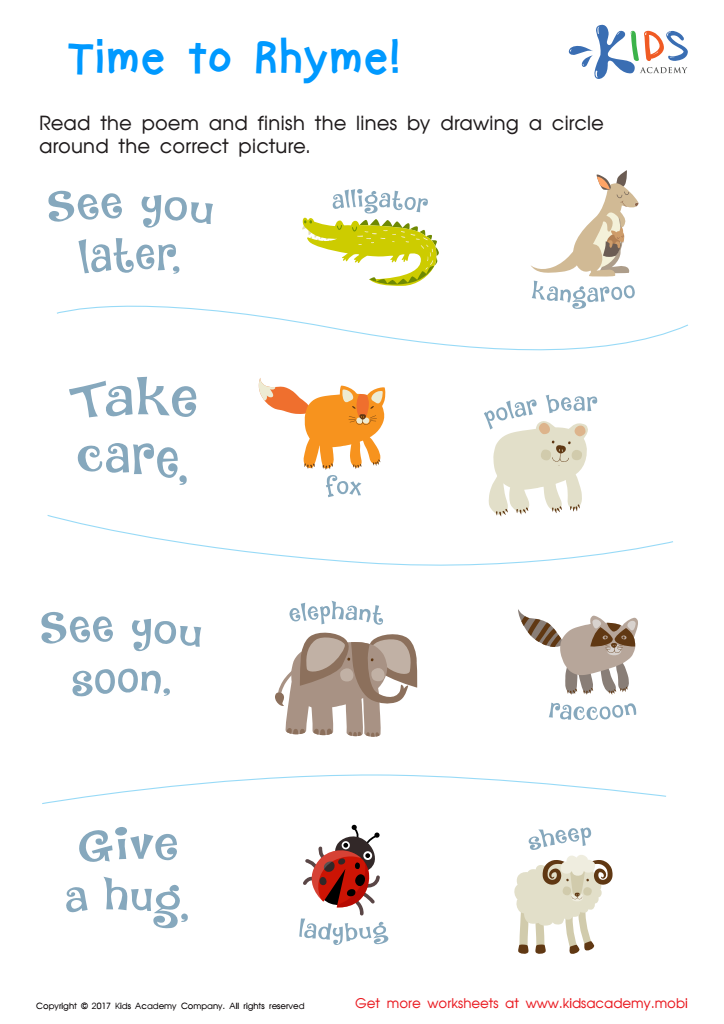
Time to Rhyme Rhyming Worksheet
This worksheet helps kids learn catchy sayings with rhymes, notice words and sounds that rhyme, and use problem solving to solve expressions. By using these expressions in everyday talk, kids gain the repetition needed to internalize the skills they've learned. Check out our nursery rhymes to further support them!
Time to Rhyme Rhyming Worksheet
Worksheet
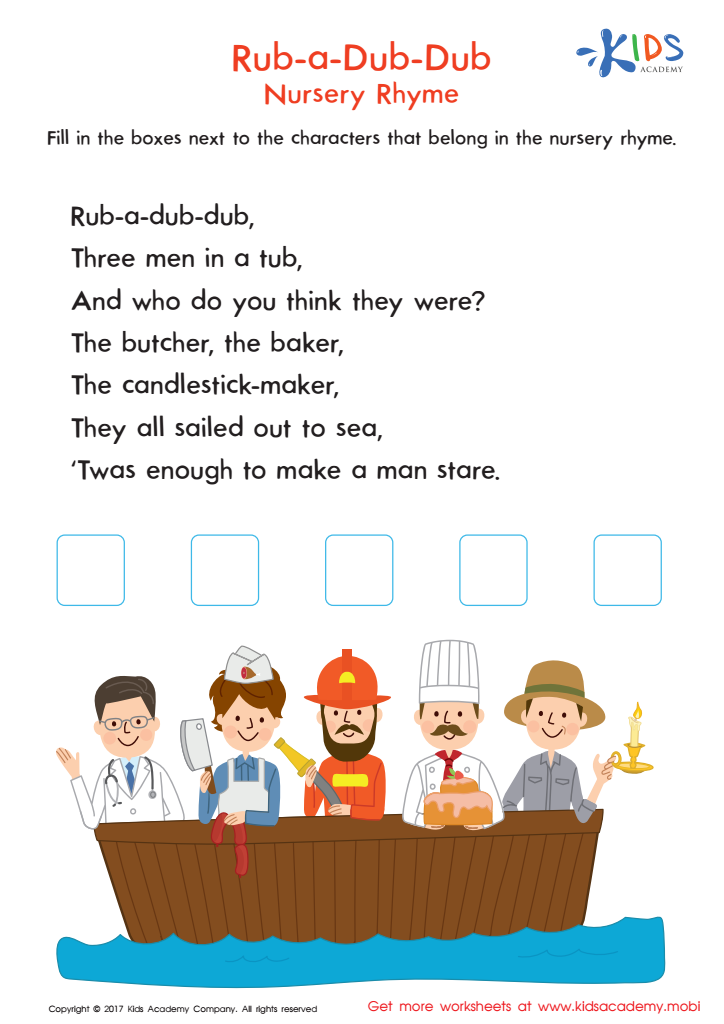
Rub a Dub Dub Printable
Delight your child and foster early reading skills with this printable nursery rhyme, Rub a Dub Dub! Let your little reader select the three men in the tub and practice important reading comprehension skills.
Rub a Dub Dub Printable
Worksheet
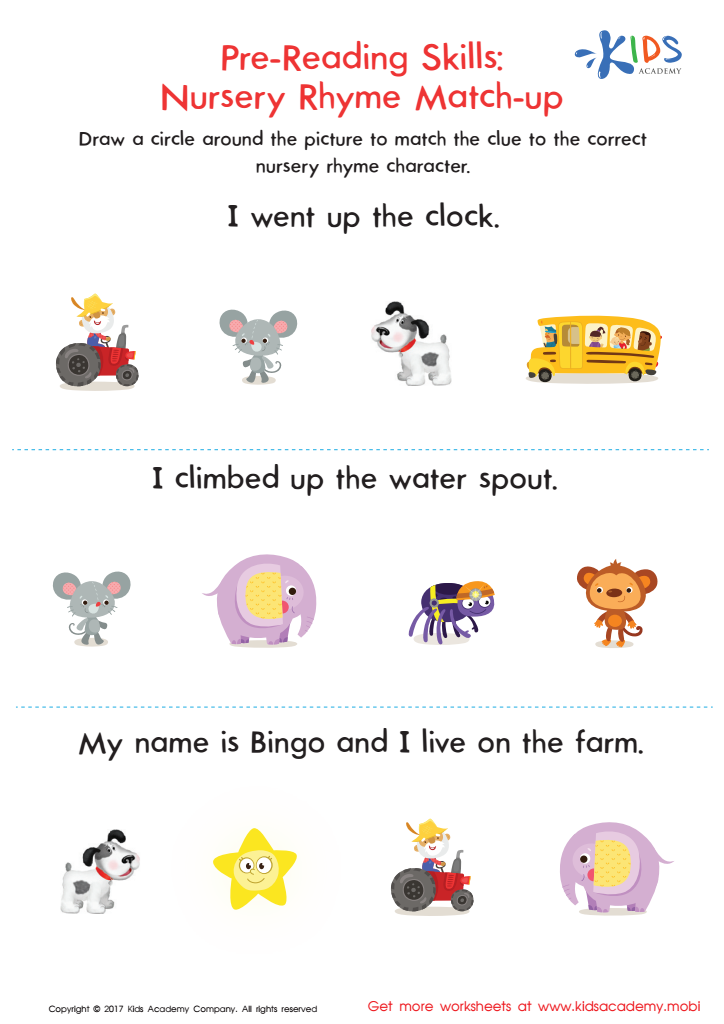
Nursery Rhyme Match–Up Worksheet
This worksheet helps kids build pre-reading skills using stories they know and love! By connecting with prior knowledge, kids can develop ideas about characters and set the stage for reading strategies.
Nursery Rhyme Match–Up Worksheet
Worksheet
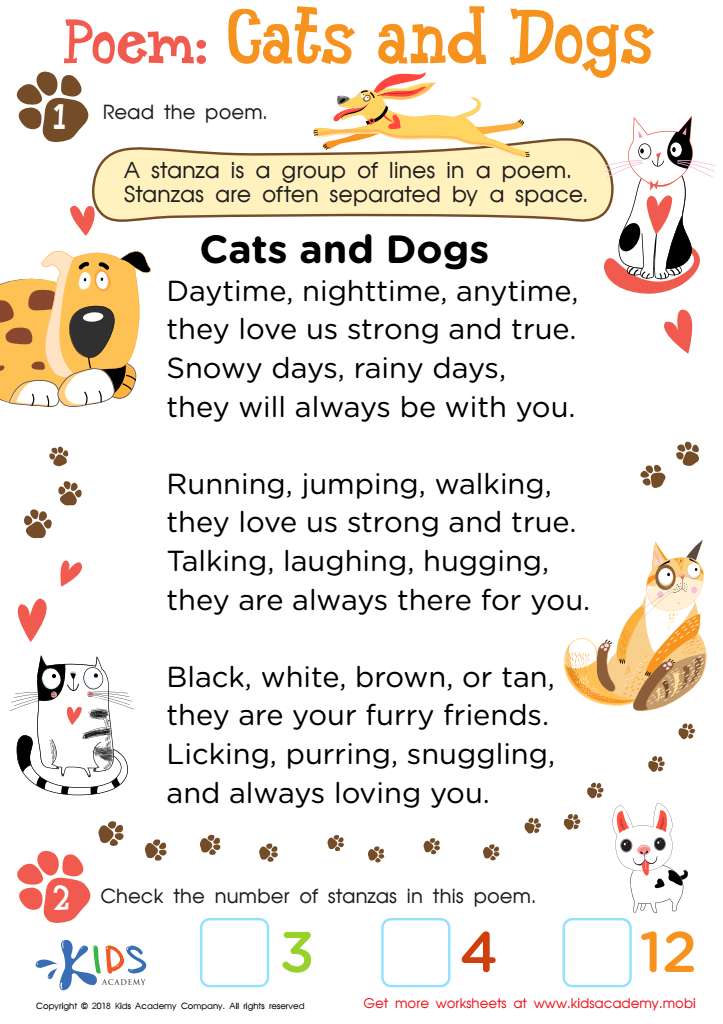
Poem: Cats and Dogs Worksheet
Read the poem to your child and point out where each stanza ends. Ask if they know what a stanza is (if not, explain it's a group of lines in a poem). Help them answer the question at the bottom of the printout. This simple, sweet poem about cats is easy for your child to relate to.
Poem: Cats and Dogs Worksheet
Worksheet
Join Kids Academy for Free
Who is primarily going to use this learning content?







Reading comprehension is a critical skill for children ages 4-8, and incorporating rhyming into early literacy activities enhances this development in several ways. First, rhyming helps children tune into the sounds of language, which is foundational for phonemic awareness — the ability to hear and manipulate sounds in words. This awareness is essential for learning to read and can seriously impact future literacy skills.
Furthermore, rhymes create a rhythmic and engaging learning environment, making reading more enjoyable for young learners. When children hear and predict rhyming patterns, it contributes to their understanding of language structures and vocabulary. This playful aspect of language can pique their interest in stories and books, fostering a love for reading.
By enjoying rhymes, children often remember phrases and structure that can aid retention and recall, enhancing comprehension. Engaging with rhyming texts also promotes listening skills and encourages expressive language development, as children are inspired to create their own rhymes.
Overall, when parents and teachers prioritize rhyming activities, they're not just encouraging entertainment—they're building essential foundations for reading and comprehension that will benefit children throughout their educational journey.







