Rhyming skills Rhyming Worksheets for Ages 4-8
3 filtered results
-
From - To
Enhance your child's literacy with our engaging Rhyming Worksheets, perfect for ages 4-8! These printable resources make learning fun through a variety of activities that promote phonemic awareness and word recognition. Kids will love finding rhyming pairs, completing rhyming puzzles, and enjoying creative exercises that build strong reading foundations. Our worksheets are designed to cater to different learning styles, ensuring every child can progress at their own pace. Boost your child's language skills and give them a head start with our expertly crafted rhyming worksheets. Available now to download and print for endless educational fun!
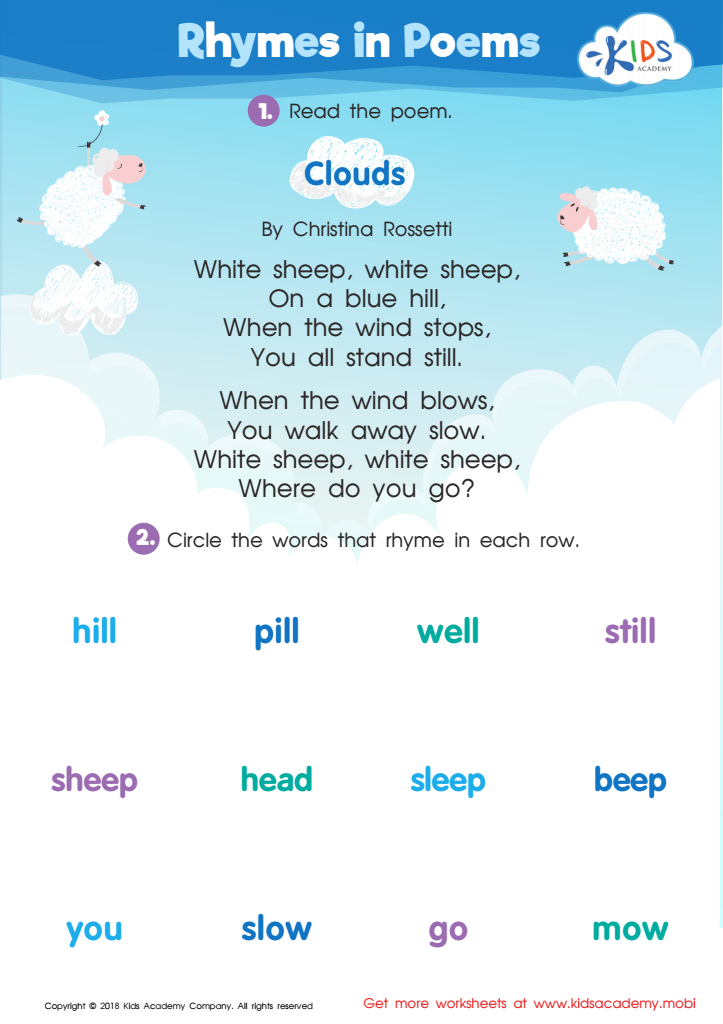
Rhymes in Poems Worksheet
 Assign to My Students
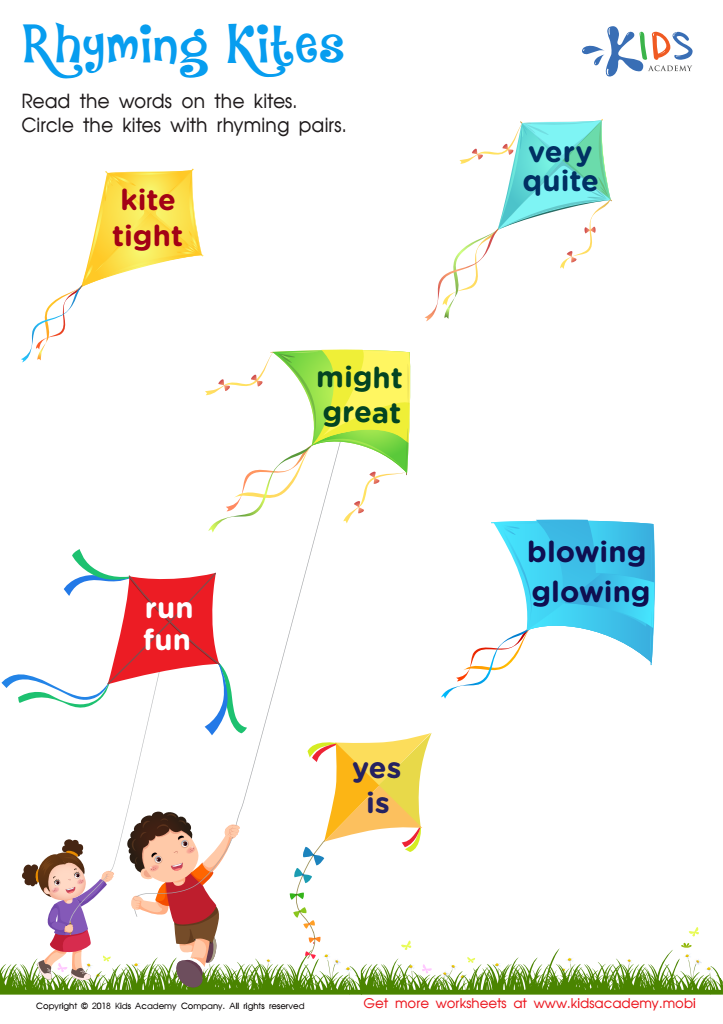
Rhyming Kites Worksheet
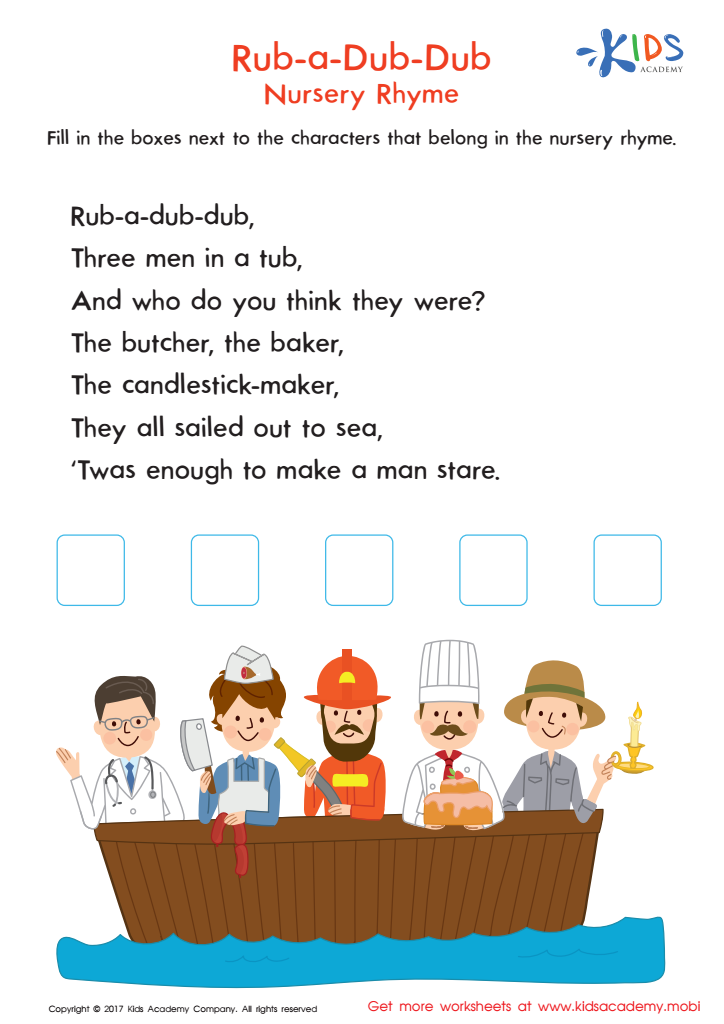
Rub a Dub Dub Printable








Rhyming skills are crucial for children ages 4-8 because they play a significant role in early literacy development. When kids engage with rhymes, they start recognizing patterns in sounds, which helps to bolster their phonemic awareness — a foundational component of reading success. Phonemic awareness is the ability to hear and manipulate individual sounds in words, a skill necessary for understanding word structures and the alphabetic principle.
Moreover, rhyming exercises improve children's listening skills, a vital part of language acquisition. As children hear rhyming pairs like "cat" and "hat," they learn to discern subtle differences and similarities in sounds. This auditory discrimination sharpens their ability to decode words and enhances overall reading fluency.
Rhymes also make learning enjoyable and engaging. Rhyming games, songs, and stories enchant young learners, making language play enjoyable and memorable. The rhythmic and predictive nature of rhymes helps children anticipate what comes next, providing a sense of accomplishment that boosts confidence.
Additionally, interacting with rhymes nurtures vocabulary development. Children are exposed to a wider range of words and sounds, broadening their linguistic repertoire. This extensive exposure supports their ability to express themselves more creatively and accurately.
In summary, rhyming skills are essential for early literacy and should be prioritized by both parents and teachers, fostering an engaging and effective learning environment.







