Vocabulary expansion Rhyming Worksheets for Ages 4-8
5 filtered results
-
From - To
Boost your child's vocabulary with our engaging Rhyming Worksheets designed for ages 4-8! These fun, educational sheets are crafted to enhance your child's language skills by introducing them to new words through delightful rhymes. Each worksheet encourages improved pronunciation, reading fluency, and creative thinking. Perfect for young learners, our rhyming activities make learning enjoyable and effective. Foster a love for words and aid in your child's literacy development with exercises tailored for beginners. Step into the rewarding world of vocabulary expansion and watch your little one thrive with our expertly designed worksheets!
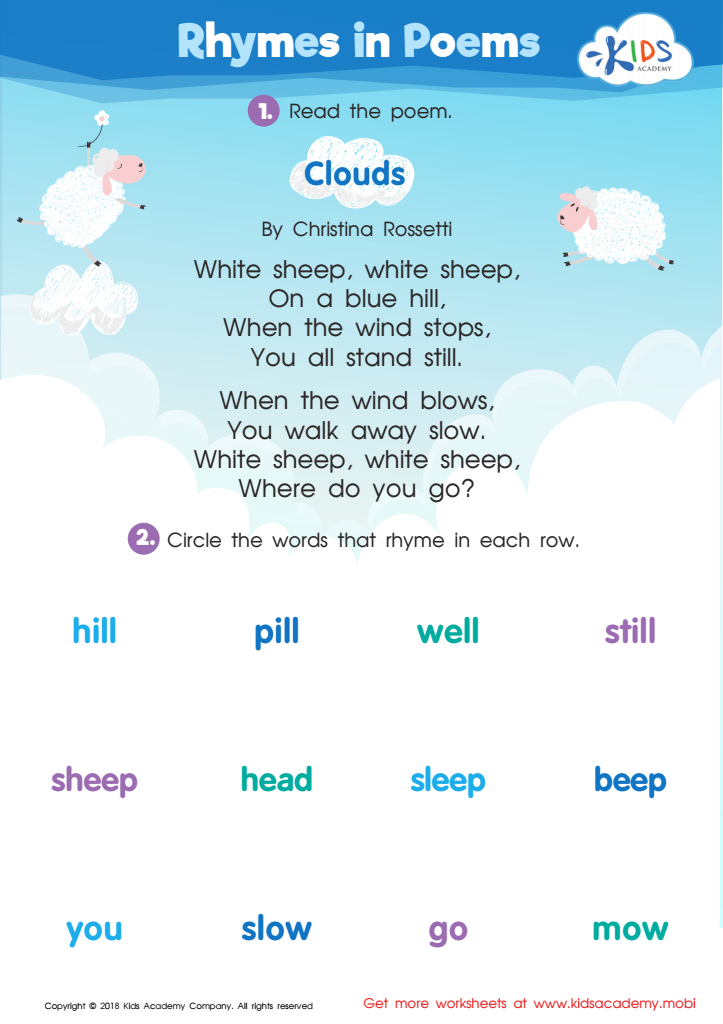
Rhymes in Poems Worksheet
 Assign to My Students
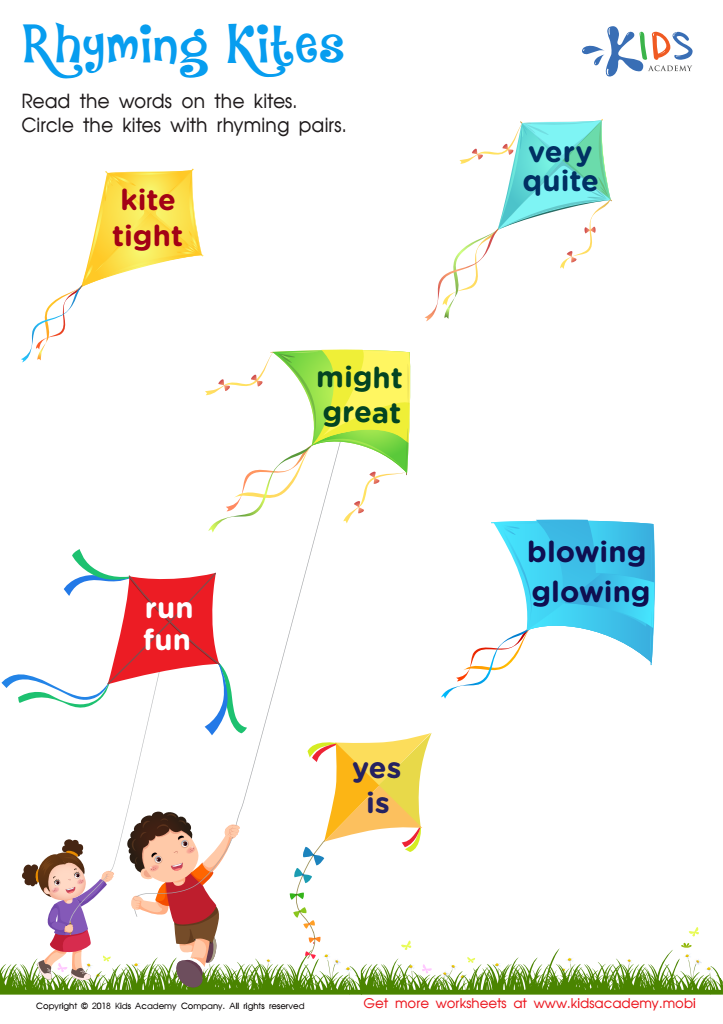
Rhyming Kites Worksheet
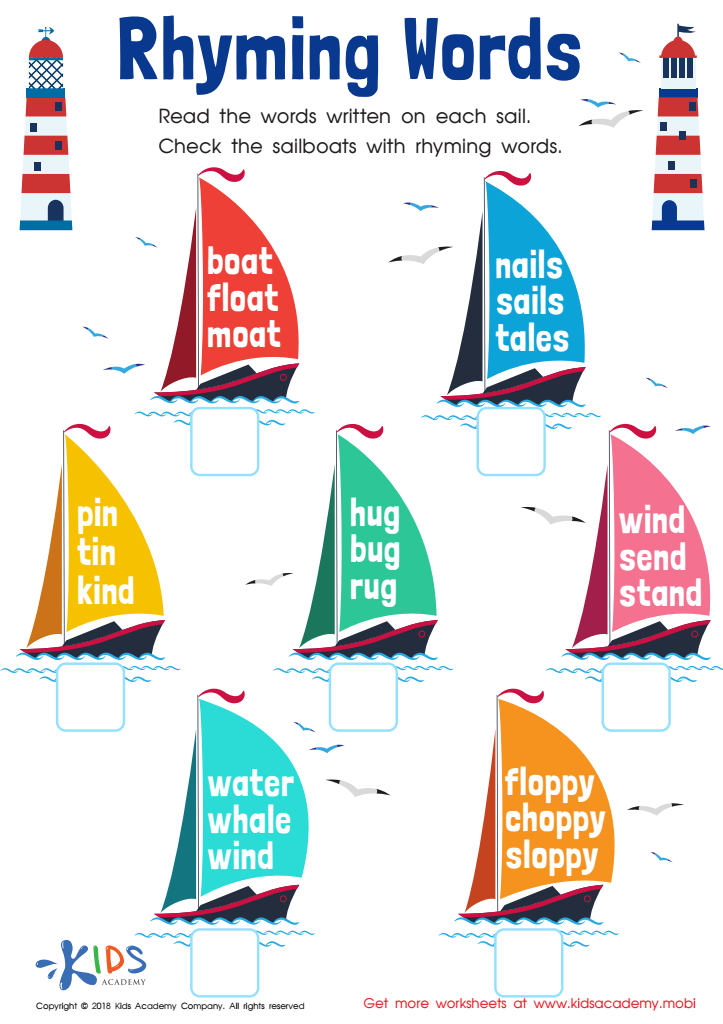
Rhyming Words Worksheet
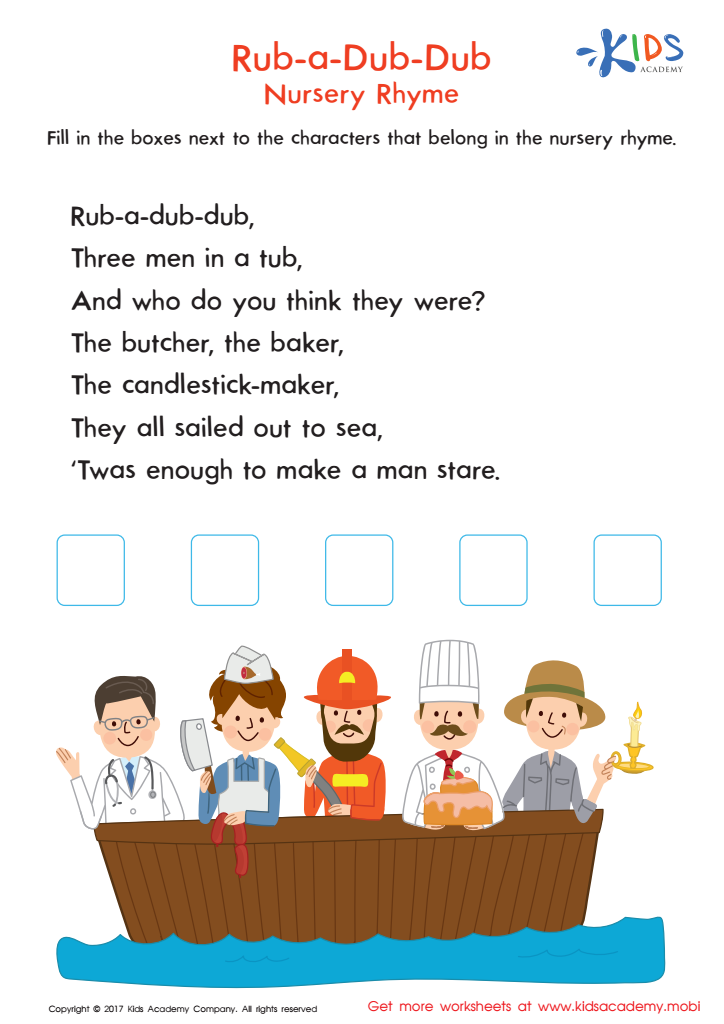
Rub a Dub Dub Printable
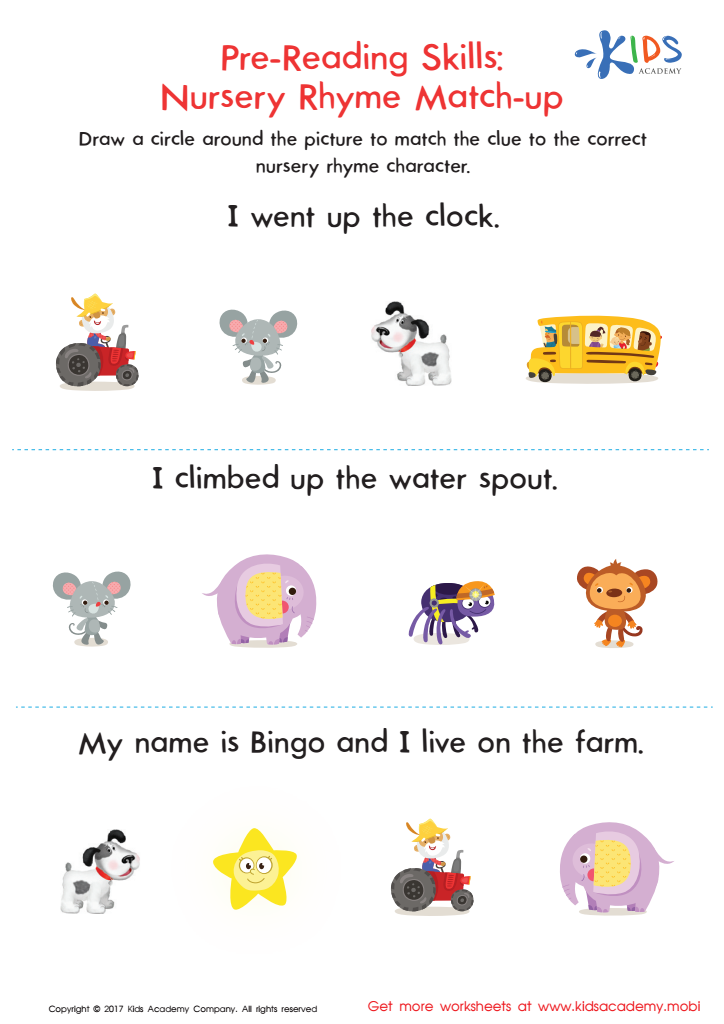
Nursery Rhyme Match–Up Worksheet







Vocabulary expansion through rhyming for ages 4-8 is crucial for several reasons. At this developmental stage, children are highly receptive to learning new words and linguistic patterns. Rhyming helps in improving phonological awareness, a critical skill for reading and writing. When children recognize and produce rhymes, they are better able to decode words, which lays the groundwork for fluent reading.
Additionally, rhyming makes learning enjoyable, engaging children in the process through games, songs, and stories. This playful aspect keeps them interested and encourages repetition, which reinforces learning. Rhyming teaches day-to-day communication skills, enriching children’s descriptive capacity and enabling them to express their thoughts more explicitly.
Parents and teachers should also recognize that a strong vocabulary is linked to academic success. Children with a rich vocabulary are better prepared for school tasks, from understanding instructions to expressing answers. Socially, a broadened vocabulary empowers children to interact more confidently with peers, boosting their social skills and self-esteem.
Overall, integrating rhyming activities into learning strategies supports language development, academic achievement, and social interaction. Investment in vocabulary expansion during these early years provides significant long-term benefits, underpinning the child's ability to navigate and articulate the world around them.







