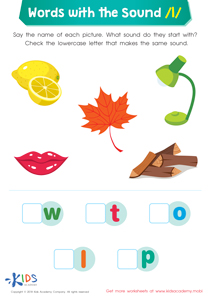
Alphabet familiarity Uppercase Letters Worksheets for Ages 4-8
4 filtered results
-
From - To
Discover our engaging "Alphabet Familiarity Uppercase Letters Worksheets" designed for children aged 4-8! These printable worksheets make learning uppercase letters fun and interactive. Each activity encourages children to recognize, trace, and identify letters, building a strong foundation for their reading and writing skills. With vibrant illustrations and diverse exercises, the worksheets cater to various learning styles, ensuring that every child remains motivated and focused. Perfect for home or classroom use, our resources are user-friendly for both parents and teachers. Start your child’s journey towards literacy today, and watch as they gain confidence in their alphabet knowledge!
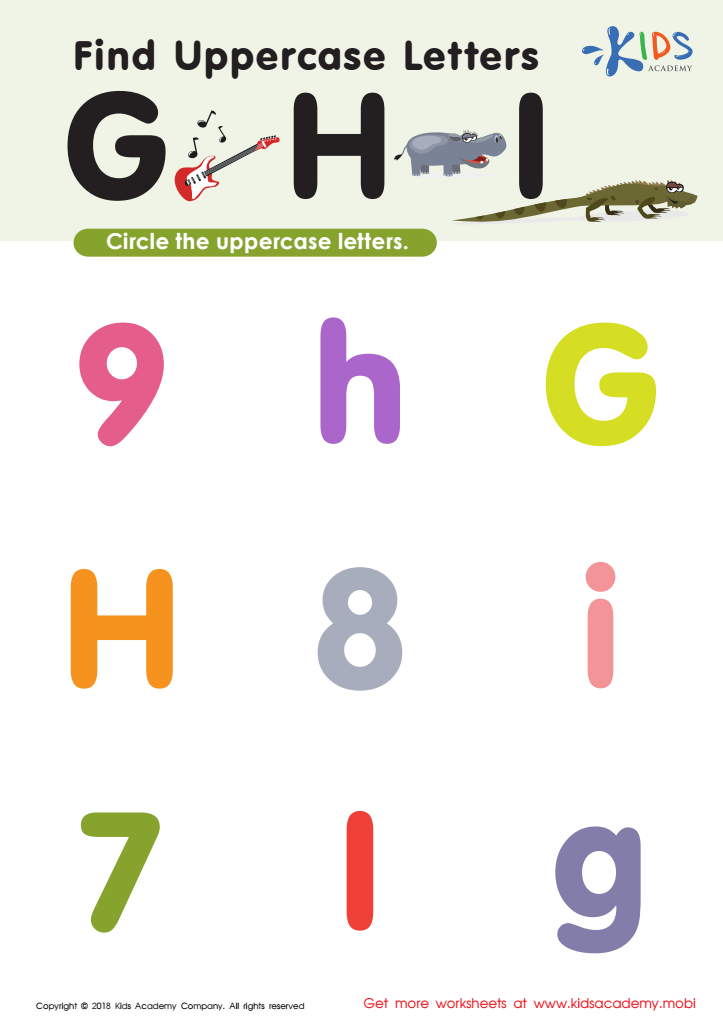
Find Uppercase Letters G, H, and I Worksheet
 Assign to My Students
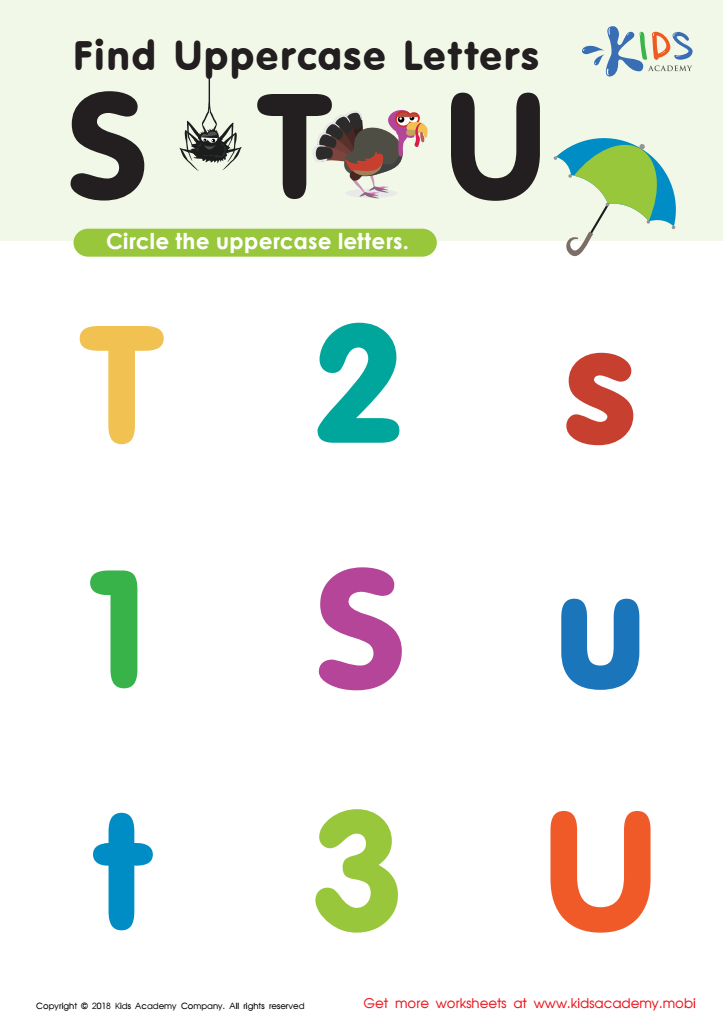
Find Uppercase Letters Worksheet
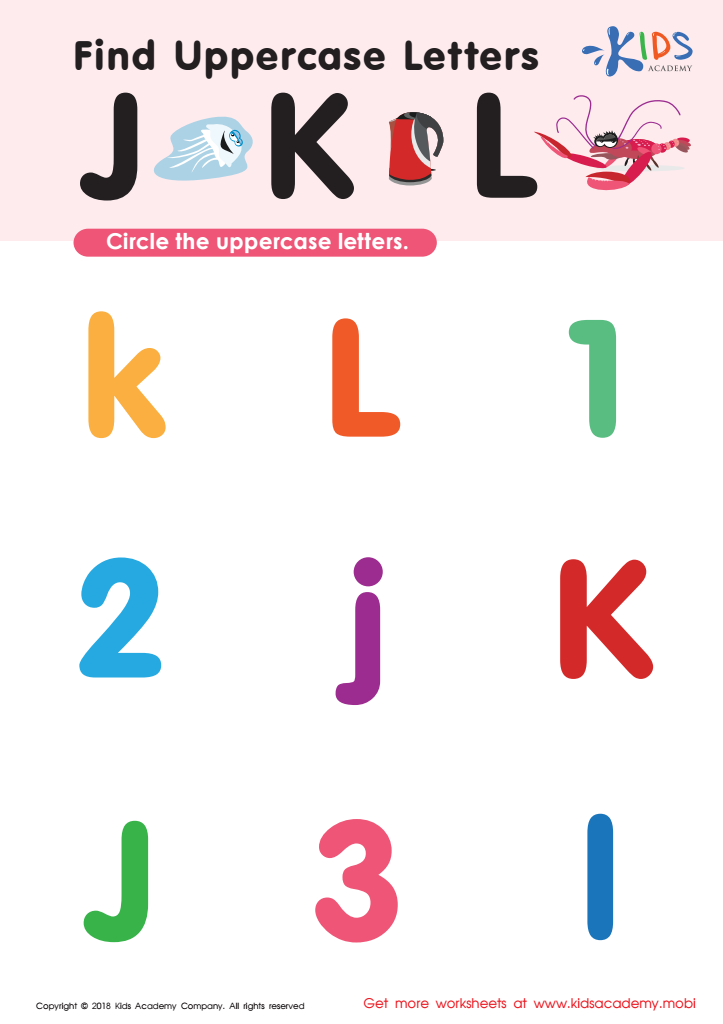
Find Uppercase Letters J, K, and L Worksheet

Find Uppercase Letters A, B, and C Worksheet








Understanding uppercase letters is crucial for children aged 4-8 as it lays the foundation for literacy and academic success. Familiarity with uppercase letters fosters the ability to recognize, read, and write both their own name and other words, facilitating early communication skills. Children at this age are often learning to decode simple texts; recognizing uppercase letters helps them identify the beginning of sentences and proper nouns, which are essential for comprehension.
Moreover, mastery of uppercase letters contributes to children’s confidence in writing. As they start to form words and sentences, knowing how to correctly use uppercase letters enhances their writing's clarity and effectiveness. Furthermore, uppercase letters are widely used in classrooms, which aligns with educational expectations and standards.
Additionally, familiarity with uppercase letters aids in developing visual discrimination skills, helping children enhance their cognitive abilities. Engaging parents in activities that reinforce this knowledge at home, such as reading and letter recognition games, complements classroom learning. This collaborative approach nurtures a love for literacy and creates a supportive learning environment, essential during these formative years. In sum, prioritizing uppercase letter familiarity is a vital step towards fostering lifelong learning and communication skills in young learners.