Applying math skills Worksheets for Ages 4-8
3 filtered results
-
From - To
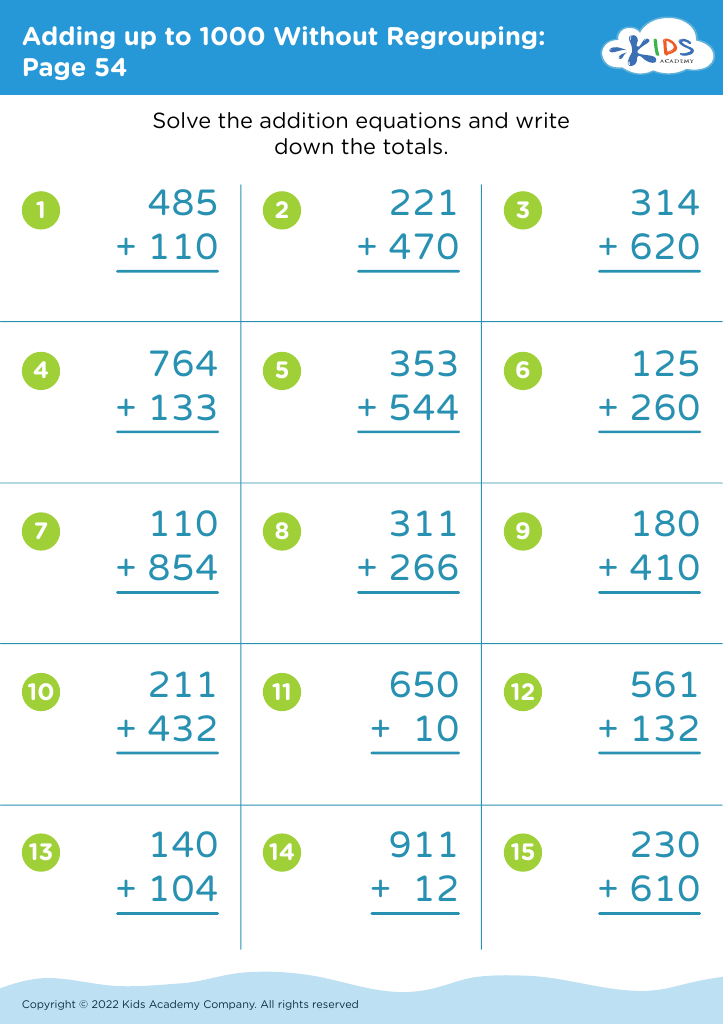
Boost your child's math abilities with our "Applying Math Skills Worksheets" designed for ages 4-8! These engaging, educational activities from Kids Academy cover essential math concepts like addition, subtraction, counting, and patterns. Our worksheets foster critical thinking and problem-solving skills in a fun, interactive way, ensuring your child builds a strong math foundation. Perfect for preschoolers and early graders, each worksheet is crafted to make learning enjoyable and effective. Unlock the path to math mastery and watch your child’s confidence soar with these expertly designed resources. Visit Kids Academy today to get started!
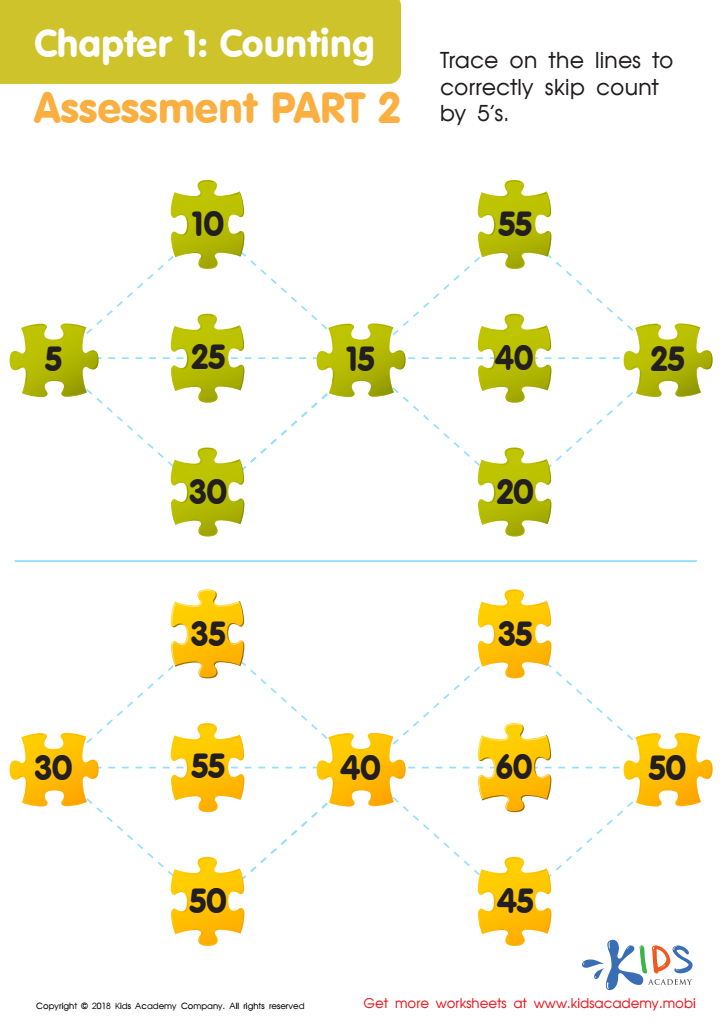
Counting: Assessment 2 Worksheet
 Assign to My Students
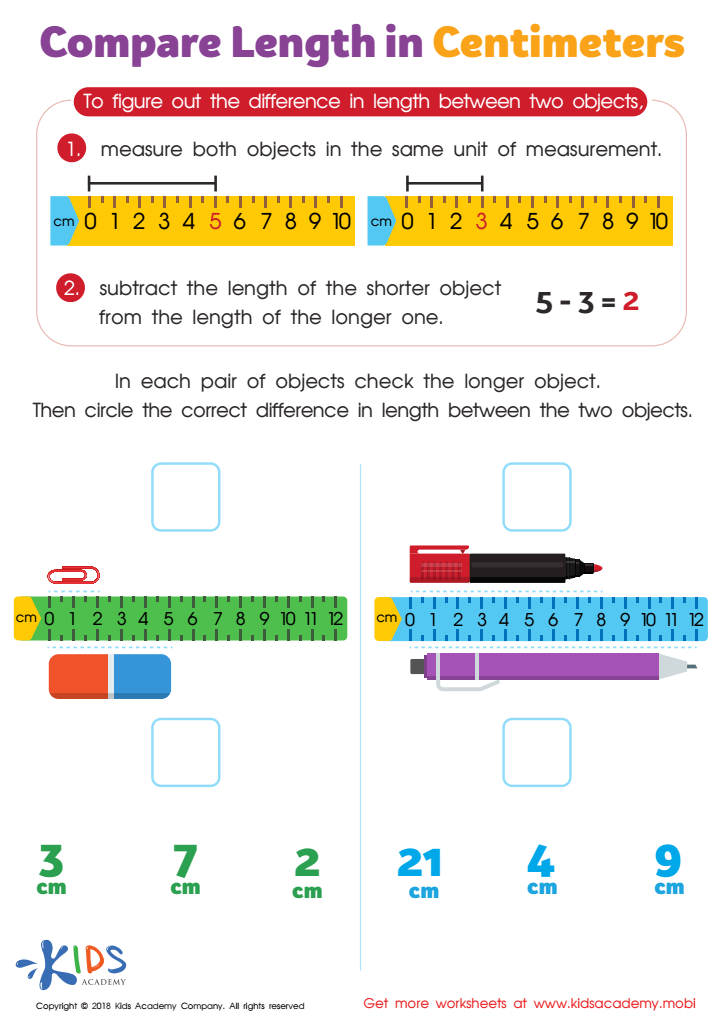
Compare Length in Centimeters Worksheet








Parents and teachers should prioritize applying math skills for children aged 4-8 because early math competence is foundational for long-term academic success and cognitive development. During these formative years, children's brains are highly adaptable and primed for learning new concepts. Introducing math early on sets the groundwork for more advanced subjects, nurturing problem-solving abilities, logical thinking, and critical reasoning.
Math is everywhere in daily life—whether telling time, measuring ingredients for a recipe, or even recognizing patterns in nature—and instilling these skills early helps children make sense of their surroundings. Early math proficiency often correlates with better performance in other subjects, including reading and science, due to the development of analytical and reasoning skills.
Childhood is also when attitudes toward learning are formed. Positive early experiences with math, involving fun and engagement, can lead to a lifelong passion and reduce anxiety toward the subject. Teachers and parents who are proactive in incorporating math activities, such as counting games, puzzles, and simple arithmetic, help cultivate a sense of curiosity and confidence in young learners.
Moreover, building a solid foundation in math can offer long-term economic benefits. As the world advances technologically, careers increasingly require strong math and analytical skills. Ensuring children are math-literate from an early age prepares them for future academic pursuits and diverse career opportunities, making the significance of this endeavor profound and far-reaching.








