Basic measurement concepts Worksheets for Ages 4-8
8 filtered results
-
From - To
Explore our engaging Basic Measurement Concepts Worksheets designed specifically for children aged 4-8. These interactive worksheets introduce foundational skills in measurement, including concepts like length, weight, and volume through fun activities and visuals. Our resources help young learners grasp essential measuring tools, such as rulers and scales, while fostering critical thinking and problem-solving abilities. These worksheets make learning measurement not only educational but enjoyable, ensuring kids build confidence in their skills. Perfect for home or classroom use, our worksheets cater to various learning styles, making math measurement accessible and fun for every child. Start measuring success today!
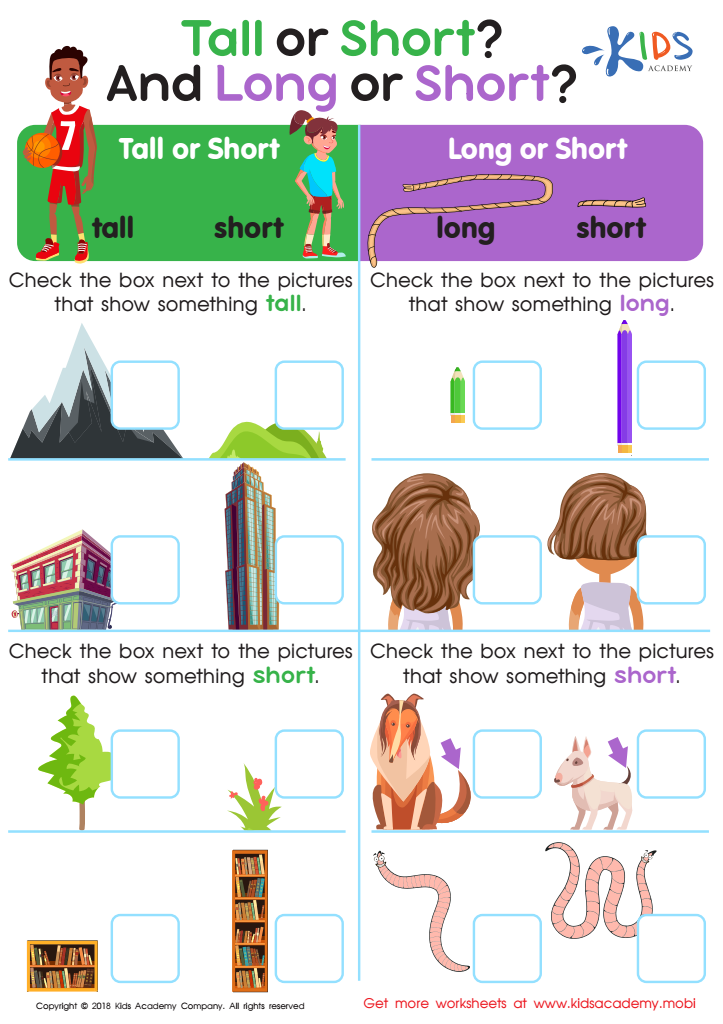
Tall or Short and Long or Short? Worksheet
 Assign to My Students
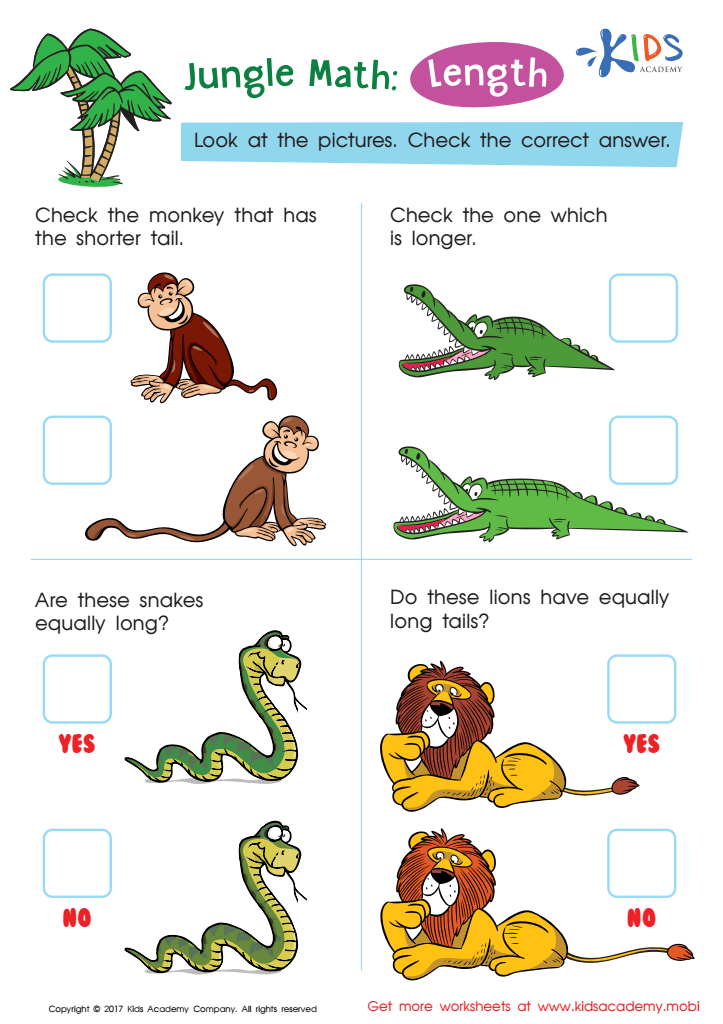
Which One Is Longer - Length Worksheet
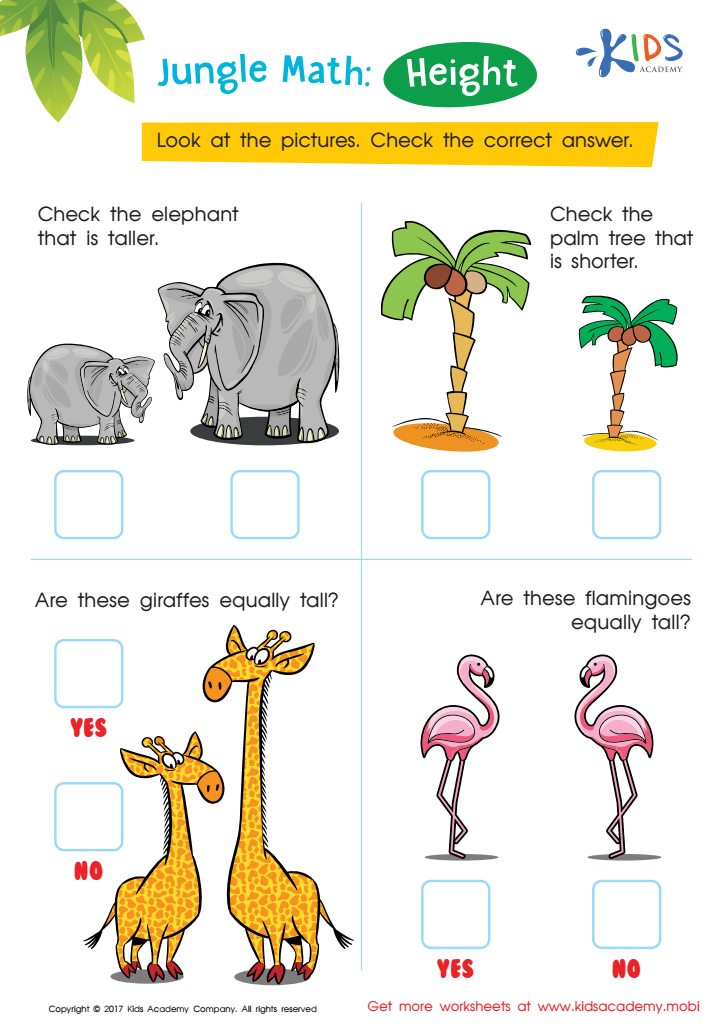
Which Is Taller Worksheet
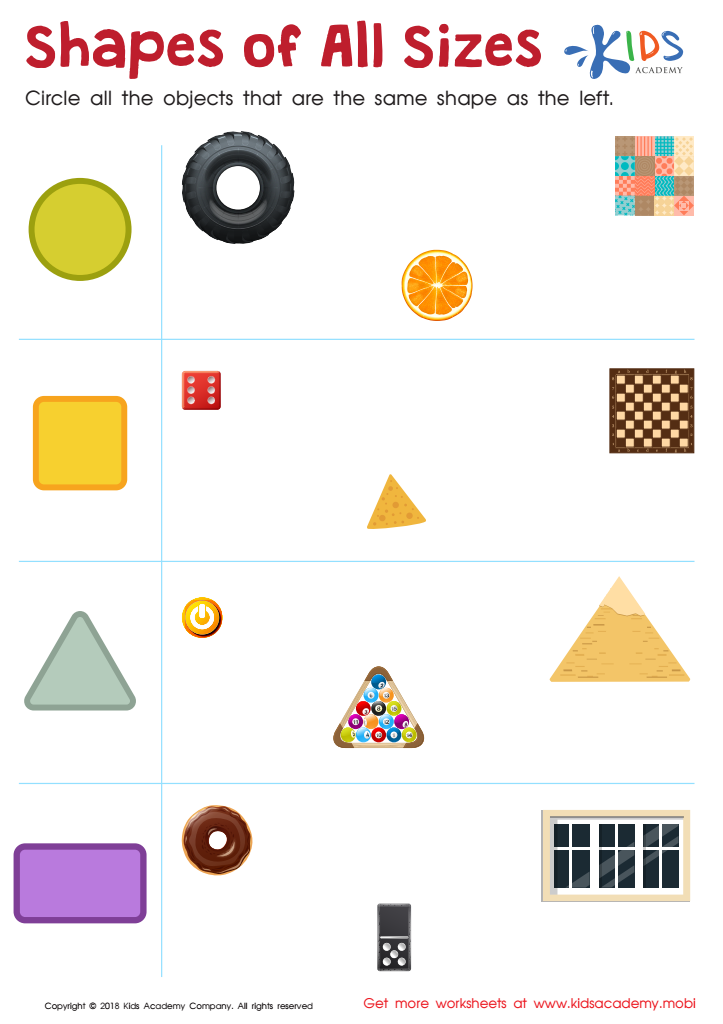
Shapes of All Sizes Worksheet
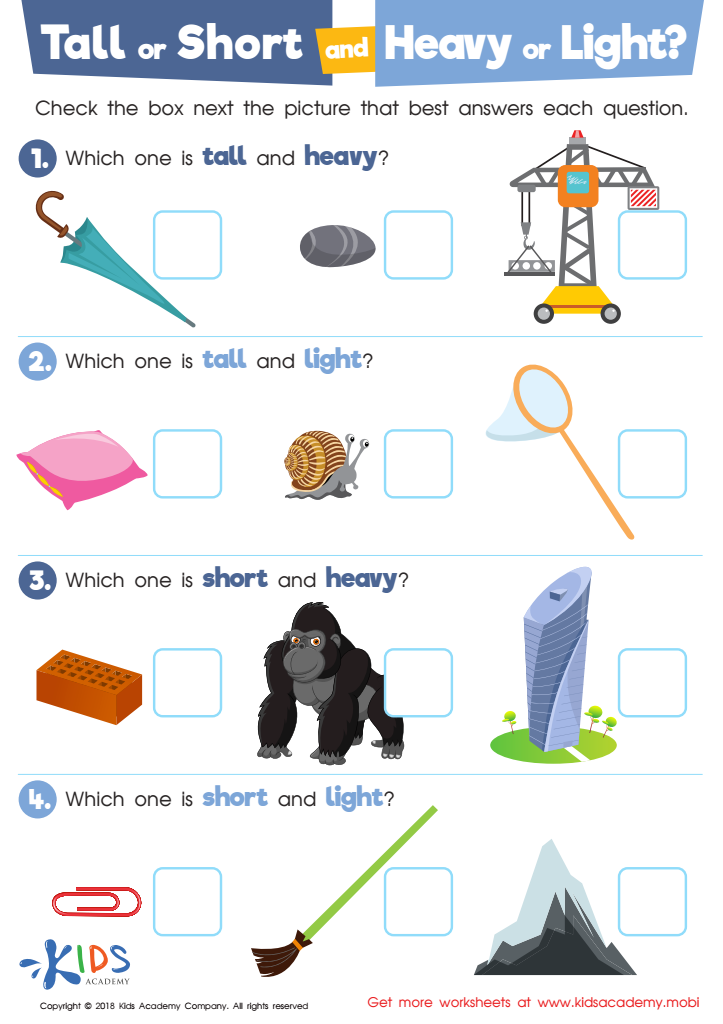
Tall or Short and Heavy or Light? Worksheet
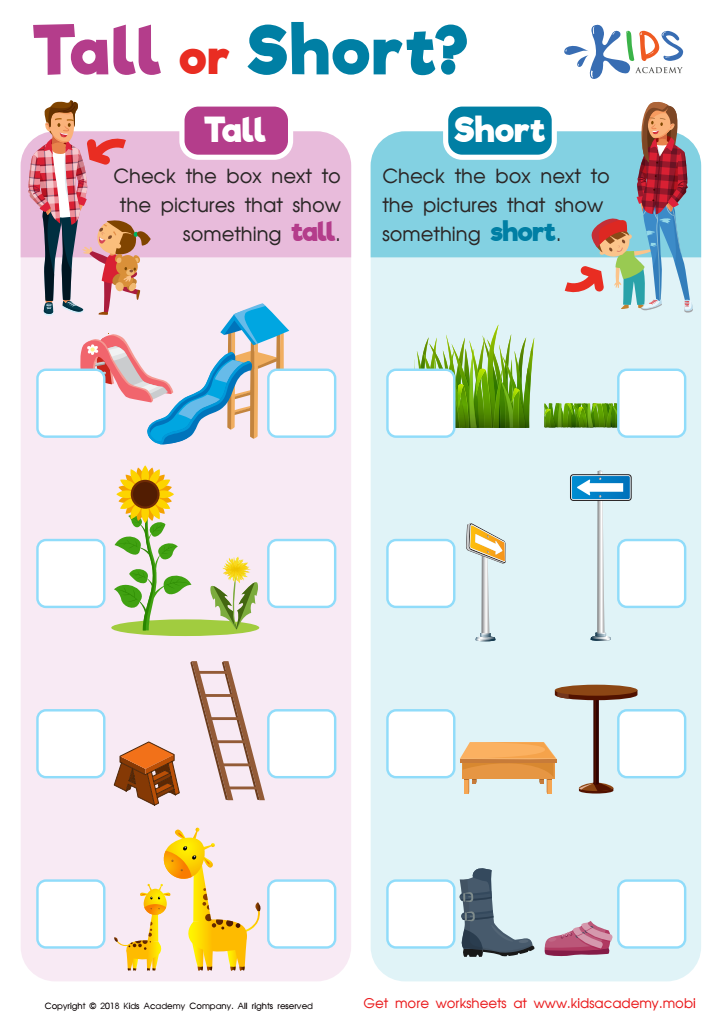
Tall or Short? Worksheet
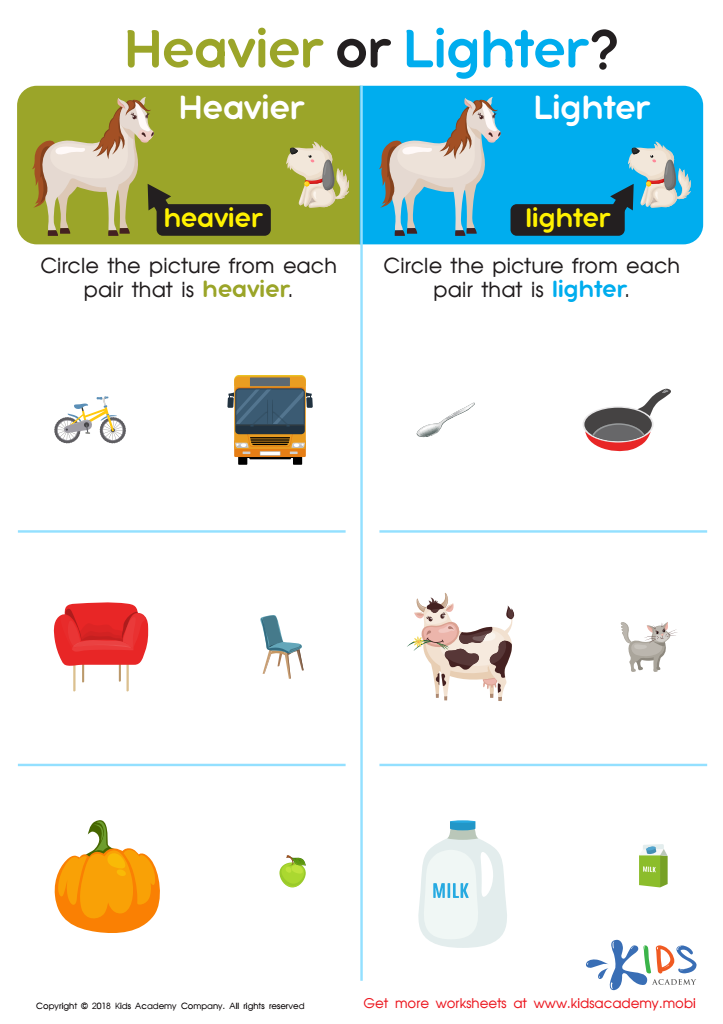
Heavier or Lighter? Worksheet
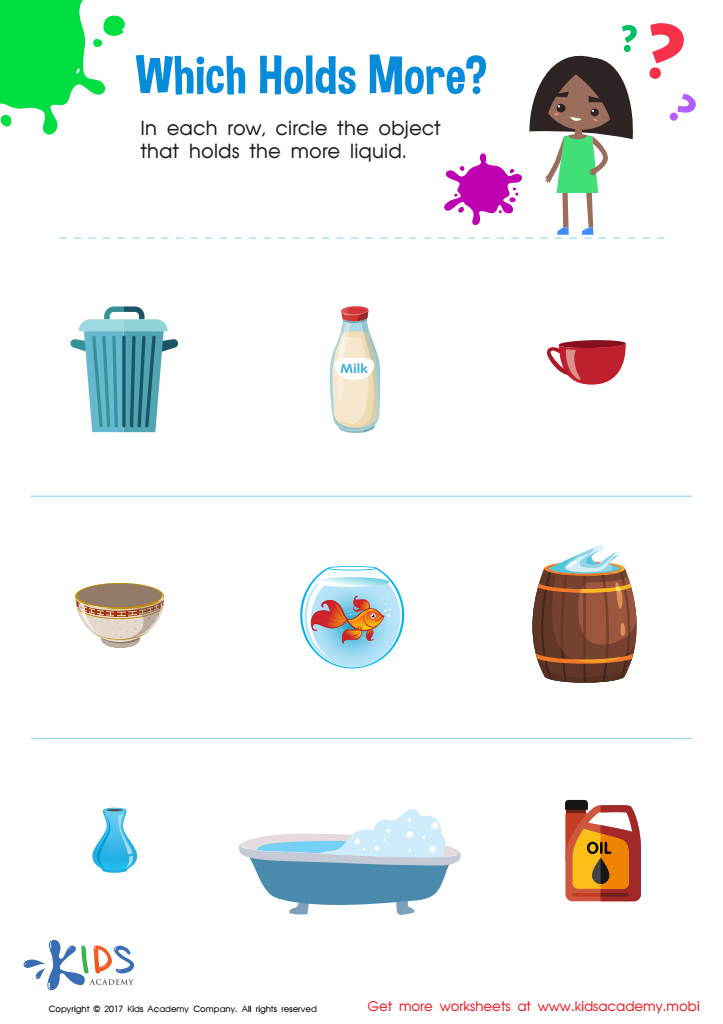
Which Holds More: Capacity Worksheet







Basic measurement concepts form the foundation for a child's understanding of the world around them, making them essential for ages 4-8. During these formative years, children are naturally curious and eager to explore their environment. Learning to measure—whether it’s length, weight, volume, or time—enhances their reasoning skills and helps them develop critical thinking capabilities.
Parents and teachers should care about these concepts because they foster not only mathematical understanding but also practical life skills. For instance, measuring ingredients while cooking can enhance both measurement skills and promote healthy eating habits. Furthermore, these activities can be a great way to engage children in hands-on learning, making abstract concepts more tangible and relatable.
Exposure to measurement encourages children to make comparisons, spot relationships, and understand quantities, thus laying the groundwork for more complex mathematical concepts later. Moreover, using measurement terminology tools helps instill language development and vocabulary expansion.
Ultimately, investing in basic measurement concepts provides children with the cognitive tools they need for future academic success and helps cultivate a lifelong love of learning, curiosity, and confidence as they interact with the world. The skills gained during these early years can pave the way for proficiency in STEM fields.








