Counting accuracy Worksheets for Ages 4-8
3 filtered results
-
From - To
Enhance your child's counting skills with our "Counting Accuracy Worksheets for Ages 4-8"! Designed to foster a love for numbers, these engaging worksheets help young learners master counting through fun activities. Kids can practice identifying quantities, matching numbers, and solving simple equations, all while reinforcing their understanding of numerical concepts. Each worksheet promotes accuracy and confidence in counting, ensuring children build a solid mathematical foundation. Ideal for home or classroom use, our worksheets cater to various learning styles and enable children to progress at their own pace. Download and start counting today for a brighter mathematical future!
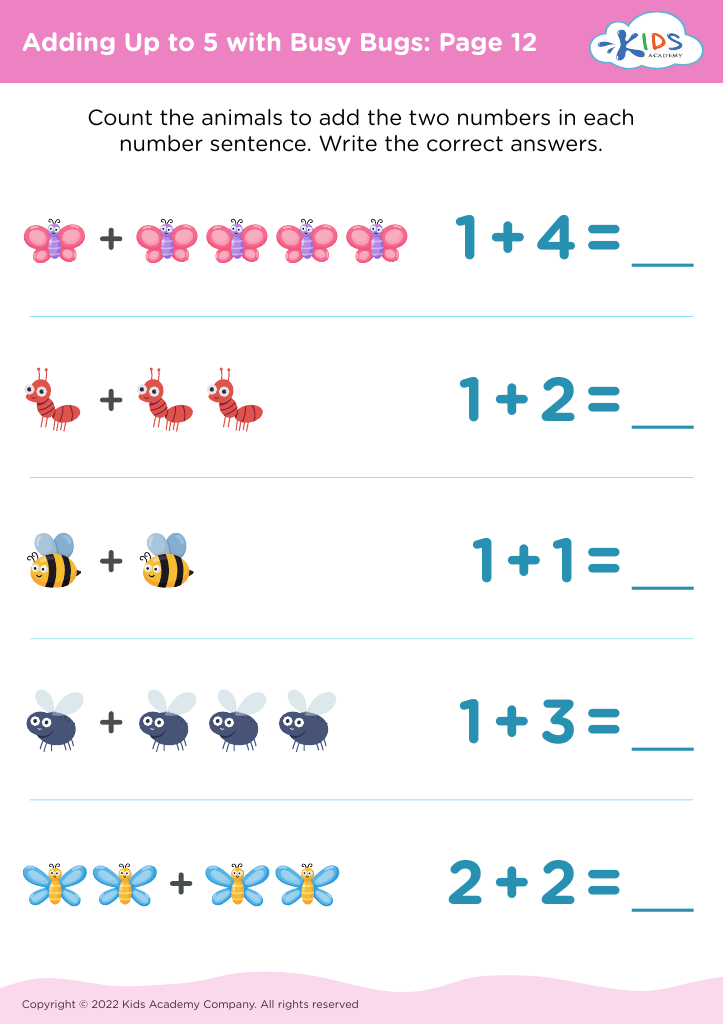
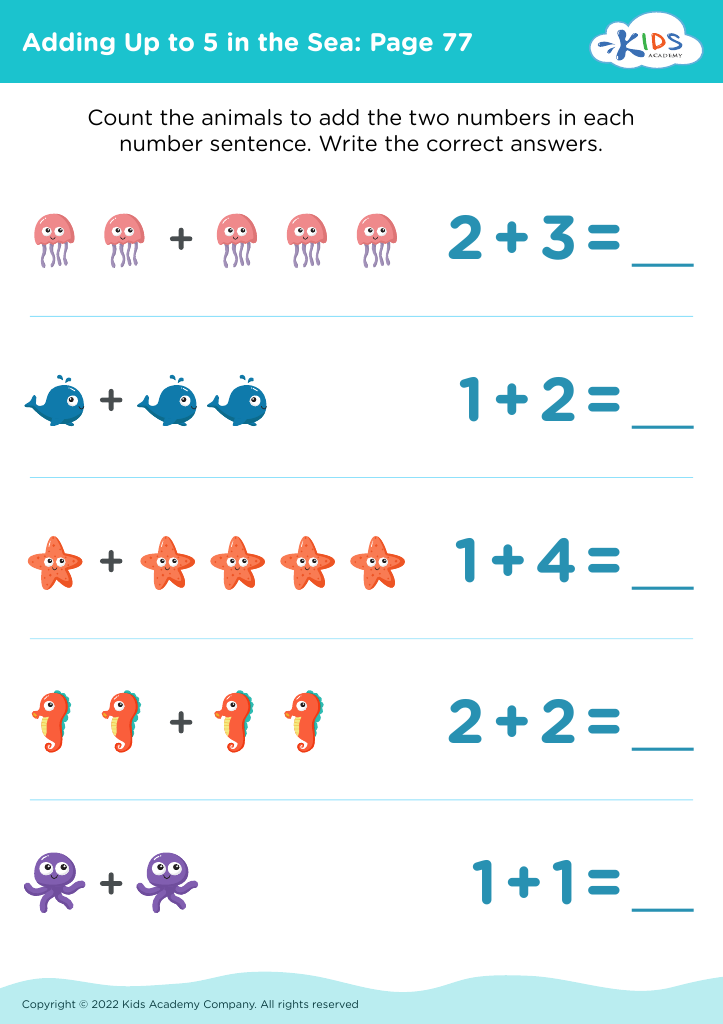
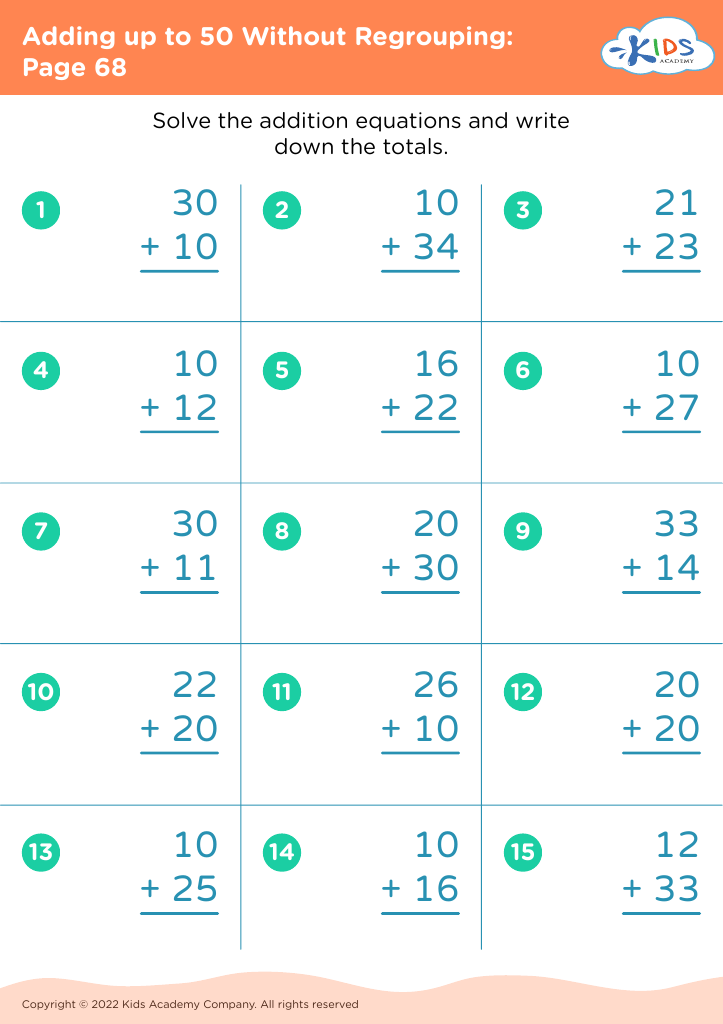








Counting accuracy is a foundational skill that significantly impacts a child's mathematical development and overall academic success. For children aged 4-8, mastering counting not only helps in understanding numbers but also enhances cognitive skills such as pattern recognition, logical reasoning, and problem-solving. Accurate counting lays the groundwork for later mathematical concepts, including addition, subtraction, and even fractions.
Parents and teachers should prioritize counting accuracy because it fosters confidence in young learners. Children who can count accurately feel more competent and are likely to engage more enthusiastically with math-related activities. Moreover, counting is immensely beneficial in everyday contexts, from counting objects during playdates to managing finances in teaching opportunities with real-life applications.
In early years, miscounting can lead to misconceptions that may carry into higher grades, creating gaps in knowledge. Hence, consistent practice of accurate counting not only mitigates these risks but also encourages a positive attitude towards learning. By fostering a strong counting foundation, we equip our children with essential skills for future academic success, aiding their overall development and nurturing a lifelong love for mathematics. Involving parents and teachers in this journey is key to promoting a supportive learning environment.








