Counting money Worksheets for Ages 4-8
3 filtered results
-
From - To
Discover engaging "Counting Money Worksheets for Ages 4-8" designed to make learning money skills fun and easy! These worksheets help young learners recognize coins, understand their values, and practice adding different amounts. Through colorful activities and playful scenarios, kids enhance their math skills and build confidence in handling money. Ideal for both classroom and home use, our printable worksheets provide a stimulating learning experience tailored to children aged 4-8. Equip your young students with essential life skills and a solid foundation in math—try our interactive and educational counting money worksheets today!
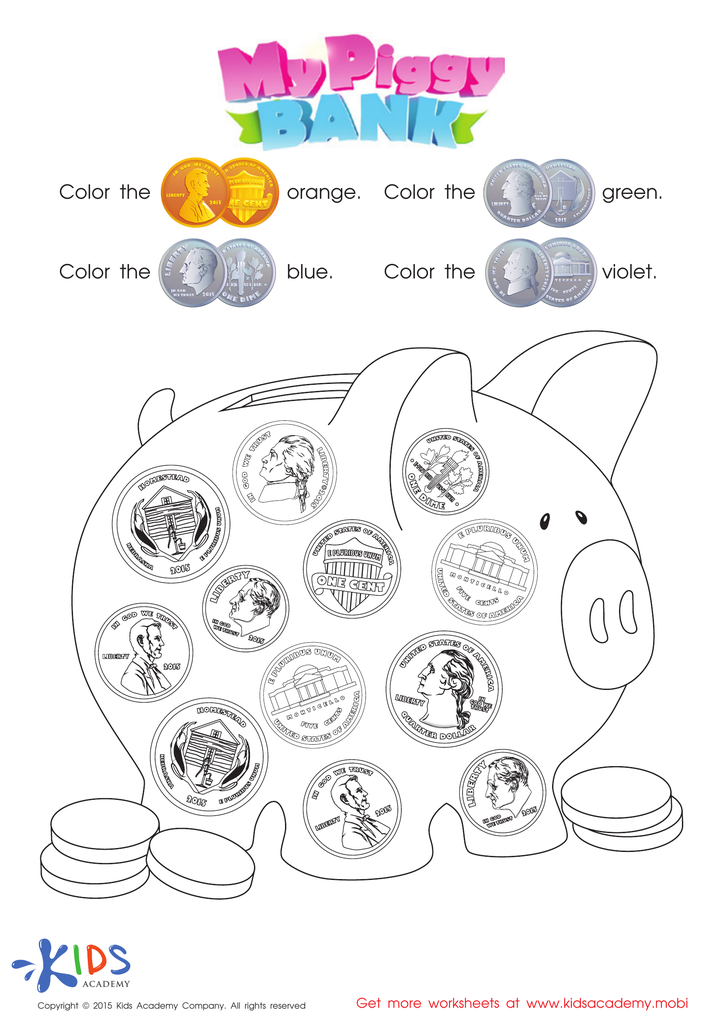
Recognizing Money Money Worksheet
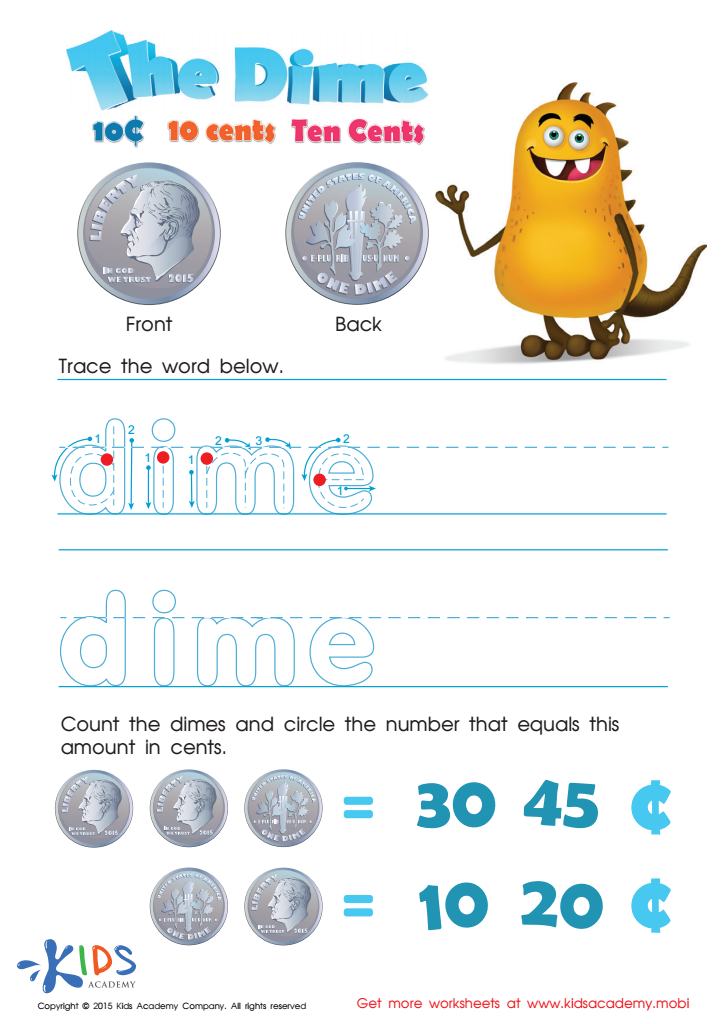
Ten Cents or the Dime Money Worksheet
 Assign to My Students







Counting money is a fundamental skill that extends far beyond the classroom and plays a crucial role in developing financial literacy among young children aged 4-8. At its core, learning to count money helps children understand the value of different denominations and enhances their ability to perform basic arithmetic operations such as addition and subtraction. This fosters their overall numerical proficiency, which is essential for both academic success and everyday life.
For parents, teaching children to count money can be an engaging way to spend quality time together, while also imparting critical life skills. It transforms abstract mathematical concepts into practical, hands-on learning experiences that children can easily grasp. Moreover, it instills a sense of responsibility and the importance of managing resources, laying the groundwork for prudent financial habits in future years.
For teachers, incorporating money-counting exercises into the curriculum provides a multifaceted educational experience. It not only aligns with key learning objectives but also enhances cognitive development through improved problem-solving skills and decision-making abilities. Additionally, these activities can boost children’s confidence and independence as they learn to handle money transactions, making them better prepared for real-world interactions.
Ultimately, fostering proficiency in counting money at an early age establishes a strong foundation for lifelong financial competence and responsible money management, benefiting children well into adulthood.








