Improving fine motor skills Worksheets for Ages 4-8
3 filtered results
-
From - To
Explore our engaging collection of worksheets designed for children aged 4-8 to enhance fine motor skills! These printable resources provide fun activities that help little hands develop precision and control through tracing, cutting, and coloring exercises. Each worksheet is thoughtfully crafted to promote hand-eye coordination, gripping strength, and overall dexterity while keeping your child entertained. Whether at home or in the classroom, these activities serve as essential tools for early learners to master critical fine motor tasks, laying a strong foundation for future academic success. Start fostering your child's development with our creative and educational worksheets today!
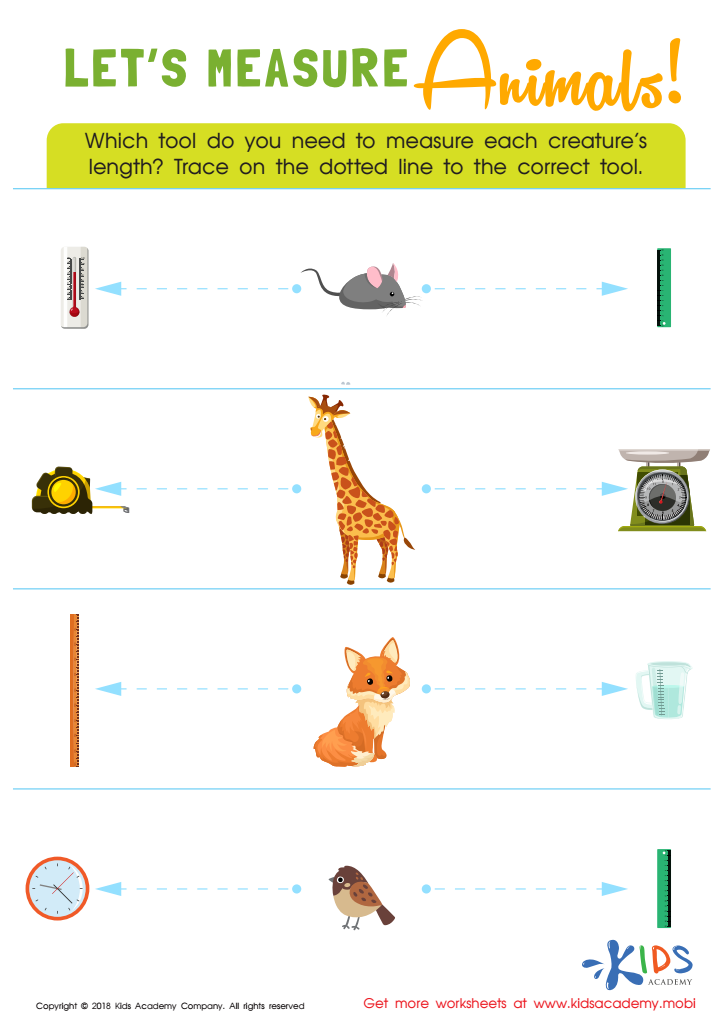
Let's Measure Animals! Worksheet
 Assign to My Students







Improving fine motor skills in children aged 4-8 is essential for several reasons, and it's a responsibility that parents and teachers should prioritize. Fine motor skills involve the coordination of small muscles, particularly in the hands and fingers, which are crucial for everyday tasks such as writing, eating, and dressing. As children develop these skills, they gain confidence in their ability to interact with their environment.
Strong fine motor skills lay the foundation for academic success, specifically in writing and art activities. By enhancing these skills, children are better equipped to hold pencils, manipulate scissors, and engage in hands-on learning experiences. This promotes better handwriting and creativity, essential for academic performance and self-expression.
Moreover, fine motor skill development also supports cognitive function. Activities that strengthen these skills often involve problem-solving and critical thinking, helping children to develop their brains in conjunction with their physical abilities.
Additionally, nurturing fine motor skills fosters independence, allowing children to take pride in completing tasks on their own. Therefore, by investing time and resources into fine motor skill activities, both parents and teachers play a vital role in shaping well-rounded, capable, and confident children prepared for future challenges.








