
Interpreting information Worksheets for Ages 4-8
3 filtered results
Difficulty Level
Grade
Age
-
From - To
Subject
Activity
Standards
Unlock your child's potential with our Interpreting Information Worksheets designed specifically for ages 4-8! These engaging and interactive worksheets help young learners develop essential skills in analyzing visuals, understanding texts, and making connections. Perfect for early grade educators and parents alike, our resources enhance critical thinking and comprehension abilities, allowing children to interpret information confidently. Each activity is crafted to be both fun and educational, ensuring that children not only learn but enjoy the process. Encourage your child's curiosity and intellect – explore our collection of interpreting information worksheets and watch them thrive in their learning journey!
Favorites
With answer key
Interactive
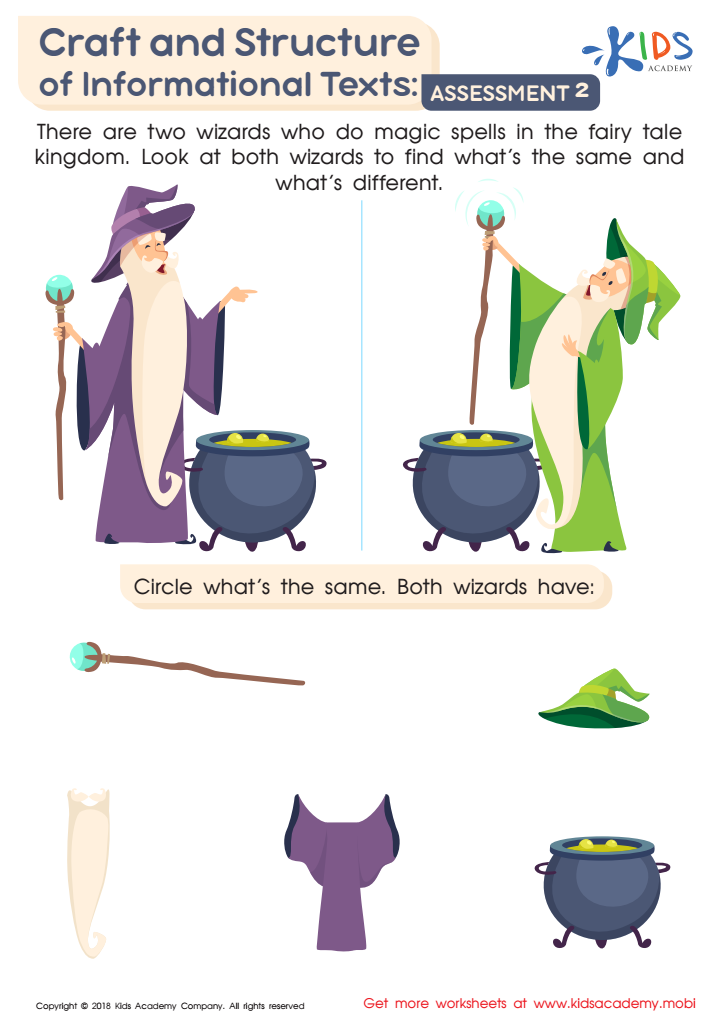
Craft and Structure of Informational Texts: Assessment 2 Worksheet
This assessment has kids looking at two similar fairy tale wizards, focusing on their visuals to find the similarities and differences. Then, they'll circle the things they both have. It's a great way to help children hone their detail-oriented comprehension skills, which is essential when using informational texts.
 Assign to My Students
Craft and Structure of Informational Texts: Assessment 2 Worksheet
Worksheet
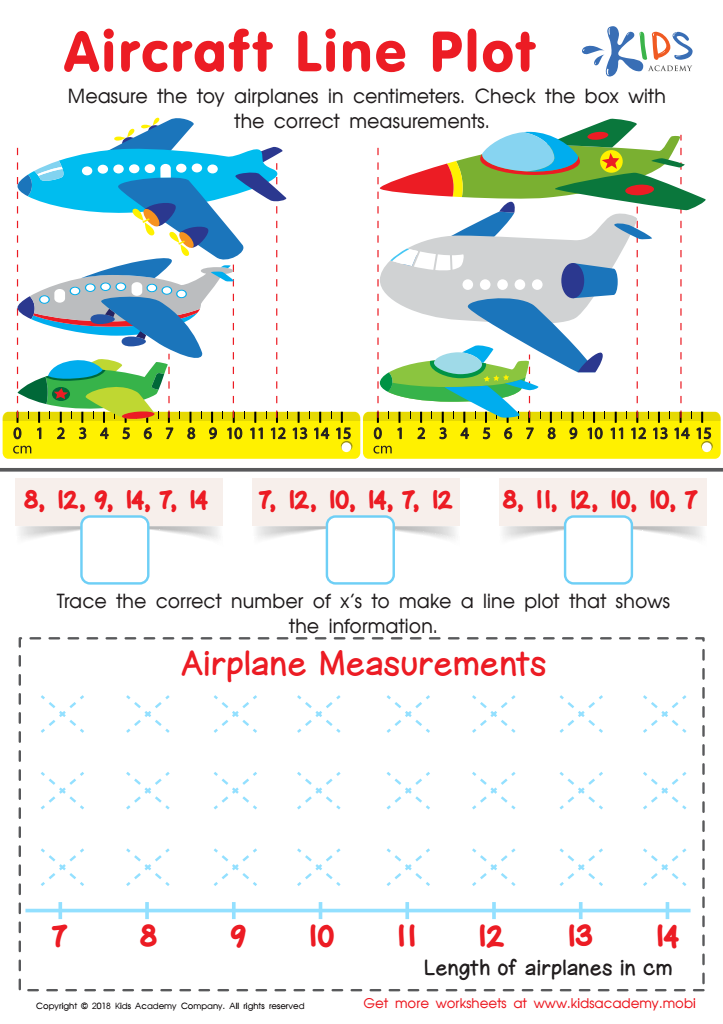
Aircraft Line Plot Worksheet
If your kids are aviation enthusiasts, they'll love this worksheet! Look at the picture with them, then ask them to measure the toy planes in cm. Check the box with the right measurements and then trace the x's to make a line plot with the data.
Aircraft Line Plot Worksheet
Worksheet
Join Kids Academy for Free
Who is primarily going to use this learning content?








Parents and teachers should prioritize the skill of interpreting information for children ages 4-8 as it lays the crucial foundation for lifelong learning and critical thinking. At this developmental stage, children are naturally curious and are beginning to interact with the world around them, absorbing information from multiple sources, including books, conversations, and digital media.
Interpreting information helps them make sense of what they see and hear, enhancing their comprehension skills. By developing these skills early on, children learn to distinguish between facts and opinions, understand context, and recognize various perspectives. This is particularly important in a digital age where misinformation is prevalent.
Additionally, encouraging interpretation fosters independence and confidence in their thought processes and decision-making, as children learn to draw conclusions based on evidence rather than simply accepting information at face value. Engaging with stories, asking open-ended questions, and encouraging discussions can promote these skills effectively in the classroom and at home.
Ultimately, supporting children in this area not only enhances academic achievement but also prepares them to navigate their increasingly complex world, making informed choices as responsible, critical thinkers in the future.








