Recognizing equivalent fractions Worksheets for Ages 4-8
6 filtered results
-
From - To
Discover our engaging "Recognizing Equivalent Fractions Worksheets" designed specifically for ages 4-8. These worksheets simplify the concept of equivalent fractions, making learning fun and interactive. With carefully crafted activities, children can visually compare fractions, enhancing their understanding through colorful illustrations and hands-on exercises. Our worksheets encourage critical thinking, promote problem-solving skills, and build a strong foundation in early math concepts. Ideal for home or classroom use, these resources help young learners confidently grasp the idea that different fractions can represent the same value. Start your child’s journey to mastering fractions with our user-friendly and effective worksheets today!
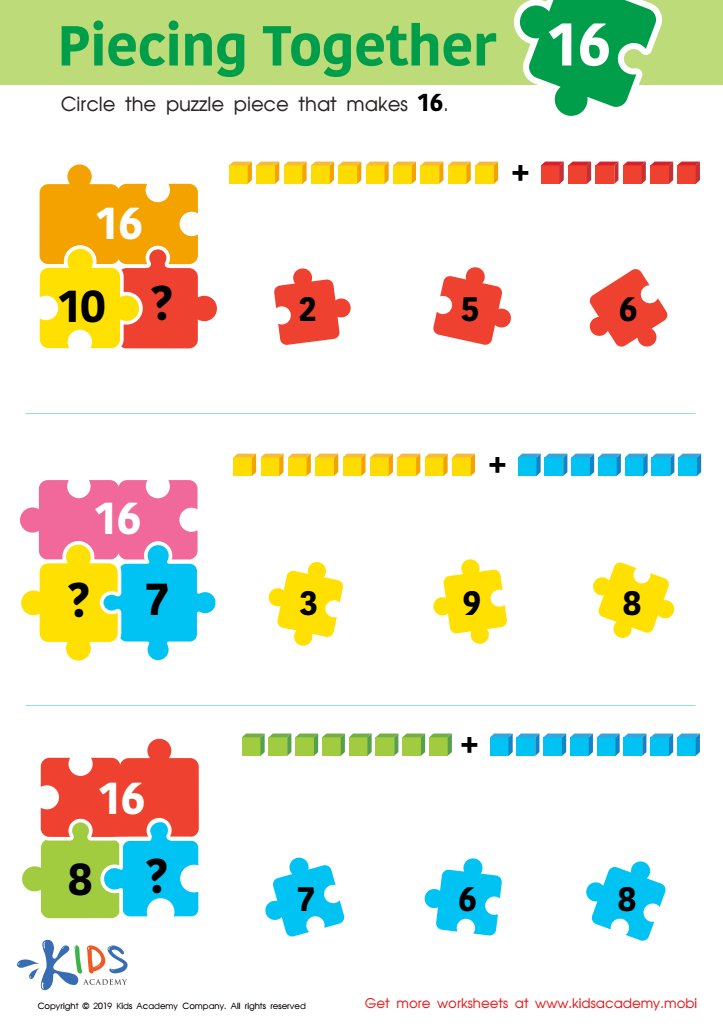
Piecing Together 16 Worksheet
 Assign to My Students





Recognizing equivalent fractions is a foundational skill for young learners, especially for those ages 4-8, as it introduces important mathematical concepts in a simple and engaging way. Parents and teachers should care about this skill because it lays the groundwork for more complex math topics, such as addition, subtraction, and comparison of fractions.
Understanding equivalent fractions helps children grasp the idea that different fractions can represent the same quantity. For example, recognizing that 1/2 is the same as 2/4 fosters flexible thinking and problem-solving skills. This understanding reinforces number sense and helps build confidence, as children can visualize fractions through hands-on activities like slicing shapes or sharing food.
Moreover, recognizing equivalent fractions promotes critical thinking. It encourages young learners to explore and justify their reasoning, which develops their ability to communicate mathematical concepts clearly. It also bridges connections to real-life situations, such as cooking or sharing, making math relevant and practical.
Ultimately, fostering this understanding in early learners empowers them with the essential skills needed for future success in math and helps cultivate a lifelong love for learning. Engaging with equivalent fractions now sets the stage for mastering more advanced concepts later.








