
Story sequencing skills Worksheets for Ages 4-8
3 filtered results
Difficulty Level
Grade
Age
-
From - To
Subject
Activity
Standards
Enhance your child’s storytelling abilities with our engaging story sequencing skills worksheets for ages 4-8! Designed to develop critical thinking and comprehension, these interactive worksheets encourage young learners to arrange stories in the correct order. By connecting visuals and text, children strengthen their understanding of narratives while boosting vocabulary and language skills. With a variety of fun activities, our worksheets foster creativity and imagination, making learning enjoyable. Perfect for home or classroom use, these resources empower kids to bring their stories to life, build confidence, and improve cognitive skills essential for their educational journey. Download and inspire a love for storytelling today!
Favorites
With answer key
Interactive
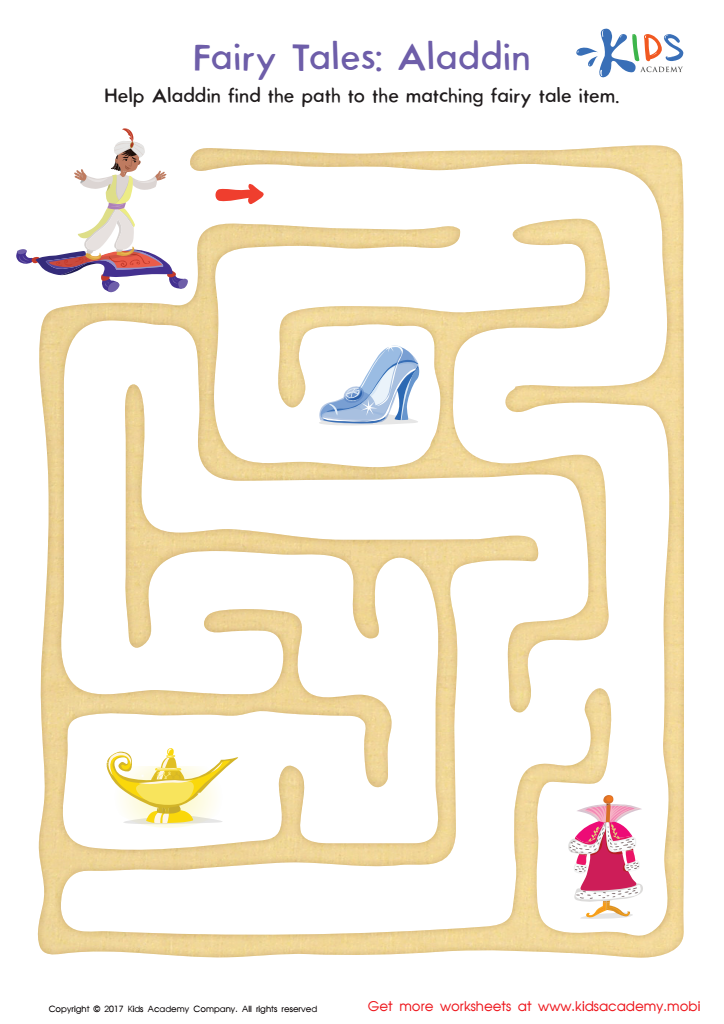
Fairy Tales Aladdin Printable
Test your child's reading recall with this challenge: the Aladdin maze worksheet! Guide your learner to identify objects linked to the story, then ask them to retell it afterwards. Hone those memory skills while having fun!
 Assign to My Students
Fairy Tales Aladdin Printable
Worksheet
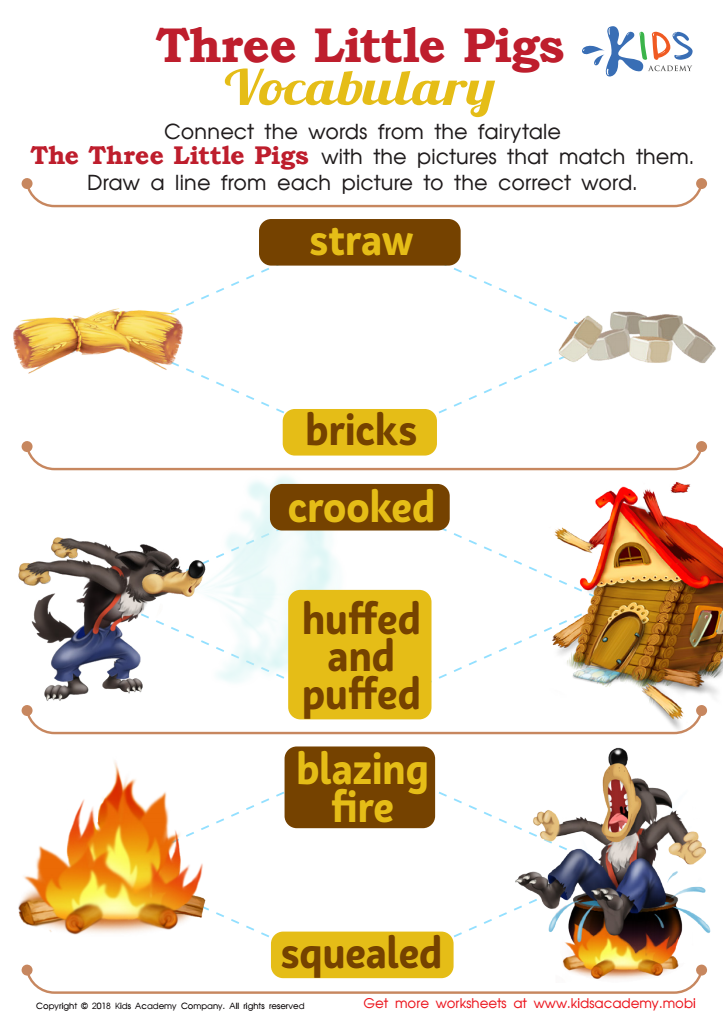
Three Little Pigs Vocabulary Worksheet
Read the Three Little Pigs to your children. Have them use the tracing sheet to connect the story words with the pictures. This is a fun and educational way to help them build their vocabulary.
Three Little Pigs Vocabulary Worksheet
Worksheet
Join Kids Academy for Free
Who is primarily going to use this learning content?








Story sequencing skills are crucial for children aged 4-8 as they lay the foundation for critical thinking and comprehension. This ability helps children understand the structure of stories, including the beginning, middle, and end, which enhances their overall narrative skills. When students grasp sequencing, they can better follow plots, remember character developments, and anticipate outcomes. This skill not only enriches their reading experiences but also enhances their writing abilities—allowing them to create coherent and engaging stories.
Furthermore, story sequencing activities often promote language development, vocabulary expansion, and creativity. As children recount stories or organize events in a logical order, they learn to articulate their thoughts clearly and express themselves effectively. This practice helps improve their listening and verbal skills.
Additionally, story sequencing can boost comprehension in various subjects beyond reading. For example, understanding the sequence of events is vital in science and history. Engaging in storytelling fosters an early love for reading, preparing children for academic success.
Ultimately, investing time in story sequencing equips children with essential cognitive and social-emotional skills, fostering a lifelong passion for literature and learning. Parents and teachers should prioritize these skills as they significantly impact child's overall development.








