Understanding arrays Worksheets for Ages 4-8
3 filtered results
-
From - To
Welcome to our "Understanding Arrays Worksheets" page for children ages 4-8! These worksheets are designed to introduce young learners to the concept of arrays, a foundational skill in mathematics. Through engaging visuals and interactive exercises, kids will explore how arrays organize objects and numbers, fostering their understanding of multiplication and counting. Our worksheets feature colorful illustrations and fun activities that stimulate critical thinking while making learning enjoyable. Ideal for classrooms or at-home practice, these resources will help young students develop their math skills in a fun and approachable way. Let’s embark on a learning adventure together!
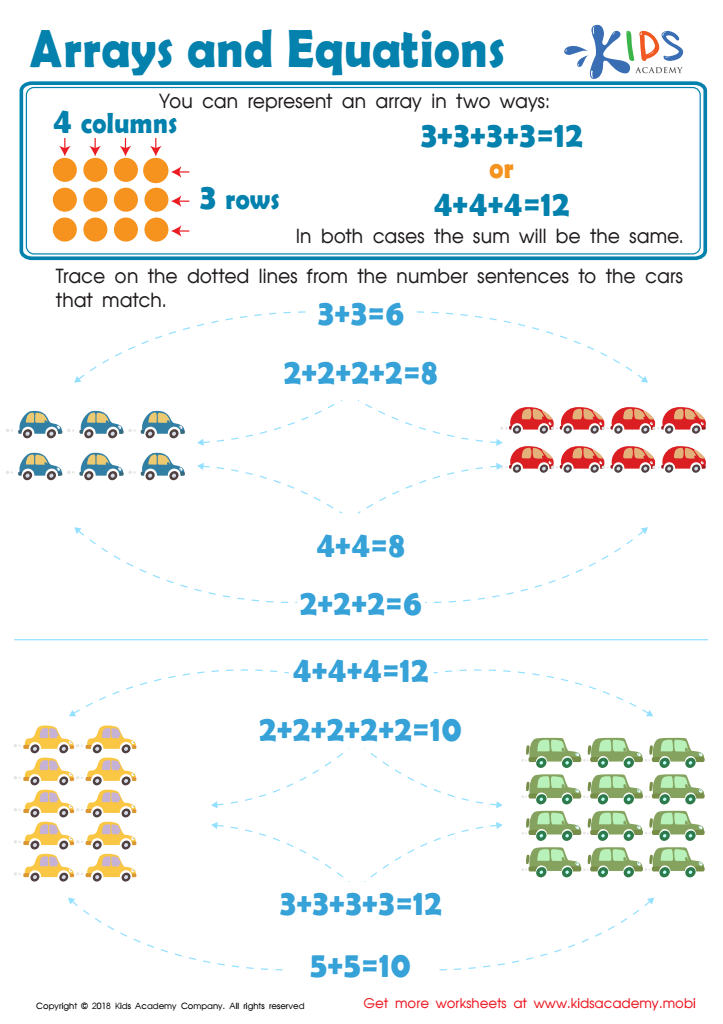
Arrays and Equations Worksheet
 Assign to My Students
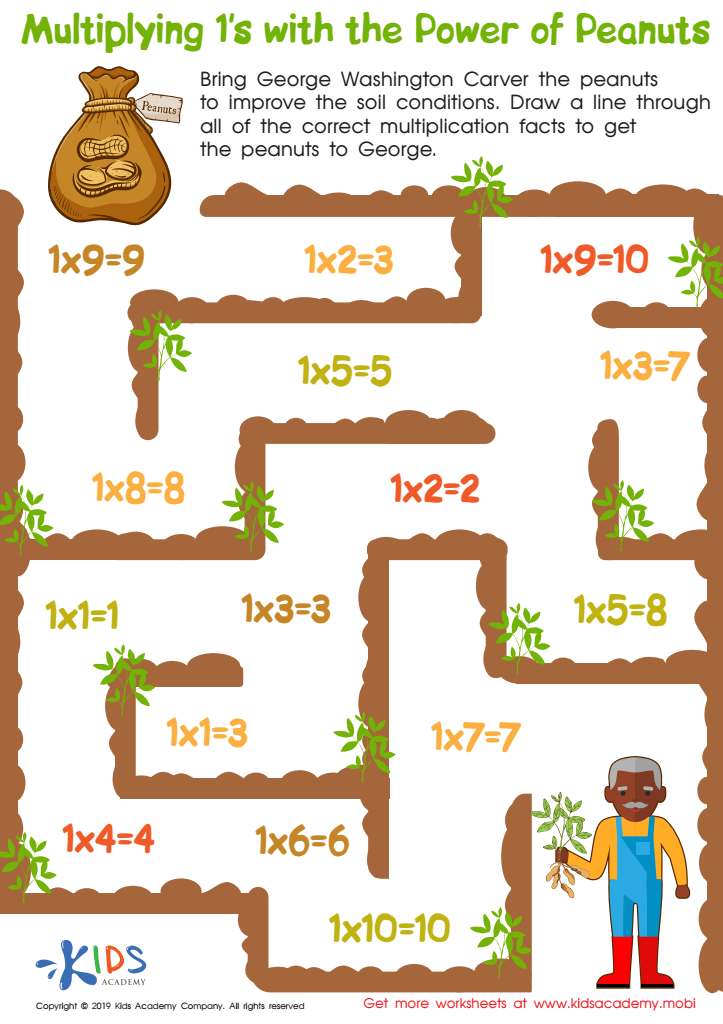
Multiplying 1’s With the Power of Peanuts Worksheet
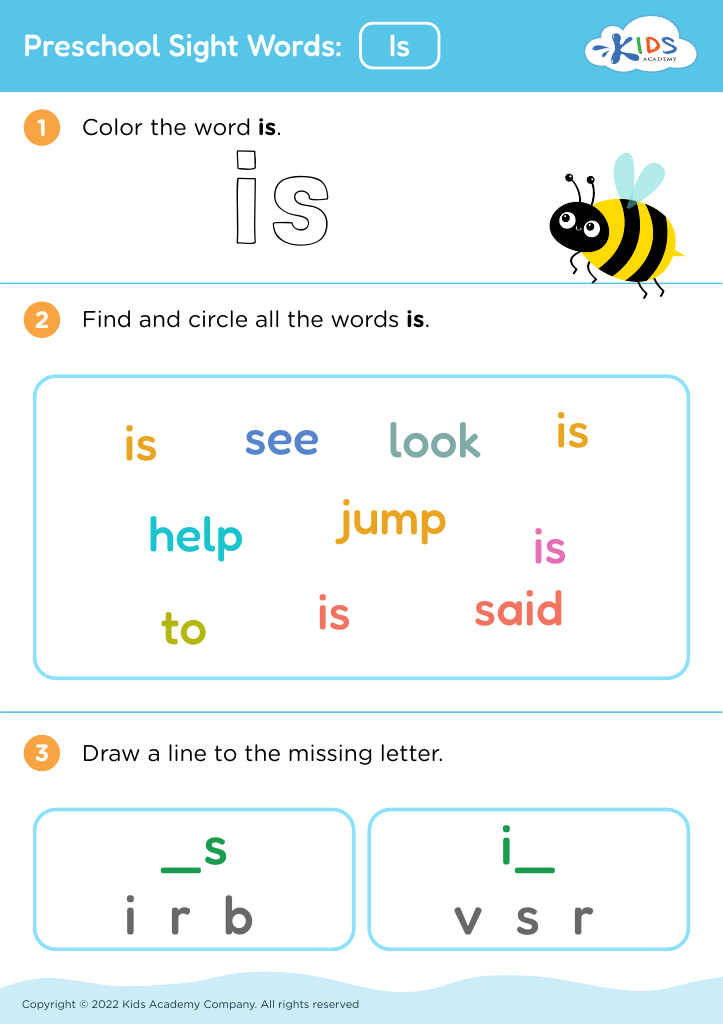






Understanding arrays is fundamental for children aged 4-8 as it lays the groundwork for essential mathematical concepts. Arrays, which are collections of objects arranged in rows and columns, help young learners visualize and organize information, making abstract concepts like multiplication and division more concrete. By engaging with arrays, children develop their counting skills, enhance their ability to recognize patterns, and improve their spatial reasoning.
Moreover, working with arrays supports early problem-solving skills. When children create or manipulate arrays, they learn to think critically about how quantities relate to one another, fostering a deeper understanding of math operations. This method can be especially beneficial for diverse learning styles, as arrays can be visual, tactile, or auditory through interactive group activities.
In addition, arrays are a stepping stone to various subjects beyond math, such as art and science, where organization and classification are vital. Parents and teachers should care about this foundational concept as it promotes a love for learning and helps children build confidence in their mathematical abilities. Encouraging exploration through arrays equips children with essential skills for future academic success and everyday problem-solving, ensuring they are well-prepared for more advanced topics.








