Understanding communities Worksheets for Ages 4-8
6 filtered results
-
From - To
Explore our "Understanding Communities Worksheets for Ages 4-8", designed to help young learners grasp the essential elements of their communities! These engaging, age-appropriate worksheets feature colorful illustrations and fun activities that encourage children to identify community helpers, understand different places, and recognize the roles everyone plays. Perfect for educators and parents, these resources foster curiosity and create a solid foundation for social studies concepts. By participating in interactive exercises, children enhance their critical thinking skills while gaining a sense of belonging in their neighborhoods. Start your children’s journey in community awareness today with our thoughtfully crafted worksheets!
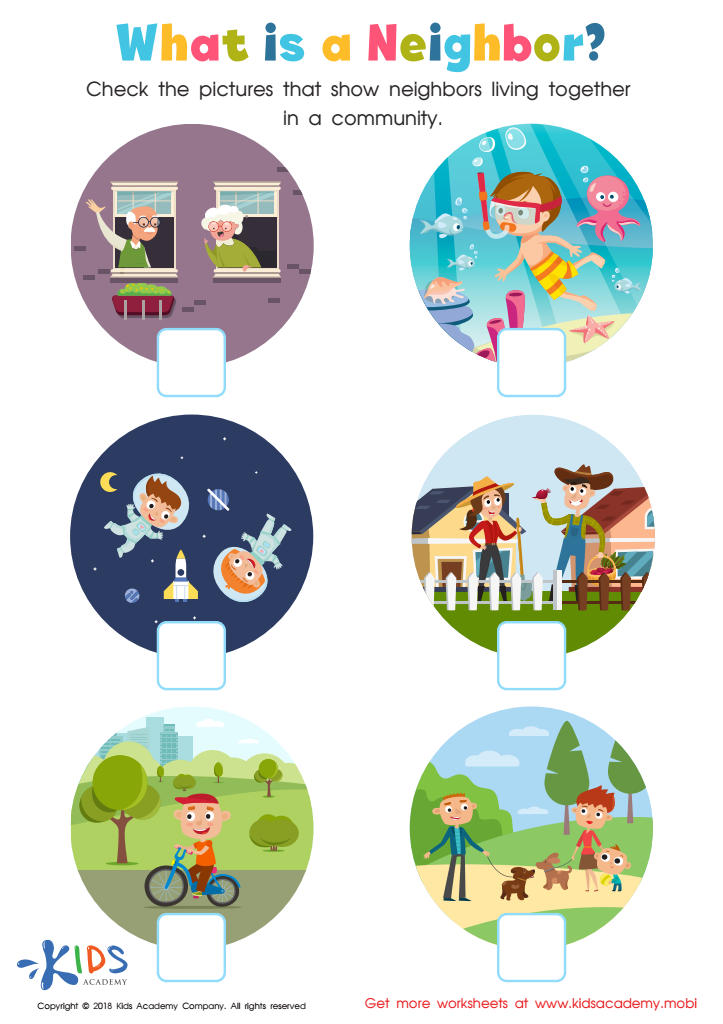
What is a neighbor Worksheet
 Assign to My Students
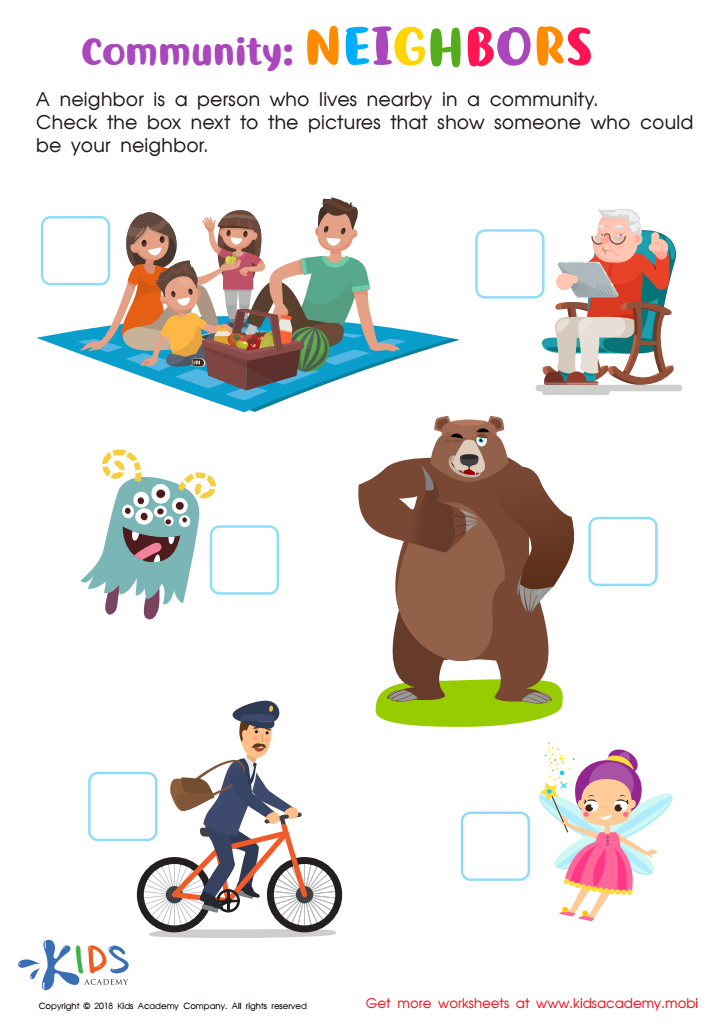
Community: Neighbors Worksheet
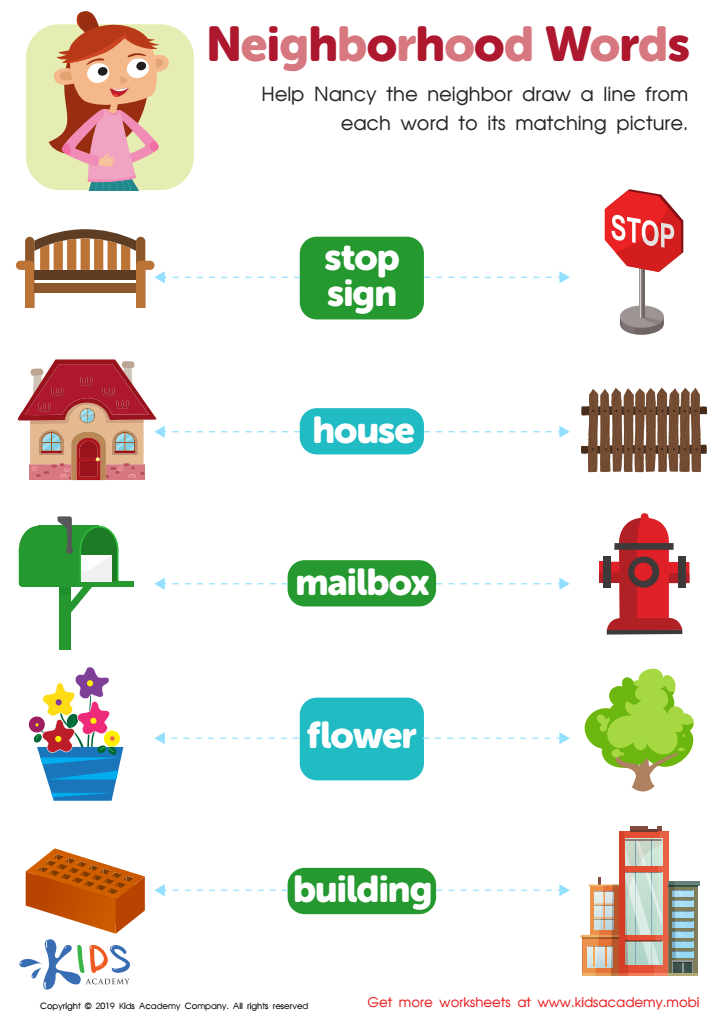
Neighborhood Words Worksheet
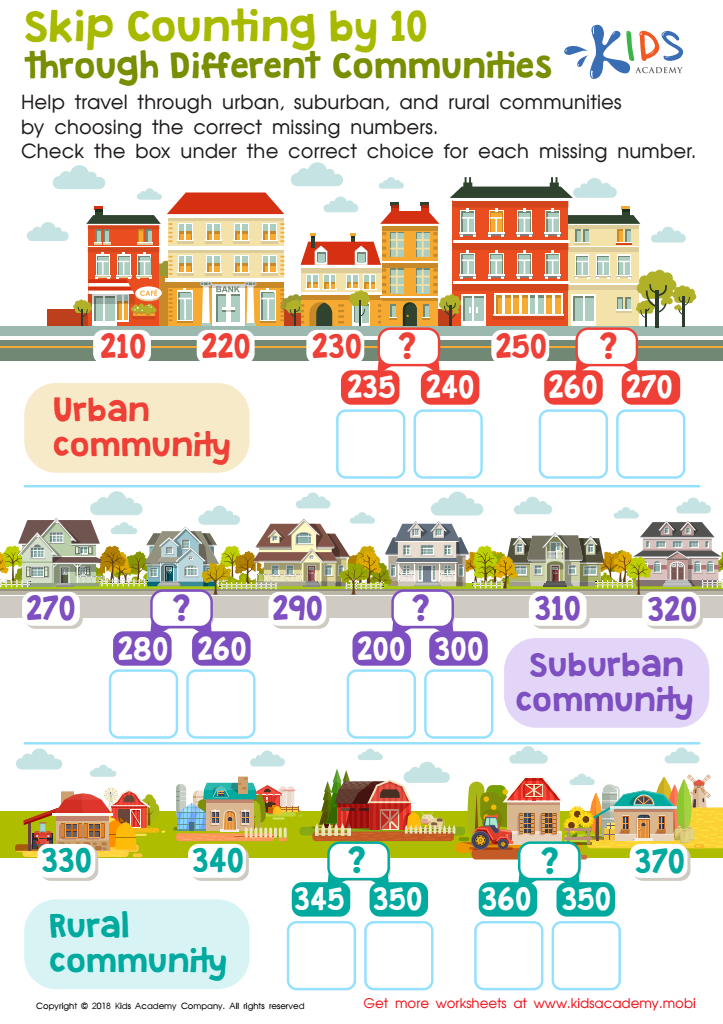
Skip Counting by 10 through Different Communities Worksheet
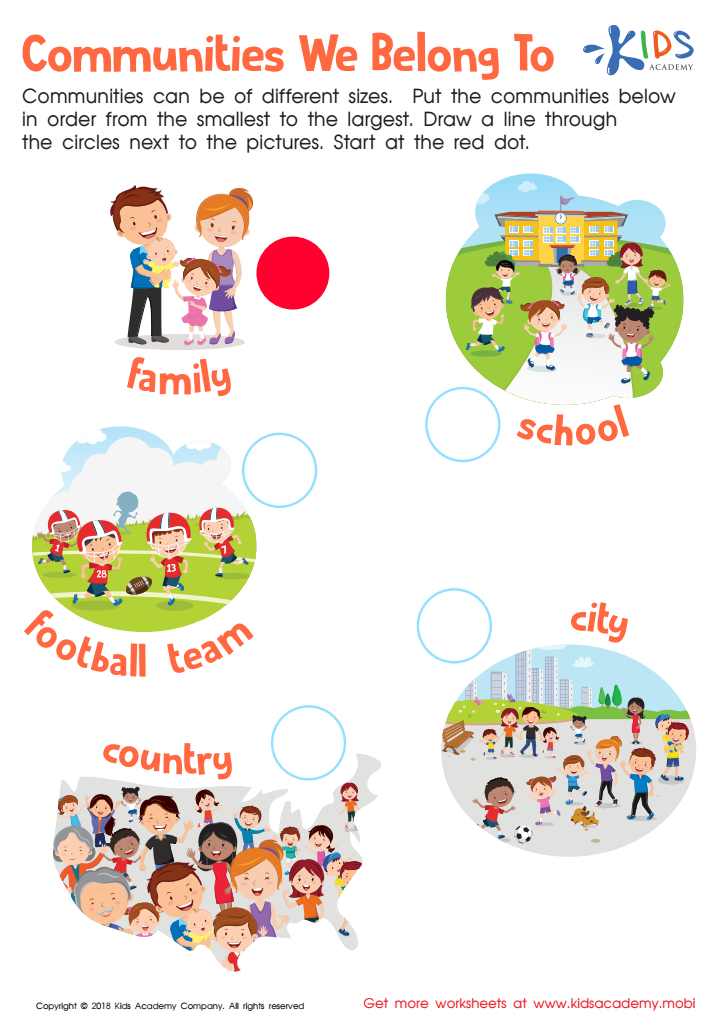
Communities We Belong to Worksheet
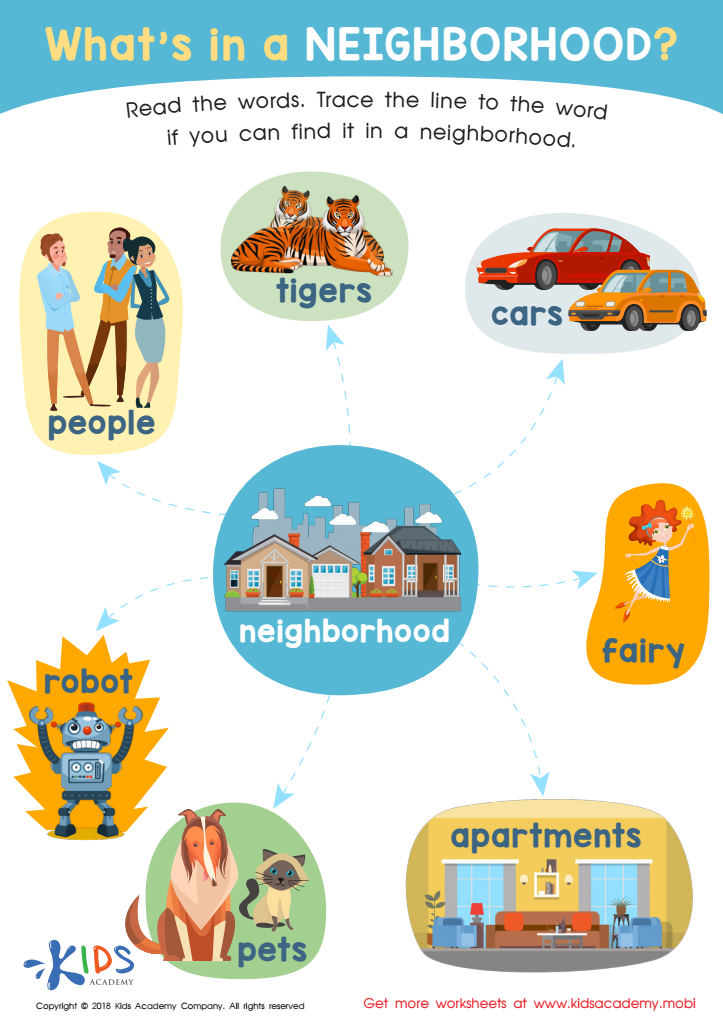
What's in a Neighborhood? Worksheet








Understanding communities is essential for children aged 4-8, as it helps cultivate a sense of belonging, awareness, and responsibility. For parents and teachers, fostering this understanding enriches children's social, emotional, and cognitive development.
At this age, children are naturally curious, eager to explore their surroundings, and build social connections. By learning about their communities, they enhance their ability to empathize with others and appreciate diverse cultures, traditions, and perspectives. This inclusivity sets a foundation for respectful interactions and cooperation in school and beyond.
Moreover, understanding communities empowers children to feel invested in their environments. They become aware of local resources, such as libraries, parks, and community centers, and actively engage in activities that promote civic responsibility, like participating in neighborhood clean-ups or family volunteering.
Parents and teachers can use this framework to encourage discussions about roles within the community, such as that of teachers, firefighters, and doctors. Such conversations position children as active participants in their worlds, fostering critical thinking and nurturing problem-solving skills.
By prioritizing this understanding, parents and teachers help shape thoughtful, engaged citizens who are ready to contribute positively to society, paving the way for a brighter future.








