Understanding graphs Worksheets for Ages 4-8
6 filtered results
-
From - To
Discover our engaging "Understanding Graphs Worksheets for Ages 4-8," designed to introduce young learners to basic graph concepts. These worksheets provide a fun and interactive way for children to explore data representation through colorful visuals and engaging activities. With simple questions and captivating illustrations, kids will learn to interpret bar graphs, pictographs, and more, all while developing critical thinking and analytical skills. Ideal for home or classroom use, our worksheets cater to different learning styles and keep children motivated. Foster your child’s mathematical journey today and help them become confident in understanding graphs with our expertly crafted resources!
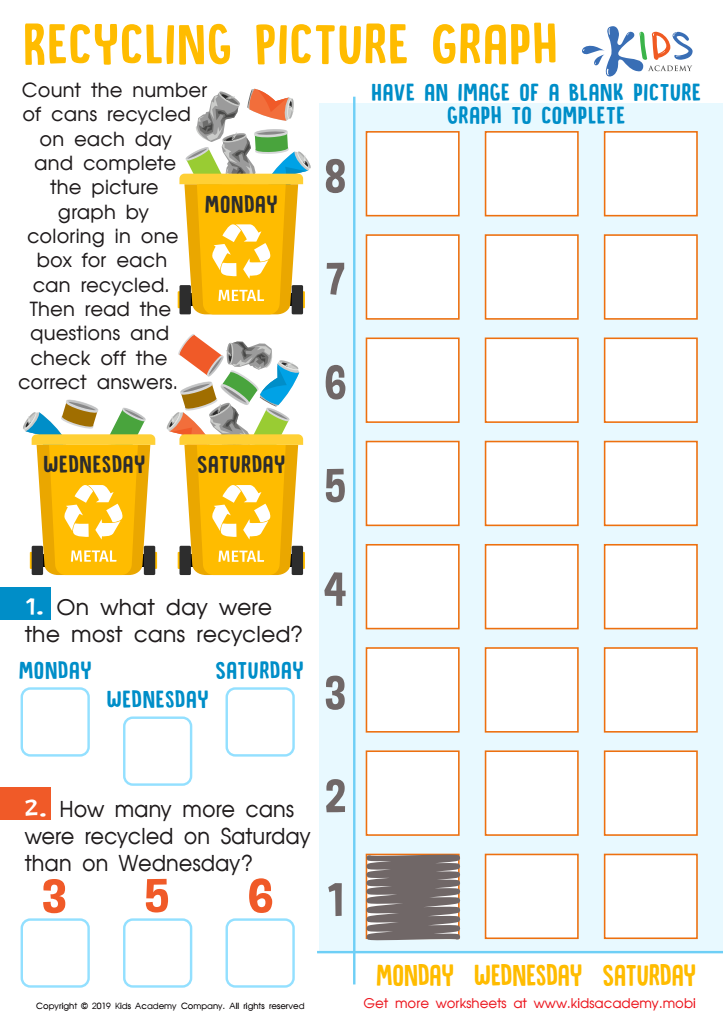
Recycling Picture Graph Worksheet
 Assign to My Students
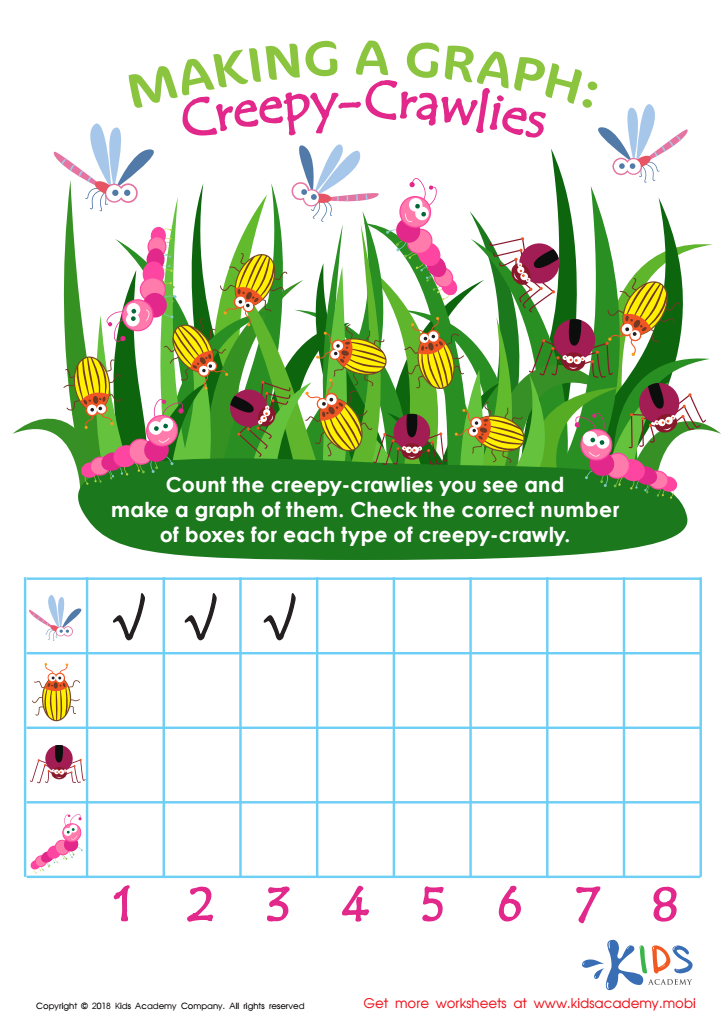
Making a Graph: Creepy Crawlies Worksheet
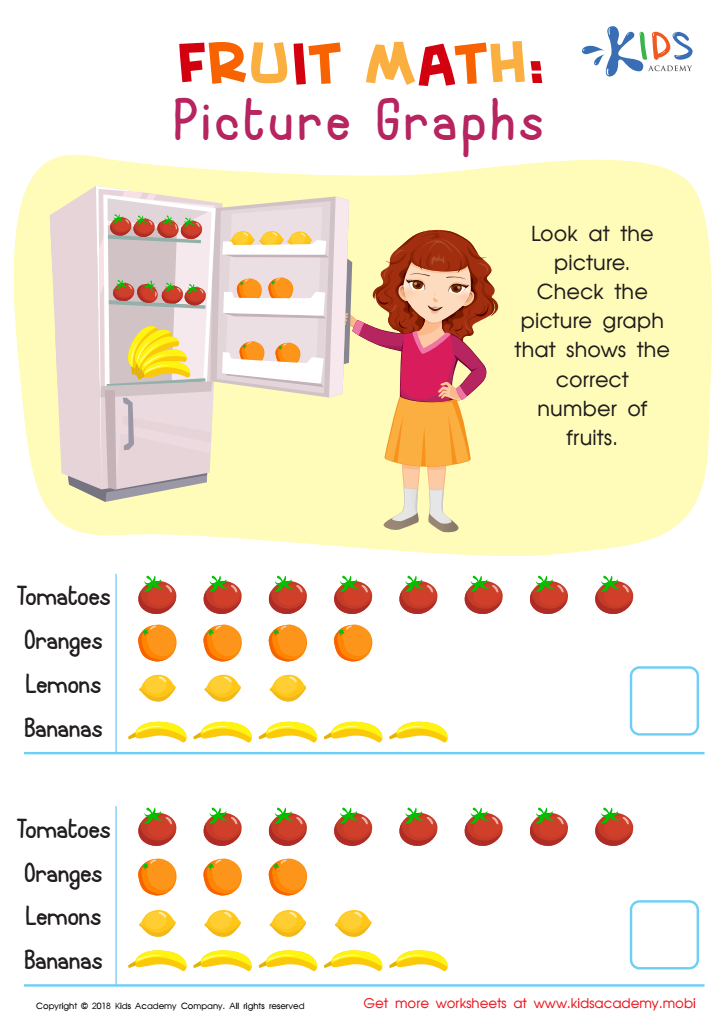
Fruit Math: Picture Graphs Worksheet
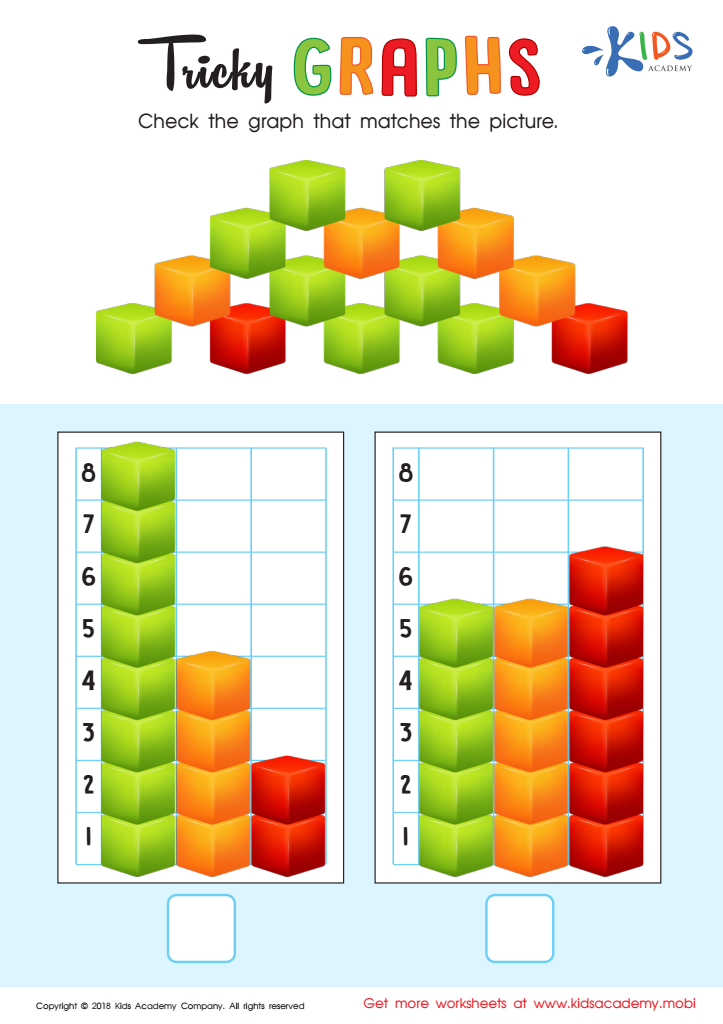
Tricky Graphs Worksheet
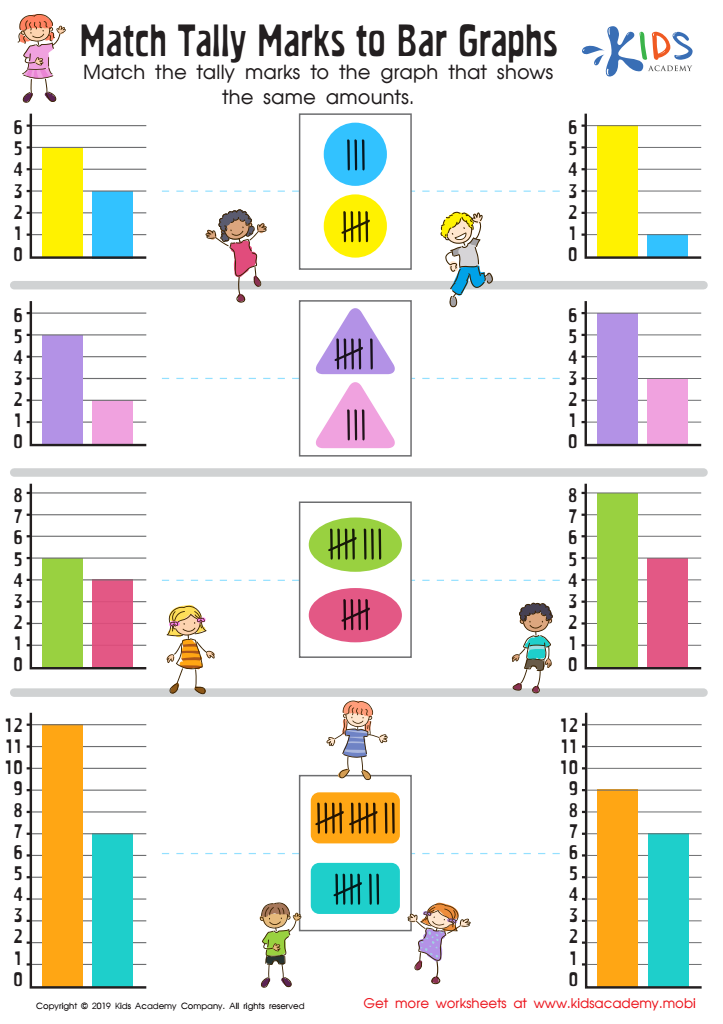
Match Tally Marks to Bar Graphs Worksheet

Aircraft Carrier Picture Graphs Worksheet






Understanding graphs is a fundamental skill for children aged 4-8 that supports critical thinking and data literacy. At this developmental stage, children are naturally curious about the world around them and enjoy visual representation. Graphs provide an engaging way to collect, represent, and interpret data, making learning both interactive and enjoyable.
Parents and teachers should care about graph literacy because it fosters essential problem-solving skills and enhances children's ability to analyze information. By learning to read and create simple graphs, children develop their analytical abilities and learn to draw conclusions based on evidence. This also emphasizes the importance of organization, encouraging children to sort information logically.
Moreover, graphs teach children about patterns, comparisons, and relationships, which are vital for better understanding real-world contexts, from weather changes to survey results. As technology increasingly influences education and career opportunities, early graph literacy equips children with foundational skills for future learning.
Encouraging familiarity with graphs can be seamlessly integrated into playful activities and everyday experiences, making it a natural and stimulating part of a child’s learning journey. Ultimately, this early exposure prepares children for the complexities of data interpretation in higher education and various life contexts.








